
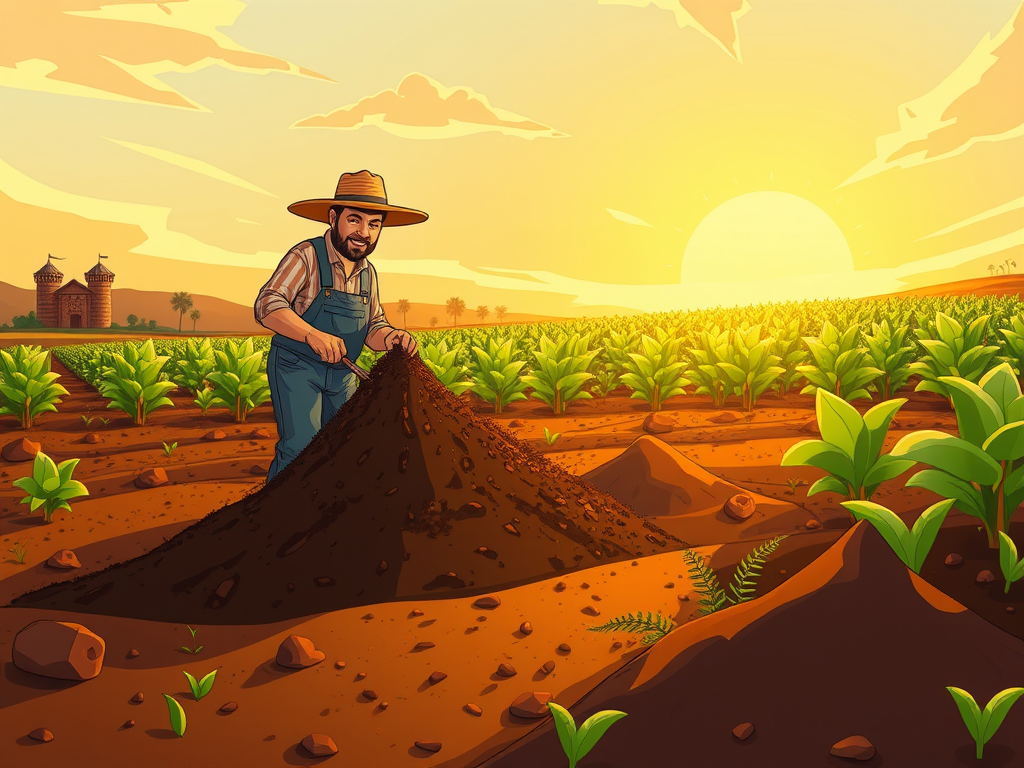
A program administered through the Natural Resources Conservation Service (NRCS), known as the Environmental Quality Incentives Program (EQIP), is offering financial assistance for farmers to apply biocharBiochar is a carbon-rich material created from biomass decomposition in low-oxygen conditions. It has important applications in environmental remediation, soil improvement, agriculture, carbon sequestration, energy storage, and sustainable materials, promoting efficiency and reducing waste in various contexts while addressing climate change challenges. More as a soil amendmentA soil amendment is any material added to the soil to enhance its physical or chemical properties, improving its suitability for plant growth. Biochar is considered a soil amendment as it can improve soil structure, water retention, nutrient availability, and microbial activity. More. A local partner, Rohrer Seed Solutions in Waverly, is actively encouraging enrollment, with owner Greg Simmons noting the practice is newer and not widely known. Through an agreement with the NRCS, Simmons can directly enroll farmers.
The program offers participants $200 per acre for the application of biochar, up to a limit of 300 acres. Simmons highlights that this payment is beneficial to the grower, the soil, and serves as a new revenue stream. The biochar used in this particular program is produced from lumber industry byproducts like sawdust and bark, which are combusted at high temperatures through pyrolysisPyrolysis is a thermochemical process that converts waste biomass into bio-char, bio-oil, and pyro-gas. It offers significant advantages in waste valorization, turning low-value materials into economically valuable resources. Its versatility allows for tailored products based on operational conditions, presenting itself as a cost-effective and efficient More.
Biochar application aims to improve soil health by increasing the cation exchange capacity, which means the soil can hold more nutrients. This improved nutrient retention and better water retention can help reduce runoff and lower the growing cost of inputs.
Supporting the benefits, a University of Illinois Extension Office study conducted several years ago demonstrated positive effects. Director Aaron Dufelmeier stated that in the applied plots, yield averages were higher. Specifically, the study found that organic matter saw an increase of 0.4% to 0.7% in plots where 20 tons per acre of biochar was added. In plots with 10 tons per acre of biochar, the increase in organic matter ranged from 0.3% to 0.4%. The history of biochar use dates back to South America, where it was successfully used to transform non-productive land into productive farmland. While full harvest numbers for recent applications are not yet available, initial farmer feedback has been positive.
SOURCE: Biochar program offering farmers cash to boost soil health




Leave a Reply