
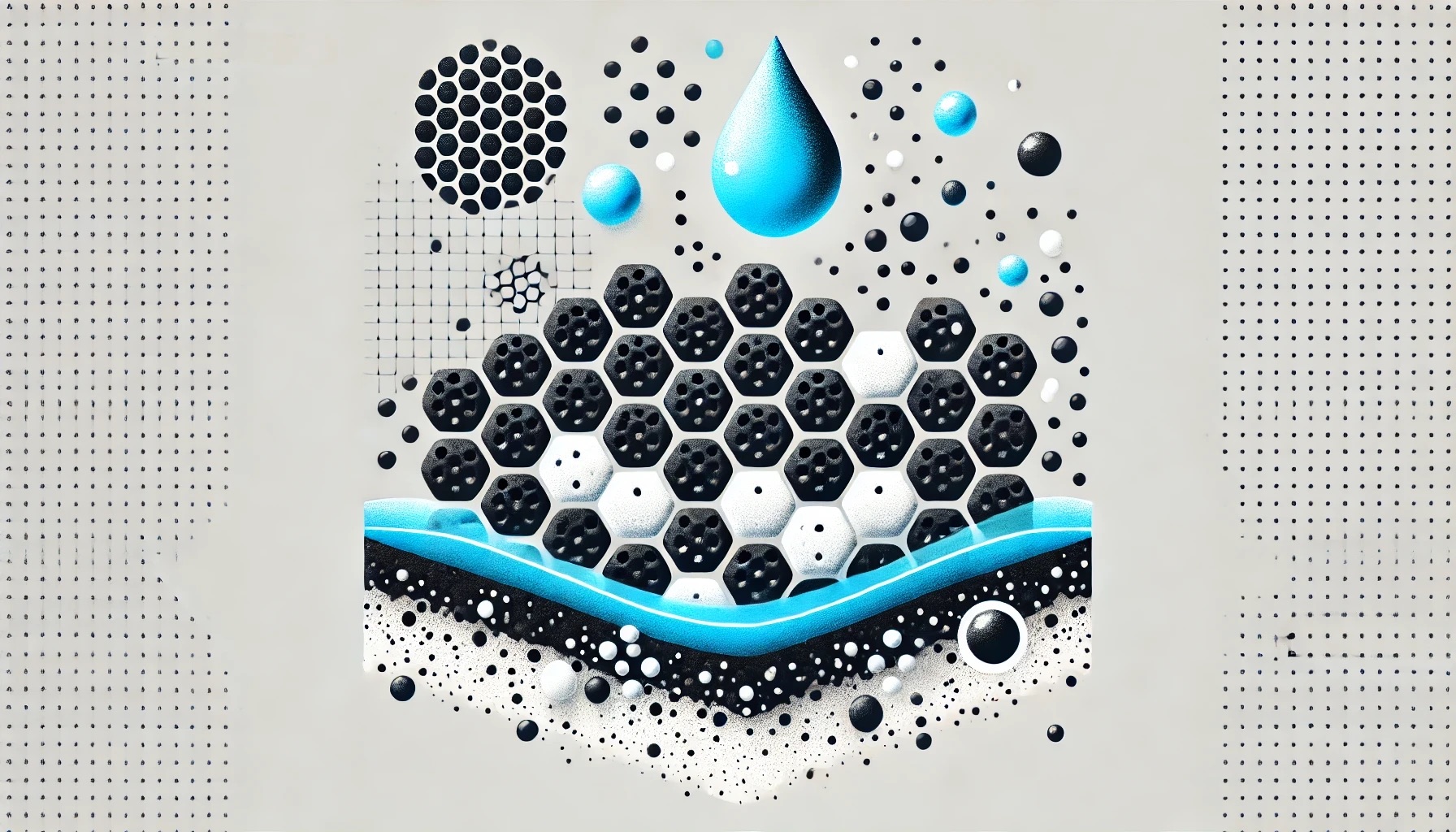
In an article recently published in Environmental Technology & Innovation, researchers describe how they have developed a graphitized biocharBiochar is a carbon-rich material created from biomass decomposition in low-oxygen conditions. It has important applications in environmental remediation, soil improvement, agriculture, carbon sequestration, energy storage, and sustainable materials, promoting efficiency and reducing waste in various contexts while addressing climate change challenges. More (HBC700) to address environmental concerns about tetracycline, a widely used antibiotic that often contaminates water systems. As Zhang, et al explain, HBC700 is engineered with a highly aromatic, condensed carbon structure to improve adsorption efficiency.
This material demonstrated remarkable performance, removing tetracycline with an adsorption capacity of 257.04 mg/g, a 4.72-fold improvement over standard biochar. Its effectiveness is attributed to a high surface area (1106.87 m²/g) and abundant micropores, which provide numerous active sites for contaminant binding. The material’s low electrical resistance also enhances electron transfer, making the adsorption process efficient.
The study explored the biochar’s adsorption mechanisms, revealing that chemisorption dominated, supported by π-π interactions and hydrogen bonding. Post-adsorption analysis showed that HBC700’s structure became more ordered, forming stable honeycomb-like graphite layers.
HBC700 also excelled in real-world tests, achieving over 98% tetracycline removal in tap water and wastewater treatment plant effluent. Although slightly less effective in complex aquaculture wastewater (79.94%), it still outperformed unmodified biochar.
Regeneration studies showed that HBC700 maintained high efficiency over five cycles, particularly when treated with methanol or hydrogen peroxide. These findings suggest HBC700’s potential as a sustainable and efficient material for water purification, particularly in systems affected by pharmaceutical pollutants.
Further research is needed to optimize biochar for selective adsorption in diverse water systems. This study represents a significant step toward mitigating antibiotic contamination and advancing biochar technology for environmental applications.
SOURCE: Zhang, et al (2024) Functionalized Construction of Highly Aromatic Condensed Graphitized Biochar for Tetracycline Adsorption. Environmental Technology & Innovation. https://doi.org/10.1016/j.eti.2024.104002



Leave a Reply