
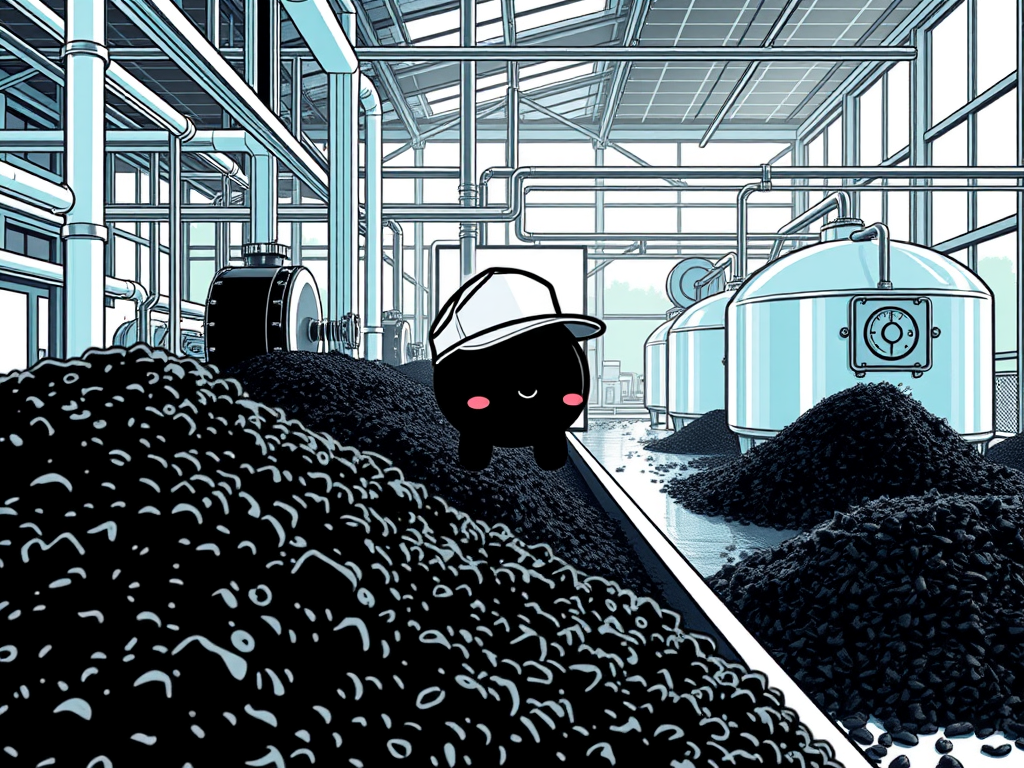
For many municipal wastewater treatment plants (MWTPs), especially those in colder regions, optimizing anaerobic digestion (AD) to boost renewable energy recovery and manage sludge sustainably is a key challenge. A recent study by Rahman Zeynali, Mohsen Asadi, Phillip Ankley, Hannah Mahoney, Markus Brinkmann, Bishnu Acharya, Kerry McPhedran, and Jafar Soltan, published in Science of the Total Environment, introduces an innovative solution: using phosphoric acid-activated sludge-derived biocharBiochar is a carbon-rich material created from biomass decomposition in low-oxygen conditions. It has important applications in environmental remediation, soil improvement, agriculture, carbon sequestration, energy storage, and sustainable materials, promoting efficiency and reducing waste in various contexts while addressing climate change challenges. More (ASBC) to significantly enhance biogas production.
The researchers developed an integrated approach that involved creating ASBC from thickened waste-activated sludge (TWAS) and then optimizing its application in AD. They also used computational fluid dynamics (CFD) simulations to fine-tune reactor mixing and reduce inactive zones within the digesters. The results were impressive: the optimized conditions, which involved using 15 g/L of ASBC with a particle size of 500 µm (referred to as R-500-15), led to a biogas yield of 285 mL/g volatile solids (VS). This represents a substantial 48% increase compared to the control group, which yielded 192 mL/g VS. Furthermore, the methane content within the biogas increased to 68%, a 9.6% improvement over the control sample’s 62%.
One of the critical factors in AD efficiency is proper mixing. The CFD modeling in this study played a crucial role in understanding and optimizing the mixing conditions. The simulations confirmed that intermittent mixing at 60 rpm for 55 seconds every 5 minutes effectively reduced reactor dead zones to just 13%. This optimized mixing strategy improved substrate distribution and facilitated better microbial interaction, which are essential for efficient digestion. This finding is particularly important because inadequate mixing can lead to uneven substrate distribution and impair microbial processes, ultimately decreasing overall efficiency.
The study also delved into the microbial communities to understand the biological drivers behind the enhanced biogas production. Analysis of the microbial community showed a notable increase in the relative abundance of the bacteria family Peptostreptococcaceae and the archaea family Methanomicrobiales in the optimized ASBC treatment (R-500-15). Peptostreptococcaceae are known for their role in anaerobic fermentation, while Methanomicrobiales are crucial for methane production. This shift in microbial community composition towards a higher abundance of methanogens, especially hydrogenotrophic methanogens like Methanomicrobiales, suggests that the ASBC treatment fostered an environment highly conducive to methane generation. The increased diversity of both bacterial and archaeal communities in ASBC-supplemented reactors also indicates a more robust and efficient AD process.
Beyond biogas production, the addition of ASBC significantly improved the removal rates of various pollutants. The R-500-15 treatment demonstrated the highest removal efficiencies: a 70% enhancement for volatile solids (VS), 31% for ammonia nitrogen (NH3-N), 28% for volatile fatty acids (VFAs), and 52% for chemical oxygen demand (COD). These improvements are critical indicators of AD efficiency and stability, highlighting ASBC’s role in promoting better organic matter degradation and adsorbing inhibitory compounds.
The use of ASBC derived from TWAS presents a cost-effective and sustainable strategy for optimizing AD performance. It aligns with circular economy principles by utilizing in-plant sludge, reducing waste disposal, and enhancing on-site biogas-based energy recovery. This approach supports energy-positive wastewater treatment and contributes to broader climate action goals. The findings from this study, particularly the identified optimal ASBC concentration of 15 g/L, offer valuable guidance for MWTPs aiming to improve their operational efficiency and environmental performance globally.
Source: Zeynali, R., Asadi, M., Ankley, P., Mahoney, H., Brinkmann, M., Acharya, B., McPhedran, K., & Soltan, J. (2025). Smart municipal wastewater treatment sludge management: Enhancement of biogas production from anaerobic digestion amended by optimized sludge-derived biochar. Science of the Total Environment, 989, 179860.




Leave a Reply