
Key Takeaways
- Nuclear power requires a steady supply of uranium, making its extraction from water sources a key priority for sustainable energy production.
- BiocharBiochar is a carbon-rich material created from biomass decomposition in low-oxygen conditions. It has important applications in environmental remediation, soil improvement, agriculture, carbon sequestration, energy storage, and sustainable materials, promoting efficiency and reducing waste in various contexts while addressing climate change challenges. More is a highly stable, low-cost material made from plant waste that can effectively filter out and separate uranium from contaminated liquids.
- Scientists can modify biochar with specialized chemical elements to dramatically improve its ability to target and trap uranium rather than other minerals.
- Advanced techniques use light, electricity, or biological microbes to continuously pull uranium from water and transform it into a solid, reusable compound.
- Researchers are using machine learning and artificial intelligence to predict how well these materials perform and optimize how they are designed.
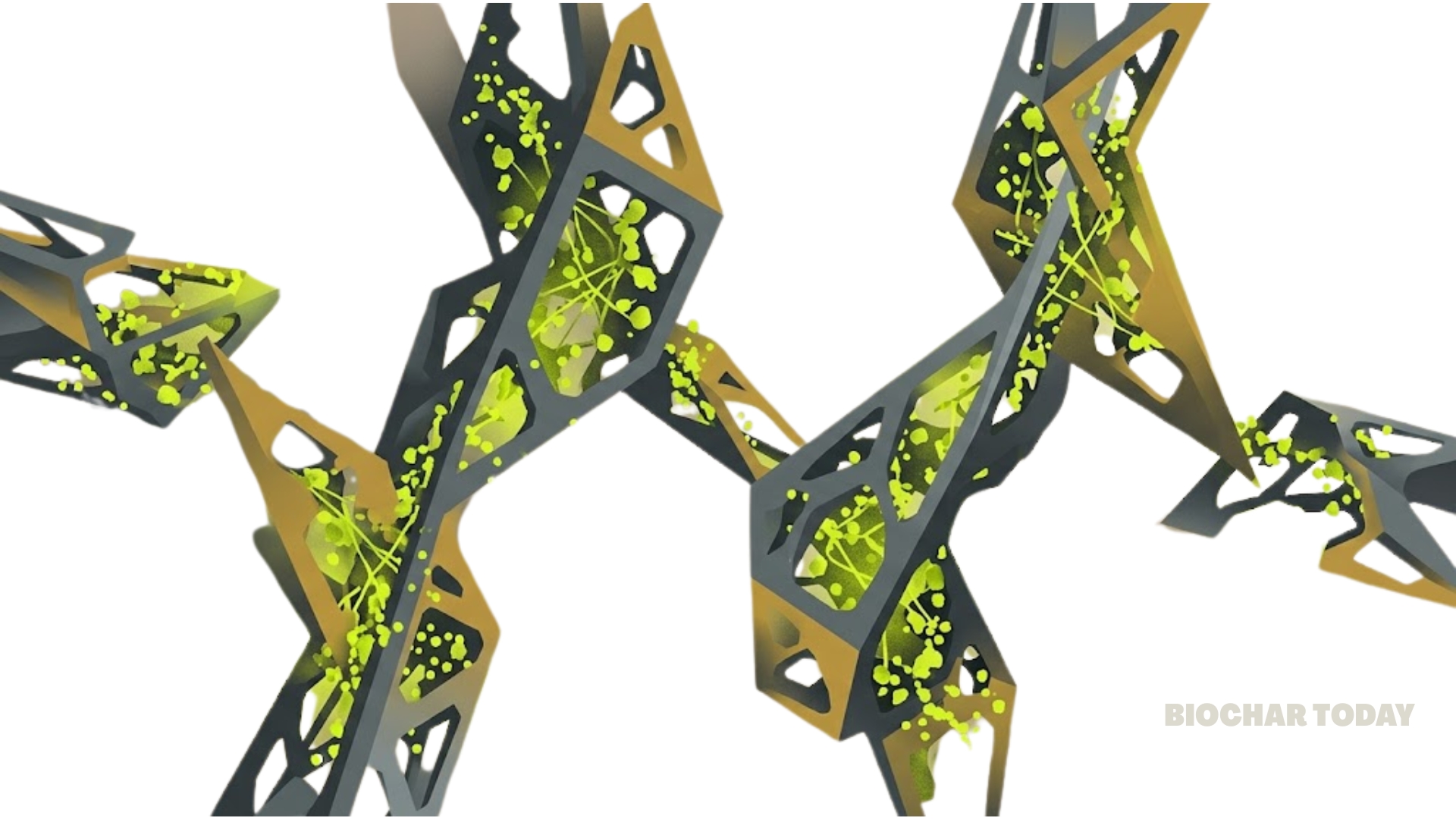
In a comprehensive review published in the journal Biochar, lead researcher Zhenli Sun along with an international team of scientists highlighted the critical emergence of biochar-based porous materials as highly effective systems for the selective separation and preconcentration of uranium from diverse aqueous environments. As the global demand for clean nuclear energy accelerates to meet stringent carbon neutrality goals, securing a stable supply of uranium from unconventional water sources like natural seawater, salt lakes, and industrial mining wastewater has become a paramount priority for water resource and energy infrastructure utilities alike. Traditional chemical filters often struggle to isolate uranium effectively due to severe interference from competing background ions and low-concentration thresholds. To overcome these challenges, materials scientists are turning toward biochar, an environmentally friendly, carbon-rich solid matrix created by heating organic waste under oxygen-deficient conditions. This material possesses massive natural surface areas and a highly stable network of pores that can be extensively engineered to lock onto radioactive contaminants.
The primary breakthrough documented across recent investigations lies in the remarkable capacity of chemically modified biochar to achieve high selectivity when treating uranium-tainted wastewater. Raw biochar typically exhibits poor innate selectivity because its native oxygen-containing functional groups bind non-specifically with many harmless minerals in the water. However, by functionalizing the biochar with targeted chemical compounds, scientists can alter its surface properties and electronic behaviors. For example, grafting specialized phosphate or amino groups onto the carbon matrix introduces a strong structural attraction that forms rigid chemical complexes specifically with uranium ions, resulting in a dramatic boost in filtration performance. Quantitative testing reveals that certain formulations can yield maximum uranium trapping capacities as high as 1616 milligrams per gram or even 2507 milligrams per gram depending on the precise combinations of surface functional groups utilized.
Beyond basic structural trapping, engineers have achieved substantial success by integrating biochar with light-activated and electrically driven catalysis strategies to enable continuous radioactive cleanups. When tailored as a light-activated catalyst, the biochar composite utilizes visible light or ultraviolet energy to generate reactive electrons that migrate to the material surface and chemically reduce highly soluble uranium into an insoluble, solid precipitate. A highly similar chemical transformation occurs under electrically catalyzed configurations, where biochar acts as a customized electrode matrix. By applying a targeted electric current, uranium ions move swiftly toward the cathode and are deposited continuously as specialized solid bimetallic metal oxides. Additionally, integrating specific biological bacterial colonies with the biochar framework can further optimize extraction rates by lowering the fundamental energy barrier required to trigger solid-state precipitation on the carbon framework.
To guide the long-term design of these porous frameworks without relying solely on slow, expensive laboratory trials, researchers have successfully introduced data-driven machine learning algorithms into the material evaluation pipeline. By aggregating massive datasets of global experimental results, advanced machine learning models can accurately predict an engineered biochar’s total uranium extraction capacity based on input combinations of physical descriptors and solution chemistry. Statistical error tracking demonstrates that regression and random forest models can identify solution acidity, initial contaminant concentration, and specific pore surface area as the absolute most influential variables governing successful uranium separation. While the structural heterogeneity of organic charcoalCharcoal is a black, brittle, and porous material produced by heating wood or other organic substances in a low-oxygen environment. It is primarily used as a fuel source for cooking and heating. More makes total molecular-level modeling inherently difficult, explainable artificial intelligence frameworks provide a direct tool to optimize real-world material deployment.
Source: Sun, Z., Chen, Z., Chen, Y., Tai, X., Wang, S., Lei, J., Wang, Q., Fan, F., Ma, B., & Wang, X. (2026). Highly selective separation of uranium by biochar-based porous materials through sorption, precipitation, photocatalysis, and electrocatalysis strategies. Biochar, 8(1), 119.




Leave a Reply