
The presence of pharmaceutical pollutants, particularly antibiotics, in aquatic environments poses a significant threat to ecosystems and human health due to their persistence and potential for detrimental effects. Traditional methods for removing these contaminants often come with drawbacks such as secondary contamination or high energy consumption. In response, researchers are exploring advanced oxidation processes, and a recent study by Y.D. Wang and C.X. Huang, published in Applied Ecology and Environmental Research, highlights a promising new catalyst for this challenge.
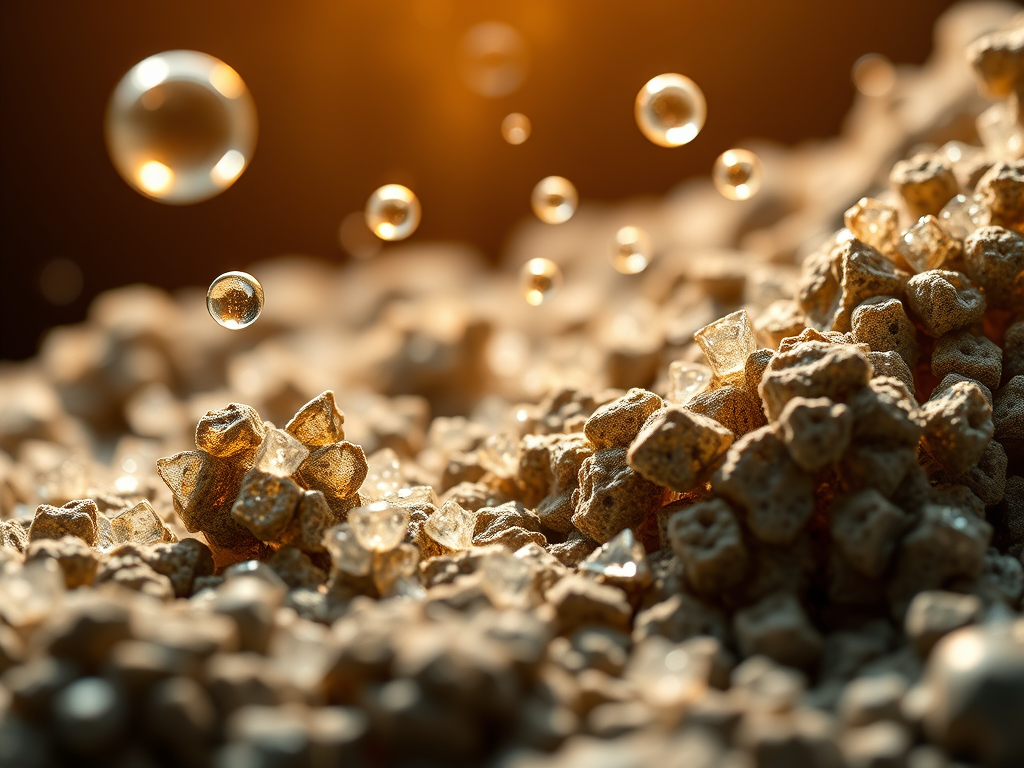
The study focuses on the catalytic degradation of Norfloxacin (NOR), a common antibiotic, using persulfate (PDS) activated by a novel cerium nanocomposite tea biocharBiochar is a carbon-rich material created from biomass decomposition in low-oxygen conditions. It has important applications in environmental remediation, soil improvement, agriculture, carbon sequestration, energy storage, and sustainable materials, promoting efficiency and reducing waste in various contexts while addressing climate change challenges. More (CeO2/BC). This innovative catalyst is synthesized from waste tea biochar, making it a cost-effective and environmentally friendly option. The modification process with cerium chloride leads to a porous, irregular shape on the biochar surface and significantly enhances the material’s crystallinity. Furthermore, detailed analysis using FTIR spectroscopy confirmed the successful incorporation of cerium onto the biochar, leading to a substantial increase in surface functional groups, which are crucial for catalytic activity.
The researchers systematically optimized the NOR degradation process by testing various parameters. They found that an optimal catalyst dosage of 400 mg/L, a PDS dosage of 160 mg/L, a pHpH is a measure of how acidic or alkaline a substance is. A pH of 7 is neutral, while lower pH values indicate acidity and higher values indicate alkalinity. Biochars are normally alkaline and can influence soil pH, often increasing it, which can be beneficial More of 7.1, and an initial NOR concentration of 10 mg/L yielded an impressive NOR removal rate of 95.19%. This high efficiency is attributed to the generation of reactive oxygen species, specifically hydroxyl radicals (⋅OH) and sulfate radicals (⋅SO4−), which play equivalent catalytic roles in breaking down NOR. Quenching tests, which involve introducing substances that inhibit these radicals, confirmed their significant contribution to NOR degradation.
Beyond its high degradation efficiency, the CeO2/BC catalyst demonstrated remarkable reusability and stability. Even after eight cycles of use, the NOR elimination rate only diminished to 81.75%, indicating that the composite material maintained substantial catalytic activity. This excellent recycling performance is a key advantage, pointing towards its potential for scalable and sustainable application in treating antibiotic-contaminated wastewater. While the study presents compelling evidence for the catalyst’s effectiveness, future research will aim to investigate its performance under real-world wastewater conditions, explore the scalability of the synthesis method, and assess the influence of other environmental factors.
Source: Wang, Y. D., & Huang, C. X. (2025). Catalytic degradation of norfloxacin by persulfate with cerium nanocomposite tea biochar. Applied Ecology and Environmental Research, 23(3), 5617-5628. Sources


![Eucalyptus Wood Waste-Derived Biochar Achieves a Ninety-Eight Percent Removal Efficiency for Benzo[ghi]perylene in Vehicle-Wash Wastewater](https://biochartoday.com/wp-content/uploads/2026/10/SCIENCE-BLOGS-2026-2026-10-19T160523.703.jpg)

Leave a Reply