
Key Takeaways
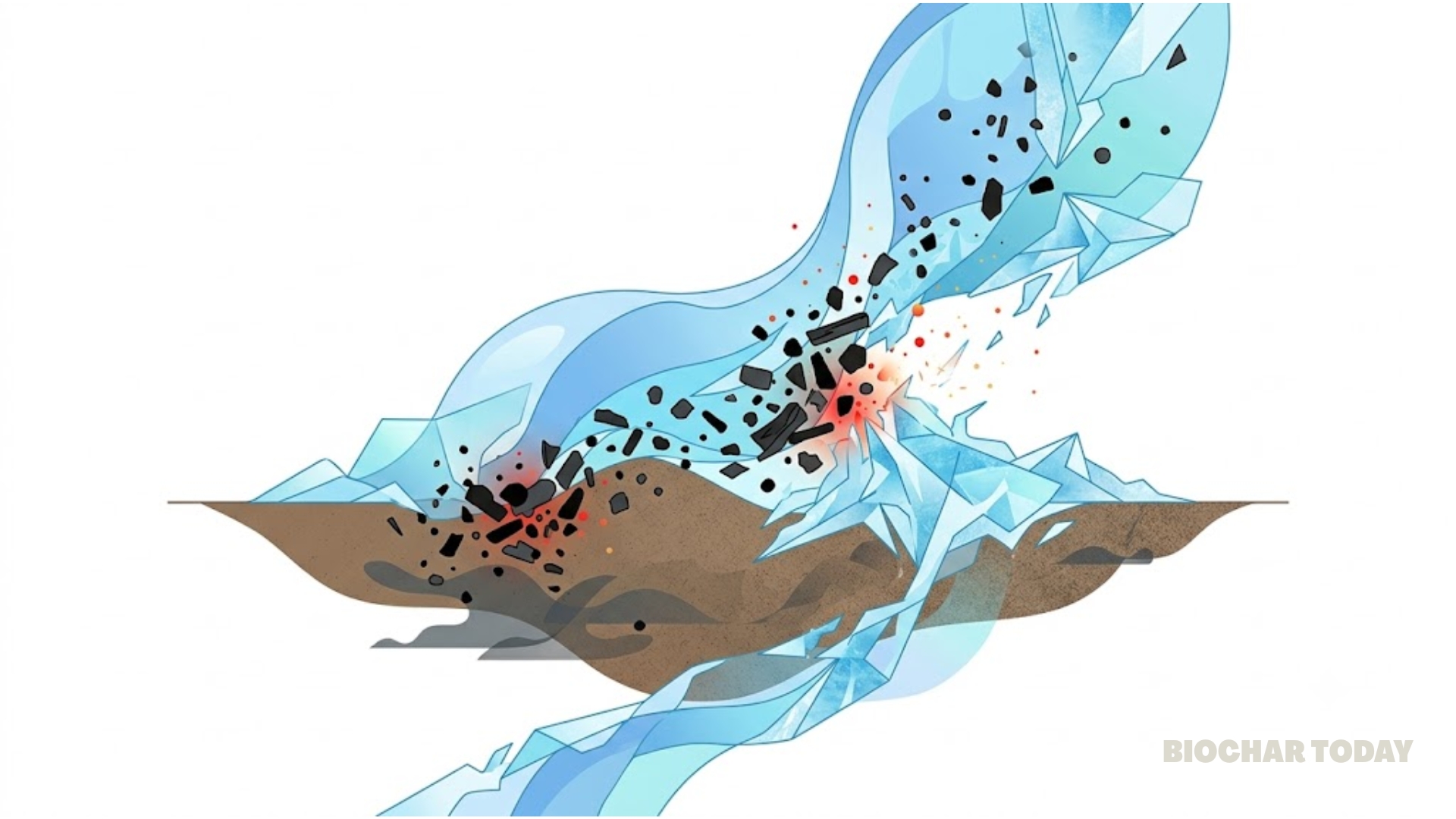
- Adding small amounts of charcoal-based additives to lead-polluted soil helps retain unfrozen liquid water during subzero conditions.
- Increased soil compaction combined with biocharBiochar is a carbon-rich material created from biomass decomposition in low-oxygen conditions. It has important applications in environmental remediation, soil improvement, agriculture, carbon sequestration, energy storage, and sustainable materials, promoting efficiency and reducing waste in various contexts while addressing climate change challenges. More lowers the freezing temperature and alters heat transfer through solid soil particles.
- Lead contamination alters how biochar interacts with soil moisture, making the soil’s freezing behavior heavily dependent on heavy metal concentration.
- At low moisture levels, biochar significantly boosts water retention, but this benefit diminishes in wetter, heavily contaminated environments.
- Understanding these multi-factor interactions helps improve soil restoration strategies in seasonally frozen regions facing heavy metal pollution.
Freeze-thaw processes in cold climate regions represent a major driver of land degradation and structural destabilization. As soil water shifts repeatedly between ice and liquid states, the resulting movement of moisture and rearrangement of soil particles can degrade soil quality, accelerate erosion, and destabilize natural ecosystems. In areas affected by industrial or agricultural runoff, these freeze-thaw cycles can also alter the chemical behavior of heavy metals, promoting the mobilization of toxic elements like lead and exacerbating environmental risks. Remediating contaminated lands in seasonally frozen environments requires a thorough understanding of how soil moisture behaves during subzero temperatures, particularly when structural amendments are introduced to restore land function.
Biochar has gained significant interest as a multi-purpose soil amendmentA soil amendment is any material added to the soil to enhance its physical or chemical properties, improving its suitability for plant growth. Biochar is considered a soil amendment as it can improve soil structure, water retention, nutrient availability, and microbial activity. More due to its porous physical structure, high surface area, and chemical stability. Derived from oxygen-limited thermal processing of organic waste, biochar helps bind heavy metals through surface adsorption while simultaneously improving overall soil aeration and moisture retention. While biochar has demonstrated success in stabilizing contaminants and altering thermal transfer properties, its exact impact on soil freezing mechanisms under heavy metal stress remains complex. Soil freezing does not convert all liquid water to ice simultaneously, as surface forces and capillary action maintain a dynamic fraction of liquid water known as unfrozen water. This unfrozen water is essential for sustaining microbial activity and root survival over winter, making its regulation vital for cold-region ecological recovery.
The structural density of soil significantly alters how biochar influences freezing behavior and heat transfer. In loose soil conditions with lower dry density, the freezing temperature is largely controlled by the inherent pore structure rather than biochar surface effects. However, as soil compaction increases, solid particle contact becomes the primary pathway for heat conduction. Under these denser conditions, higher biochar content progressively lowers the soil freezing temperature. The dense network of micropores and functional groups on biochar surfaces increases the proportion of tightly bound water while reducing freezable bulk water. Consequently, soil compaction shifts biochar from simply providing thermal insulation to actively altering phase change dynamics during cold spells.
Lead contamination adds another layer of complexity to these subzero moisture dynamics by altering soil solution chemistry and interface properties. Lead ions in the soil solution lower the freezing point through solute effects while competing with water molecules for active binding sites on biochar and mineral surfaces. At lower lead levels, a modest application of biochar enhances water retention and reduces freezing temperatures effectively. Conversely, when lead concentration increases significantly, high biochar application rates are required to maintain a noticeable reduction in freezing temperature and preserve higher levels of unfrozen water. The ability of biochar to regulate freeze-thaw hydrology is therefore strongly dependent on the concentration of heavy metals present within the matrix.
Initial soil water content serves as a critical governing factor that determines how effectively biochar maintains unfrozen water. Under low initial moisture conditions, low biochar addition rates substantially increase the unfrozen water content by optimizing capillary pores and strengthening hydrogen bonding. Under high moisture conditions, however, excess water increases lead ion mobility and promotes competitive interaction with biochar surface functional groups. Statistical evaluations confirm a significant synergistic interaction between initial water content and biochar dosage in controlling unfrozen moisture levels, highlighting that biochar performance cannot be evaluated in isolation from environmental moisture states.
Understanding the combined interactions between soil density, moisture, lead pollution, and biochar provides important practical insights for cold-region environmental management. Rather than applying uniform soil treatments, restoration efforts in seasonally frozen areas must tailor biochar application rates based on specific compaction levels and contamination profiles. Optimizing these soil amendments helps stabilize soil structures against frost heave and thaw settlement while maintaining essential winter moisture for soil biological functions. Integrated soil management approaches that account for subzero physical dynamics offer a realistic path forward for restoring degraded, polluted lands in freezing environments.
Source: Han, S., Chou, Y., Cao, W., Yang, F., Wang, Y., & Guo, X. (2026). Effects of Biochar on Freezing Temperature and Unfrozen Water Content in Pb-Contaminated Seasonally Frozen Soils: Implications for Mitigating Land Degradation. Land Degradation & Development, 37(1), 1–15.



Leave a Reply