
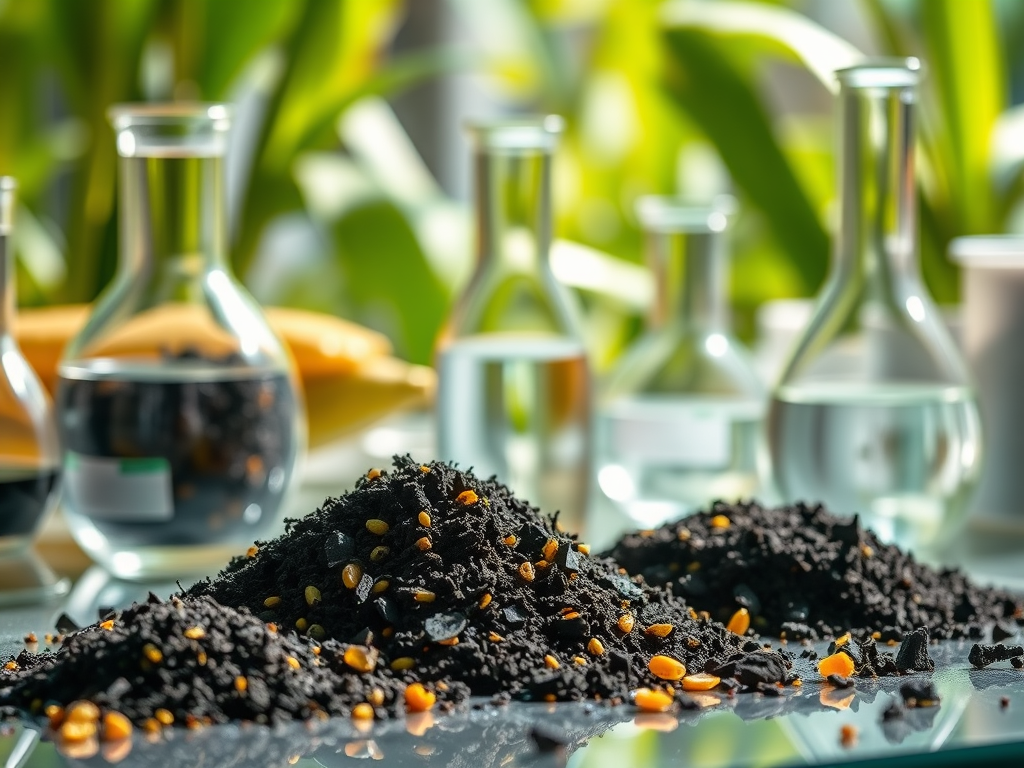
In a breakthrough for wastewater treatment, Shaker et al. have unlocked the potential of a biocharBiochar is a carbon-rich material created from biomass decomposition in low-oxygen conditions. It has important applications in environmental remediation, soil improvement, agriculture, carbon sequestration, energy storage, and sustainable materials, promoting efficiency and reducing waste in various contexts while addressing climate change challenges. More derived from corn (Zea mays) modified with an anionic surfactant, sodium dodecyl sulfate (SDS). This ingenious combination, SDS-BC, is proving to be a powerful and sustainable solution for eliminating toxic hexavalent chromium [Cr(VI)] from synthetic wastewater. Have a look at this wonderful study published in BCM Chemistry.
Cr(VI) is a hazardous heavy metal notorious for its environmental and health risks. With industrial processes often releasing it into water systems, finding an efficient removal method has become a pressing challenge. Enter biochar—a carbon-rich material celebrated for its versatility in tackling pollutants. But in this study, researchers supercharged biochar with SDS to enhance its adsorption capabilities.
The modified biochar showed a 99% Cr(VI) removal rate under optimal conditions. Imagine this: a small 0.1 g dose of SDS-BC, at a slightly acidic pHpH is a measure of how acidic or alkaline a substance is. A pH of 7 is neutral, while lower pH values indicate acidity and higher values indicate alkalinity. Biochars are normally alkaline and can influence soil pH, often increasing it, which can be beneficial More , removes almost all Cr(VI) from a 15 ppm solution in just three hours at room temperature . The secret lies in the SDS treatment, which increases the biochar’s surface area and adds hydrophilic and hydrophobic functional groups, enabling better diffusion of Cr(VI) ions.
The pseudo-second-order kinetic model best explained how Cr(VI) ions adhered to the biochar surface, while the Temkin isotherm model captured the adsorption process. Thermodynamic studies revealed that this process is spontaneous and exothermic, making it energy-efficient. Not only is SDS-BC effective, but it’s also reusable—maintaining its performance across several regeneration cycles.
Our take
This study is a promising leap in biochar’s journey as a sustainable water treatment solution. However, we encourage scaling up the production of SDS-BC and testing its performance in real-world conditions, where wastewater systems are far more complex. More research is also needed to optimize its regeneration process to enhance cost-effectiveness further. Biochar continues to prove its versatility in environmental cleanup. With innovations like SDS-BC, the future of water purification looks brighter, greener, and cleaner!
SOURCE: Shaker, Azza M., et al. (2025). Loading of anionic surfactant on eco-friendly biochar and its applications in Cr (VI) removal: adsorption, kinetics, and reusability studies. BMC chemistry. http://creativecommons.org/licenses/by/4.0/.


Leave a Reply