
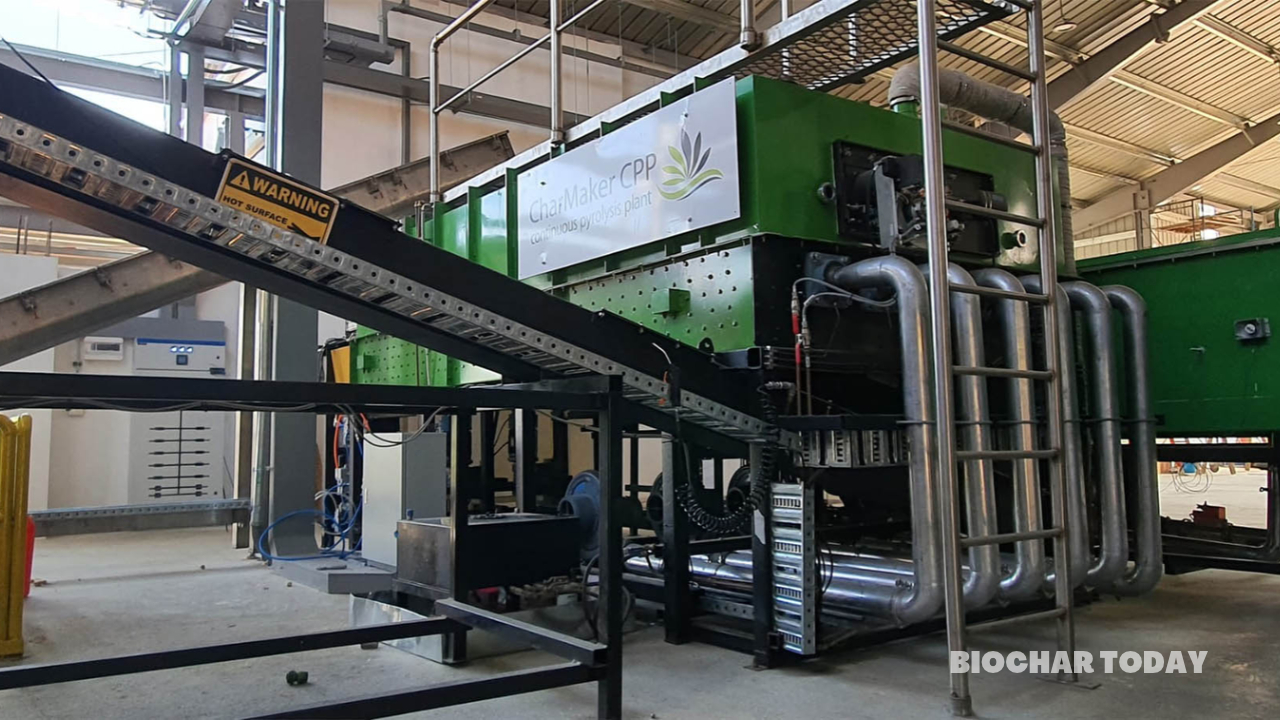
Melbourne-based environmental engineering firm Earth Systems has partnered with Thai biomassBiomass is a complex biological organic or non-organic solid product derived from living or recently living organism and available naturally. Various types of wastes such as animal manure, waste paper, sludge and many industrial wastes are also treated as biomass because like natural biomass these More developer Enable Earth to commission a commercial biocharBiochar is a carbon-rich material created from biomass decomposition in low-oxygen conditions. It has important applications in environmental remediation, soil improvement, agriculture, carbon sequestration, energy storage, and sustainable materials, promoting efficiency and reducing waste in various contexts while addressing climate change challenges. More production facility in northern Thailand. Facilitated by the Australian Trade and Investment Commission (Austrade), the multimillion-dollar export project deploys Australian-manufactured thermal conversion machinery to help local farmers curb carbon emissions from open-field agricultural burning.
Thailand faces severe air pollution and greenhouse gas emissions driven by the widespread practice of burning crop residues in the field. The Thai Government has sought practical alternatives to help farmers manage organic agricultural waste without open combustion. Meanwhile, Australian technology providers like Earth Systems—operating in a country that generates over 50 million tonnes of biomass waste annually—have looked to diversify their operations into Southeast Asian markets where government-backed sustainability initiatives create commercial demand.
To address this waste management challenge, Earth Systems exported its patented CharMaker thermal processing system to Thailand at the end of 2025. The partnership originated during a 2024 Southeast Asia Business Exchange trade mission hosted by Austrade, which connected Earth Systems with Enable Earth and Thai government officials at Thailand’s annual Sustainability Expo. The CharMaker unit converts wood chips and agricultural crop residues into biochar suitable for soil improvement, animal feed, carbon sequestration, and industrial carbon materials.
The newly commissioned facility in northern Thailand marks the operational launch of the first stage of a broader multimillion-dollar initiative. By processing crop residues rather than burning them, the installation directly reduces local air pollution and carbon emissions while providing Thai farmers with climate-resilient agricultural inputs. Beyond immediate emissions reductions, Earth Systems and Enable Earth are developing a strategic biochar roadmap for Thailand to scale domestic production and position the country as a regional hub for the sector, while establishing a commercial export model for Australia’s growing biochar technology industry.

Leave a Reply