
Key Takeaways
- Washing beach seaweed in fresh water before turning it into charcoalCharcoal is a black, brittle, and porous material produced by heating wood or other organic substances in a low-oxygen environment. It is primarily used as a fuel source for cooking and heating. More removes harmful salts that otherwise harm earthworms and crops.
- Adding nine percent seaweed charcoal to cow manure and waste paper speeds up worm composting and creates a nutrient-rich organic fertilizer.
- The seaweed charcoal acts like a sponge that holds onto nitrogen and potassium, preventing valuable plant nutrients from washing away.
- Mature compost enriched with seaweed charcoal keeps heavy metals well below international safety limits for agricultural soils.
- Most vegetable seeds sprout and grow stronger roots in the seaweed-enriched compost, though salt-sensitive crops like cabbage require lower doses.
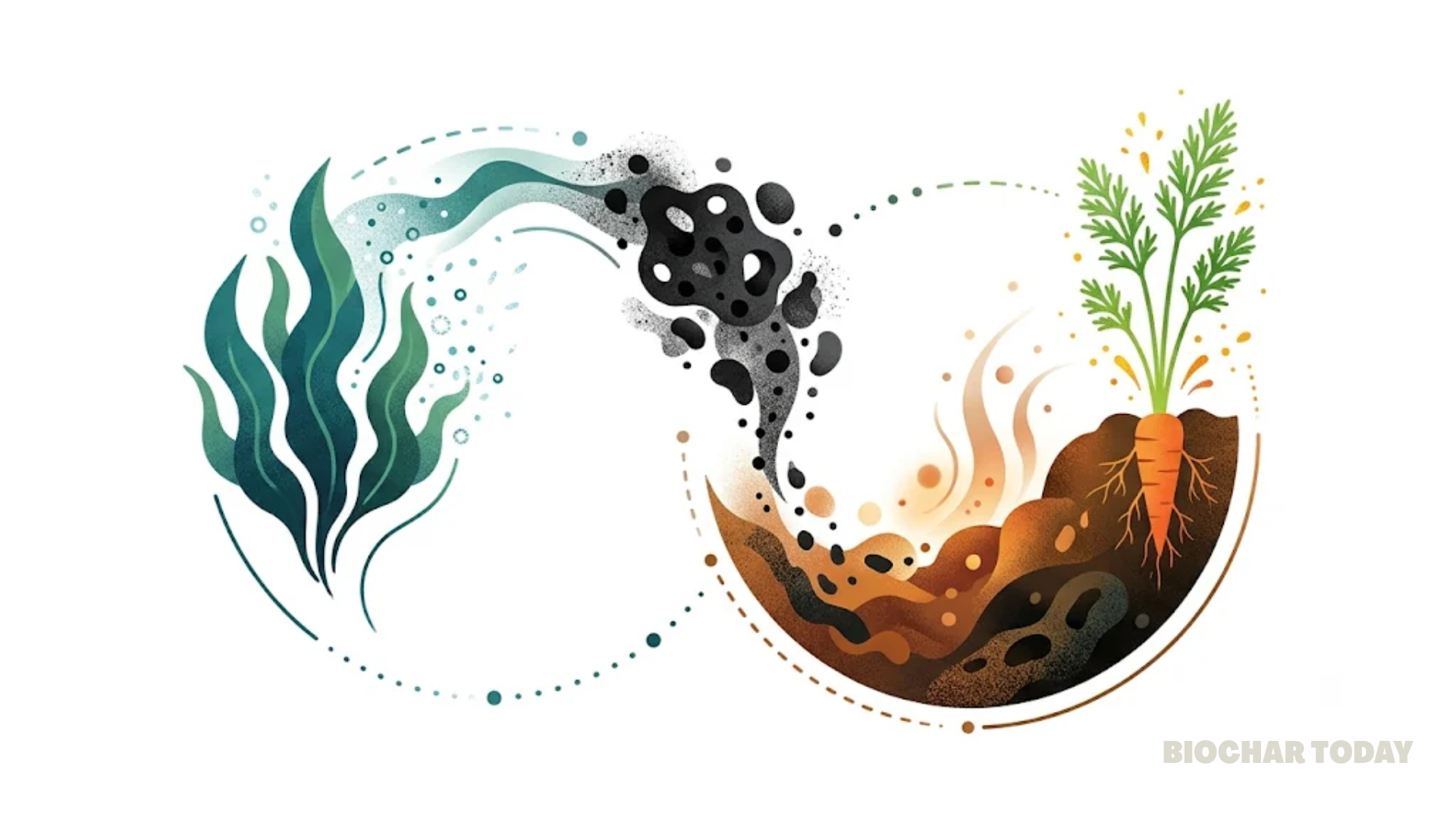
A recent study published in Cleaner and Circular Bioeconomy by Elia N.M. Ruben, Simeon S. Hamukoshi, Bethold Handura, and Hupenyu A. Mupambwa demonstrates how washed beach seaweed can upgrade organic fertilizer production in arid regions. Farmers increasingly rely on vermicompost, a nutrient-rich soil conditioner produced when earthworms digest organic waste, to reduce dependence on synthetic chemical fertilizers. However, soluble nutrients like nitrogen easily wash out of standard vermicompost before crops can absorb them. While adding plant-based charcoal, known as biocharBiochar is a carbon-rich material created from biomass decomposition in low-oxygen conditions. It has important applications in environmental remediation, soil improvement, agriculture, carbon sequestration, energy storage, and sustainable materials, promoting efficiency and reducing waste in various contexts while addressing climate change challenges. More, helps lock nutrients in place, arid countries like Namibia lack abundant crop residues for charcoal production. To solve this problem, the researchers harvested fast-growing red seaweed from the Namibian coast, soaked it in fresh water for six hours to remove excess salt, and baked it into biochar before mixing it with cattle manure, shredded office paper, and red wiggler earthworms for 12 weeks.
Testing biochar addition rates of zero, three, six, and nine percent revealed that higher seaweed charcoal levels significantly accelerated compost maturity. By week 12, the carbon-to-nitrogen ratio dropped across all mixtures, reaching its lowest and most stable value of 11.43 in the nine percent biochar treatment compared to 17.60 in the untreated compost. Because porous charcoal particles provide extra surface area for beneficial microbes to colonize, the seaweed biochar sped up organic matter breakdown while keeping electrical conductivity within a safe range of 2.41 to 2.77 millisiemens per centimeter. Soaking the raw seaweed in water prior to heating successfully prevented the severe salt buildup that previously limited marine biochar use in earthworm beds.
Nutrient analysis showed that seaweed biochar reshaped how vital plant minerals were stored and released. Rather than allowing nitrogen to convert rapidly into easily leached nitrates, higher biochar levels retained nitrogen within the solid compost matrix, reducing nitrate-nitrite concentrations to 11.43 milligrams per kilogram at the nine percent rate compared to 54.34 milligrams per kilogram in plain vermicompost. At the same time, the nine percent seaweed biochar mixture delivered the highest plant-available phosphorus at 281.00 milligrams per kilogram and raised exchangeable potassium to 8.90 grams per kilogram, while keeping sodium at its lowest level of 3.44 grams per kilogram. Furthermore, trace heavy metals including chromium, cadmium, copper, nickel, and zinc remained far below United States Environmental Protection Agency safety thresholds for agricultural land.
To verify that the finished compost was safe for young plants, the team tested liquid extracts on tomato, onion, carrot, Swiss chard, and cabbage seeds. Most crops responded positively as seaweed biochar adsorbed natural toxins found in raw manure compost. Carrot seeds achieved a germination index of 105.16 percent, while Swiss chard jumped dramatically from 3.99 percent in unamended compost to 85.17 percent at the nine percent biochar level. Tomato and onion seeds also maintained healthy germination and root growth. Cabbage was the sole exception, with its germination index dropping from 72.32 percent down to 31.64 percent at the highest biochar dose due to sensitivity to elevated potassium and dissolved salts.
Overall, the findings highlight a practical circular-economy strategy that turns nuisance beach seaweed, livestock manure, and waste paper into a mildly alkaline fertilizer well suited for improving acidic agricultural soils. Because salt-sensitive crops like cabbage showed stress at the highest inclusion rate, the authors recommend matching application rates to specific crop tolerances and conducting field trials to evaluate long-term soil salinity and crop yields.
Source: Ruben, E. N. M., Hamukoshi, S. S., Handura, B., & Mupambwa, H. A. (2026). Biochar prepared from desalinated seaweed (Gracilariopsis funicularis) has a positive potential on cattle manure-waste paper vermidegradation and plant nutrient value. Cleaner and Circular Bioeconomy, 15, 100229.



Leave a Reply