

Michigan State University forestry researcher Emily Silver has received a $300,000 grant from the USDA National Institute of Food and Agriculture to evaluate converting storm-damaged timber into biocharBiochar is a carbon-rich material created from biomass decomposition in low-oxygen conditions. It has important applications in environmental remediation, soil improvement, agriculture, carbon sequestration, energy storage, and sustainable materials, promoting efficiency and reducing waste in various contexts while addressing climate change challenges. More in northern Michigan. Following severe March 2025 ice storms across the region, large volumes of downed and damaged trees exceeded the capacity of traditional forest product markets. Working alongside regional partners—including Community Energy Solutions, Eastside Compost, and the Great Lakes Biochar Network—the project examines both the logistics of processing surplus wood and the development of viable end-use markets.
The primary challenge centers on surplus biomassBiomass is a complex biological organic or non-organic solid product derived from living or recently living organism and available naturally. Various types of wastes such as animal manure, waste paper, sludge and many industrial wastes are also treated as biomass because like natural biomass these More and nascent market infrastructure in the United States. Severe ice storms in late March 2025 caused widespread tree breakage across northern Michigan counties, prompting emergency and disaster declarations. While traditional forest product producers salvaged timber where possible, supply outpaced regional demand. Furthermore, domestic biochar markets remain underdeveloped, and practitioners such as Eastside Compost co-owner MC Rothhorn note regulatory hurdles and limited consumer demand that complicate incorporating biochar into compost products.
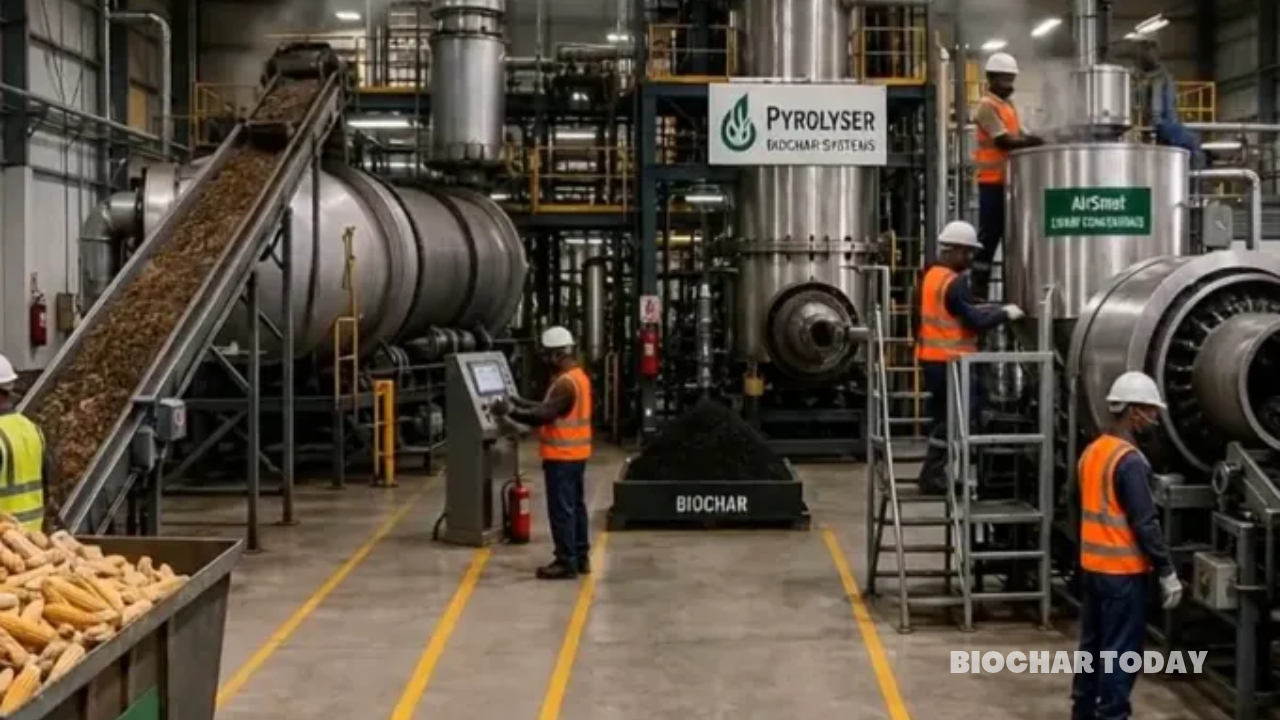
To address these barriers, Silver’s two-part research framework first focuses on moving damaged timber and wood unsuitable for conventional forest products into pyrolysisPyrolysis is a thermochemical process that converts waste biomass into bio-char, bio-oil, and pyro-gas. It offers significant advantages in waste valorization, turning low-value materials into economically valuable resources. Its versatility allows for tailored products based on operational conditions, presenting itself as a cost-effective and efficient More processing. Second, the project investigates end uses, distribution channels, and buyer demand. Funded activities include workshops, demonstrations, logger trainings, economic impact assessments, and biochar testing. The effort builds on outreach from the Great Lakes Biochar Network, hosted by MSU Extension with support from the Michigan Department of Natural Resources Forest Resources Division and MSU AgBioResearch’s Project GREEEN.
The project aims to generate practical data and guidance for landowners, loggers, composters, and agricultural users across Michigan and the surrounding region. Clean energy consultant Tom Stanton notes that pairing soil health improvements with potential carbon credit or emission-reduction revenue could support adoption and local economic value. By clarifying feedstockFeedstock refers to the raw organic material used to produce biochar. This can include a wide range of materials, such as wood chips, agricultural residues, and animal manure. More pathways, regulatory and technical constraints, and commercial outlets, the research seeks to establish whether biochar can serve as a practical outlet for surplus storm-damaged wood.


Leave a Reply