

Key Takeaways
- Traditional natural silk dyeing still creates notable carbon emissions because it relies heavily on electricity, long-distance transport, and diesel fuel.
- Reusing iron-rich river mud with helpful bacteria cuts overall environmental harm and lowers greenhouse gas emissions by nearly one-third.
- Turning leftover dye yam plant waste into charcoal-like biocharBiochar is a carbon-rich material created from biomass decomposition in low-oxygen conditions. It has important applications in environmental remediation, soil improvement, agriculture, carbon sequestration, energy storage, and sustainable materials, promoting efficiency and reducing waste in various contexts while addressing climate change challenges. More locks away enough carbon to make the entire dyeing operation carbon-positive.
- Selling the resulting biochar offsets production expenses, making the environmentally friendly method the cheapest option for textile makers.
- Sourcing dye yams closer to factories and maximizing river mud reuse cycles are essential for keeping carbon savings intact.
In a study published in the journal Biochar, researchers Qing Li, Jesvin Puay-Hwa Yeo, Liping Fang, and Kai Liu evaluated the environmental and economic performance of traditional gambiered silk dyeing in southern China. Although natural textile dyeing avoids many synthetic chemicals, the heritage craft consumes vast amounts of plant biomassBiomass is a complex biological organic or non-organic solid product derived from living or recently living organism and available naturally. Various types of wastes such as animal manure, waste paper, sludge and many industrial wastes are also treated as biomass because like natural biomass these More, water, electricity, and iron-rich river mud. By examining a commercial facility in Guangdong Province producing 350,000 meters of fabric annually, the research team quantified the hidden ecological footprint of this centuries-old industry and tested practical strategies to make it cleaner and more profitable.
Under standard operating conditions, producing 350,000 meters of gambiered silk generated 142.7 metric tons of carbon dioxide equivalent and a total environmental impact score of 14.06 kilopoints. Electricity used to operate pigment extraction and mud-washing machinery accounted for 63.0 percent of the environmental burden, followed by trucking dye yams 600 kilometers from Guangxi Province at 26.9 percent, and burning diesel to dredge river mud at 10.1 percent. Financially, total annual production reached 0.76 million dollars, with manual labor representing 78.1 percent of expenses and raw dye yams accounting for 18.2 percent.
To reduce these impacts without altering the traditional craftsmanship, the researchers modeled two resource-recovery improvements. First, they evaluated recycling spent river mud in on-site settling ponds using iron-reducing bacteria to restore its dyeing reactivity. Reusing the mud up to 14 times slashed fresh mud demand from 235.62 metric tons to 16.83 metric tons and cut diesel-related carbon emissions by 92.8 percent. Overall, river mud recycling lowered total environmental impacts by 28.9 percent and reduced carbon emissions by 30.7 percent to 98.8 metric tons of carbon dioxide equivalent, while trimming annual production costs to 0.75 million dollars.
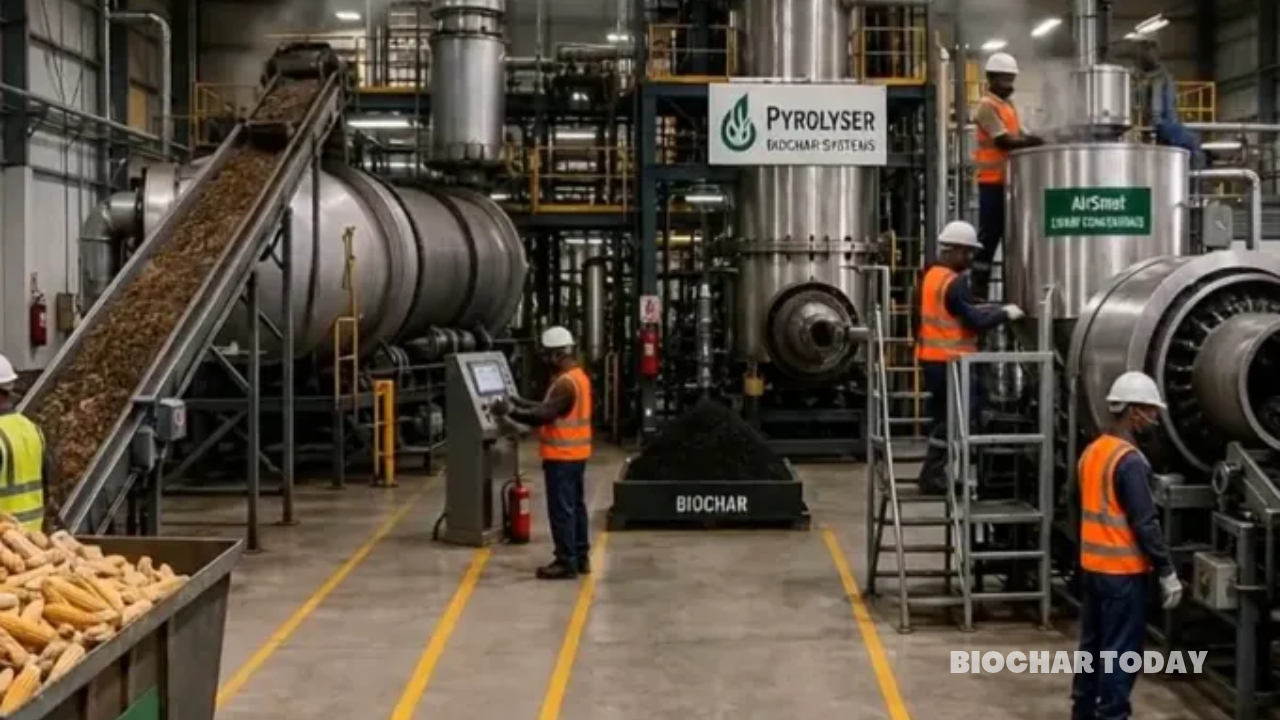
Adding a second improvement—converting discarded dye yam extraction residues into biochar—transformed the facility’s climate balance. Because aqueous pigment extraction recovers only 13.53 percent of the tuber weight, large piles of plant waste remain after dyeing. Heating this residue into biochar required additional electricity and generated 68.2 metric tons of processing emissions, raising the direct environmental impact score to 16.7 kilopoints. However, the resulting biochar sequestered 173 metric tons of carbon dioxide equivalent, reversing the factory’s net carbon budget from negative 142.7 metric tons to a net positive storage balance of 6.0 metric tons. Selling the biochar at 295 dollars per metric ton further lowered net annual production costs to 0.73 million dollars, making the integrated system the most economical option.
Further analysis showed that supply chain logistics strongly influence these gains. Increasing dye yam transport distances from 200 to 800 kilometers erased the net carbon storage advantage, shifting the carbon budget back into net emissions. Similarly, maximizing river mud reuse cycles proved vital for offsetting the energy required during biochar production. Scaled across China’s entire annual output of 50 million meters of gambiered silk, combining river mud recycling with dye yam biochar production could eliminate 33,660 metric tons of fresh mud extraction and achieve net carbon sequestration of 857 metric tons annually, offering a replicable blueprint for sustainable heritage textile manufacturing.
Source: Li, Q., Yeo, J. P.-H., Fang, L., & Liu, K. (2026). Field-based life cycle assessment of resource recycling and biochar strategies for sustainable gambiered silk dyeing. Biochar, 8, 148.



Leave a Reply