
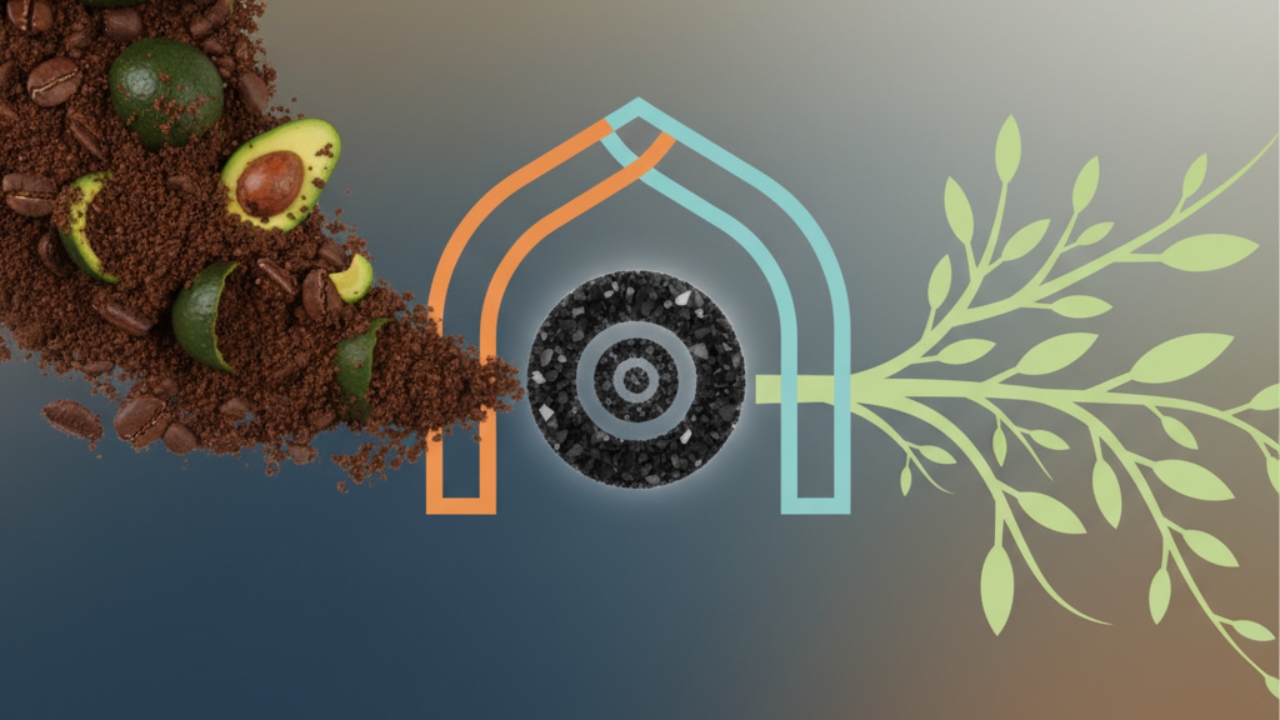
A collaboration between Dutch and Ethiopian entities is transforming agricultural waste into valuable resources. In Ethiopia, large volumes of coffee and avocado byproducts often go unused, while soils suffer from nutrient depletion. The Netherlands Agricultural Network (LAN) team at the Dutch Embassy in Addis Ababa is connecting Dutch innovators with Ethiopian partners to convert these byproducts into oils, feed, and biocharBiochar is a carbon-rich material created from biomass decomposition in low-oxygen conditions. It has important applications in environmental remediation, soil improvement, agriculture, carbon sequestration, energy storage, and sustainable materials, promoting efficiency and reducing waste in various contexts while addressing climate change challenges. More.
Ethiopia’s agro-processing sector generates substantial waste, including fruit pulp, peels, and husks, which often end up in landfills, emitting greenhouse gases and causing environmental problems. For instance, the Yirgalem Industrial Park produces around 200 tons of avocado pits and pulp each season. Similarly, coffee washing stations create vast amounts of coffee pulp. These residues could be used as soil fertilizers, but many farmers apply little to none, exacerbating soil degradation.
To address these challenges, Dutch companies are sharing expertise. Spaak Circular Solutions BV, for example, converts plantain residues into fibers and fertilizers in Ghana. Partnering with the TRAIDE Foundation and local processors, Spaak is exploring the upcycling of avocado and coffee waste into cosmetic ingredients, animal feed, and biochar in Ethiopia. Caffe Inc., another Dutch innovator, offers technology to scale circular approaches across value chains, turning spent coffee grounds into high-value ingredients.
A pilot project is underway in the Sidama region, where coffee and avocado production overlap. This initiative aims to create an integrated model that reduces waste and enhances productivity for local farmers. The cosmetic ingredients extracted from avocado pits and coffee waste can be exported to Europe. The biochar byproduct is distributed to farmers, promoting healthier soils, higher productivity, and greater resilience.
This partnership demonstrates the potential of circular agriculture to address waste management, soil health, and climate change. By connecting Dutch technology with Ethiopian resources, the LAN team is fostering sustainable farming practices and improving rural livelihoods. The model holds promise for replication across Ethiopia and in other agricultural sectors, paving the way for a more resilient and circular bioeconomy.
Source: Dutch–Ethiopian partnerships turning coffee and avocado byproducts into value



Leave a Reply