
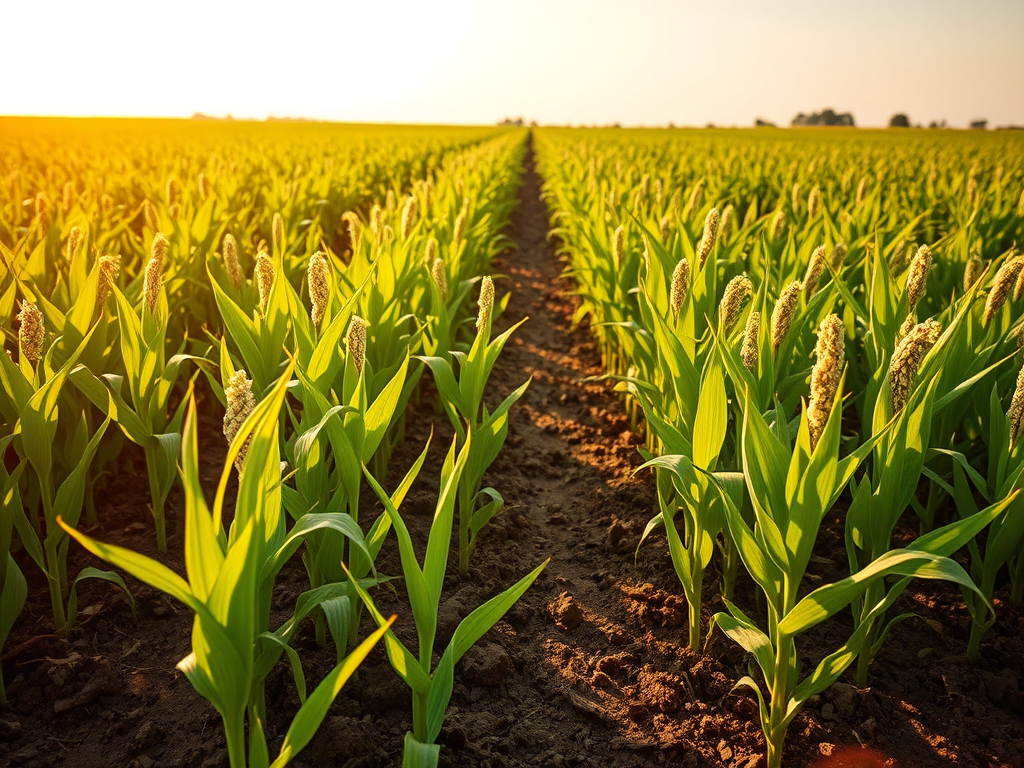
The global population is growing, and with it, the pressure on agricultural soils to meet a projected 70% increase in food demand by 2050. This context makes enhancing soil health a critical focus for achieving agricultural sustainability and resilience, especially as climate change introduces unpredictable weather patterns. A study published by Thapa et al. in the Soil Science Society of America Journal explored how organic amendments—specifically chicken manure, dairy manure, and biochar—impact soil health indicators in a sweet corn-sorghum rotation in southeast Texas. The experiment used a factorial design to evaluate the effects of two biocharBiochar is a carbon-rich material created from biomass decomposition in low-oxygen conditions. It has important applications in environmental remediation, soil improvement, agriculture, carbon sequestration, energy storage, and sustainable materials, promoting efficiency and reducing waste in various contexts while addressing climate change challenges. More rates and two manure types at three application rates.
The research demonstrated that the type of manure significantly influenced the concentration of certain essential nutrients in the soil. For sorghum, dairy manure proved more effective at raising the levels of key cations compared to chicken manure. Soil treated with dairy manure exhibited 45.4% higher potassium (K) and 67.5% higher calcium (Ca) content than soil treated with chicken manure. In contrast, the phosphorus (P) and aluminum (Al) content in soils treated with dairy manure was lower, specifically 33.4% and 26.3% lower, respectively, than in soils treated with chicken manure for sorghum. The researchers noted that manure type did not affect the carbon (C) and nitrogen (N) content in this experiment, possibly due to the sandy loam soil’s low cation exchange capacity and high leachingLeaching is the process where nutrients are dissolved and carried away from the soil by water. This can lead to nutrient depletion and environmental pollution. Biochar can help reduce leaching by improving nutrient retention in the soil. More rates leading to easy nutrient loss. Beyond the type of manure, the application rate played a decisive role in enriching the soil chemically. Increasing the manure rate from the control to the double recommended rate significantly boosted nutrient levels. The double recommended rate resulted in the highest concentrations of P, Ca, magnesium (Mg), and manganese (Mn), surpassing levels in the control group. This pattern highlights that higher manure rates are effective at delivering organic matter and nutrients to the soil, which can improve soil health and crop productivity. Conversely, aluminum (Al) concentrations were significantly higher in the control treatments than at the double recommended rate, indicating that manure application can alter soil chemical properties related to acidity.
While manure focused on boosting nutrient content, biochar’s contribution was primarily to soil physical health. The biochar application rate did not significantly affect soil nutrient concentrations in the study. Instead, it improved soil structure, particularly in the sweet corn plots. Higher biochar rates increased porosityPorosity of biochar is a key factor in its effectiveness as a soil amendment and its ability to retain water and nutrients. Biochar’s porosity is influenced by feedstock type and pyrolysis temperature, and it plays a crucial role in microbial activity and overall soil health. Biochar More and saturated hydraulic conductivity (Ksat) while simultaneously reducing bulk density. The porous structure of biochar allows it to enhance soil porosity and decrease bulk density upon application.
A significant finding was the difference in nutrient uptake and retention between the two crops. Although the sweet corn required and received a higher manure application rate, the soil nutrient concentrations were greater following the sorghum harvest. This disparity is attributed to the crops’ root systems. Sweet corn has a shallower, dense, and fibrous root system, accessing mainly readily available nutrients in the topsoil. Sorghum, with its deep and extensive root system, can extract nutrients from deeper soil layers, which influences the residual nutrient levels measured in the topsoil after harvest. The physical properties of the soil also differed by crop, with sorghum showing a stronger association with physical properties like porosity and Ksat in response to the amendments compared to sweet corn’s more pronounced response regarding nutrient availability. Correlation analysis reinforced these structural connections. Bulk density was found to be negatively correlated with key nutrients such as K, Mg, and Ca. Conversely, porosity and Ksat showed positive correlations with nutrient availability, suggesting that a well-structured soil with good water movement is crucial for nutrient accessibility to plant roots. This holistic understanding emphasizes the need for a balanced approach to organic amendments. The study concludes that tailoring the combined use of manure and biochar to the specific crop and environmental conditions can optimize soil fertility and support sustainable agricultural practices under a changing climate.
Source: Thapa, B., Awal, R., Fares, A., Rahman, A., Veettil, A., Elhassan, A., & KC, N. (2025). Improving soil health through manure and biochar amendments under climate‐smart agriculture. Soil Science Society of America Journal, 89, e70129.




Leave a Reply