
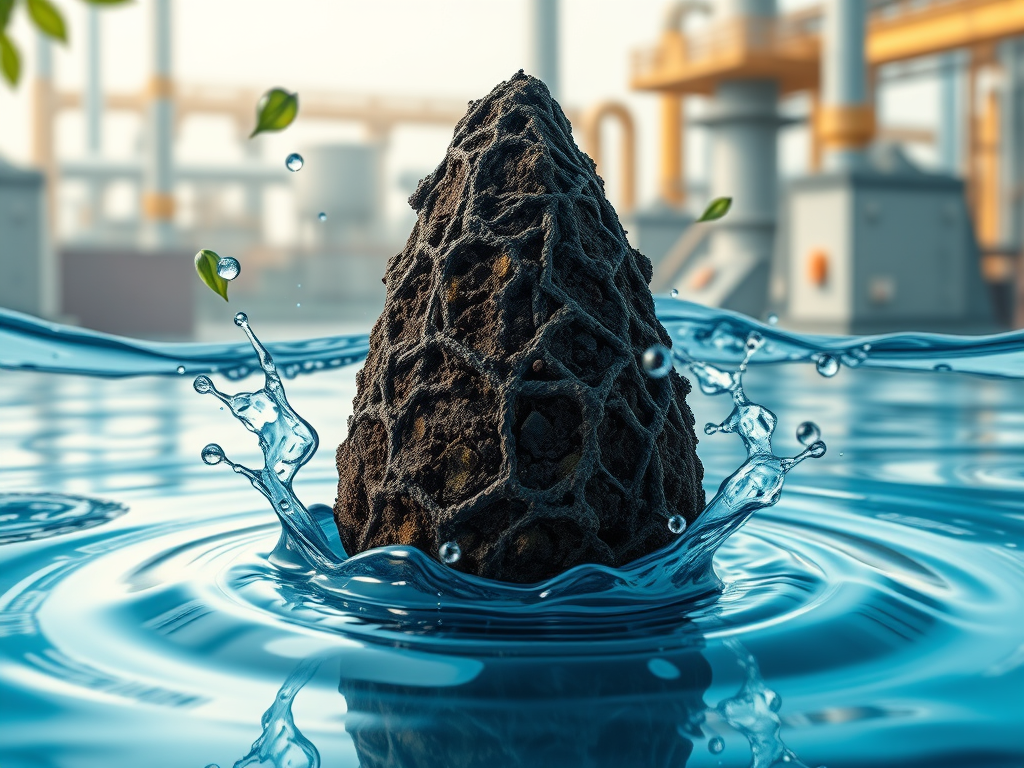
Recent study published in Scientific Reports, Ahmed et al., investigate a novel approach to removing toxic dyes from wastewater using biocharBiochar is a carbon-rich material created from biomass decomposition in low-oxygen conditions. It has important applications in environmental remediation, soil improvement, agriculture, carbon sequestration, energy storage, and sustainable materials, promoting efficiency and reducing waste in various contexts while addressing climate change challenges. More derived from Delonix regia seed pods. The biochar-sulfur composite (DRB-S) was tested for its efficiency in adsorbing Acid Yellow 36 (AY36) and Direct Blue 86 (DB86), two dyes commonly found in industrial effluents.
The research demonstrated that DRB-S effectively adsorbed the dyes at an optimal pHpH is a measure of how acidic or alkaline a substance is. A pH of 7 is neutral, while lower pH values indicate acidity and higher values indicate alkalinity. Biochars are normally alkaline and can influence soil pH, often increasing it, which can be beneficial More of 1.5. Equilibrium was reached within 30 minutes for AY36 and 90 minutes for DB86, with adsorption capacities of 270.27 mg/g for AY36 and 36.23 mg/g for DB86. These high adsorption rates are attributed to the biochar’s porous structure and functional groups, which promote chemisorption and homogeneous dye distribution.
Advanced characterization techniques such as FTIR and SEM revealed the functional groups and structural integrity of DRB-S. The adsorption process was best described by the Langmuir and pseudo-second-order models, indicating a monolayer adsorption mechanism and electron exchange between the dye molecules and the biochar surface. Additionally, DRB-S proved reusable, maintaining high adsorption efficiency across six regeneration cycles.
This study highlights the potential of DRB-S as an economical and eco-friendly adsorbent for wastewater treatment. By utilizing Delonix regia seed pods, a largely untapped agricultural byproduct, the research promotes a sustainable method to mitigate water pollution caused by industrial dye effluents. Future studies could explore scaling up this method and evaluating its efficiency under real-world conditions.
SOURCE: Eleryan, A., Aigbe, U. O., Ukhurebor, K. E., Hassaan, M. A., Ragab, S., Osibote, O. A., Hossain, I., & El Nemr, A. (2025). Adsorption of Acid Yellow 36 and Direct Blue 86 dyes to Delonix regia biochar-sulfur. Scientific Reports, 15(3448). https://doi.org/10.1038/s41598-025-85405-4



Leave a Reply