
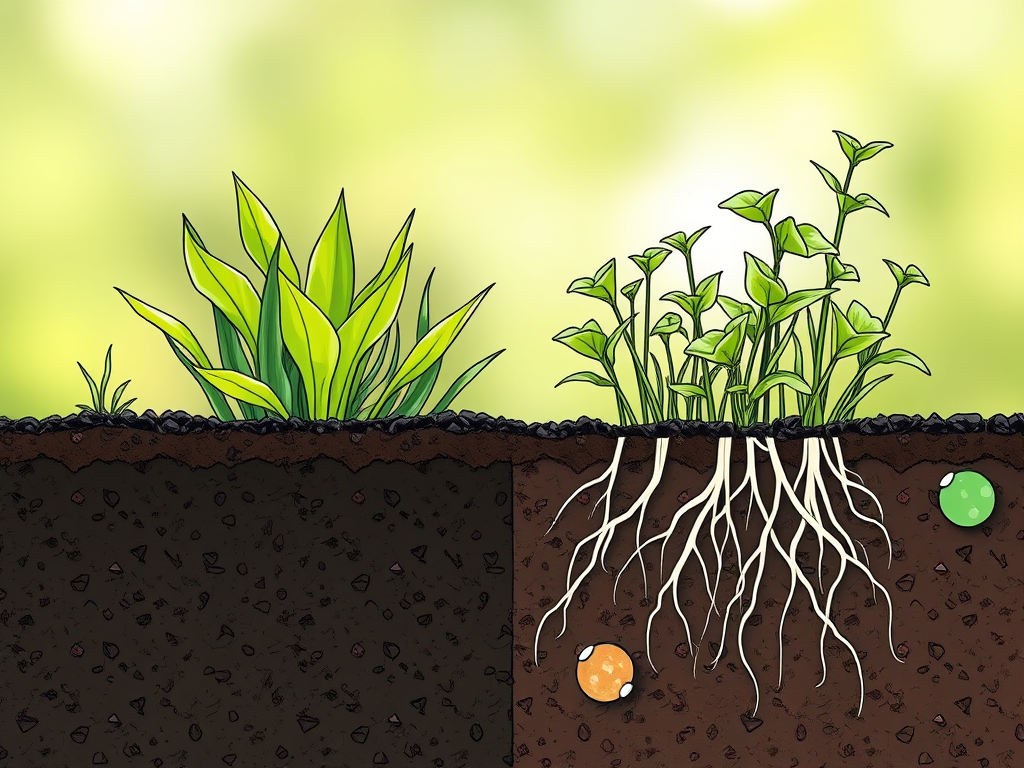
In an important study published in the journal BiocharBiochar is a carbon-rich material created from biomass decomposition in low-oxygen conditions. It has important applications in environmental remediation, soil improvement, agriculture, carbon sequestration, energy storage, and sustainable materials, promoting efficiency and reducing waste in various contexts while addressing climate change challenges. More, Tao Sun, Yuebing Sun, and their colleagues have provided new and critical insights into how a seemingly simple waste material can be used to manage a dangerous environmental pollutant. Arsenic contamination in soil is a global problem that threatens food safety and human health. This research focuses on the dual roles of crayfish shell biochar (CSBC) in influencing the fate of arsenic in both acidic and alkaline aerobic soils, revealing that its effect is entirely dependent on the soil’s pHpH is a measure of how acidic or alkaline a substance is. A pH of 7 is neutral, while lower pH values indicate acidity and higher values indicate alkalinity. Biochars are normally alkaline and can influence soil pH, often increasing it, which can be beneficial More. The authors’ findings reveal a complex interaction between the biochar, soil chemistry, and microbial life, demonstrating that while CSBC can effectively lock up arsenic in alkaline soil, it can paradoxically cause the pollutant to become more mobile in acidic conditions.
The researchers discovered that applying CSBC to alkaline soil decreased the available arsenic content by 4.5-9.9% compared to untreated soil. This is a significant and promising finding, showing that the biochar acts as an effective remediation agent in these conditions. The mechanism behind this success is rooted in the biochar’s unique properties. The CSBC, which has an alkaline nature itself, provides additional bonding sites on its surface that readily adsorb arsenic anions, thereby mitigating the environmental risk. The study also found that the CSBC slightly increased the pH of the alkaline soil, which further promoted the stabilization of arsenic. In essence, the biochar’s positively charged surface attracts the negatively charged arsenic species, holding them in place and preventing them from leachingLeaching is the process where nutrients are dissolved and carried away from the soil by water. This can lead to nutrient depletion and environmental pollution. Biochar can help reduce leaching by improving nutrient retention in the soil. More into groundwater or being absorbed by plants. The study confirmed that arsenic-binding aluminum compounds were significantly increased by the addition of the biochar, providing another layer of immobilization. This demonstrated a clear, positive effect of CSBC on alkaline soils, offering a sustainable and cost-effective way to manage arsenic contamination in such environments.
The results for acidic soils, however, told a very different story. The same CSBC material that was effective in alkaline soil actually increased the content of available arsenic in acidic soil by 19.6-26.8%. This surprising result highlights the complexity of soil remediation and the importance of considering environmental context. The authors found that several factors contributed to this increase in arsenic mobility. First, the application of CSBC significantly raised the pH of the acidic soil by 2.97-3.21 units. This pH increase, while seemingly minor, caused a reaction where an abundance of hydroxide ions competed with arsenic for adsorption sites on soil particles, leading to the desorption and release of arsenic.
Furthermore, the study showed that the CSBC addition stimulated microbial activity in the acidic soil, particularly enhancing microbial membrane transport and signal transport functions. The biochar also increased the relative abundance of certain microbial genera, such as Bradyrhizobium, Sphingomonas, and Streptomyces, which possess genes for arsenic metabolism. These microorganisms contain genes like arsC and arrB, which are responsible for reducing the less mobile arsenic species, As(V), to the more mobile As(III). The presence of these genes and the corresponding increase in their relative abundance led to an increase in the conversion of arsenic into its more bioavailable form. The application of CSBC increased the abundance of these genes, with the relative abundance of arsC and arrB increasing by 2.15-4.85% and 3.13-3.80%, respectively. This microbial-mediated process, combined with changes in soil chemistry, worked to increase the mobility and potential risk of arsenic in acidic soil. The research provides a crucial warning that “one size fits all” solutions in environmental science are not always effective and that a thorough understanding of the underlying mechanisms is paramount.
Source: Sun, T., Sun, Y., Pei, P., Huang, Q., Wang, C., Wu, S., Zhou, X., Xu, Y., Zhang, C., Mailhot, G., & Vione, D. (2025). Dual roles of crayfish shell biochar on the fate of arsenic in acid and alkaline aerobic soils: insights from dissolved organic matter and metabolism genes. Biochar, 7(47).



Leave a Reply