
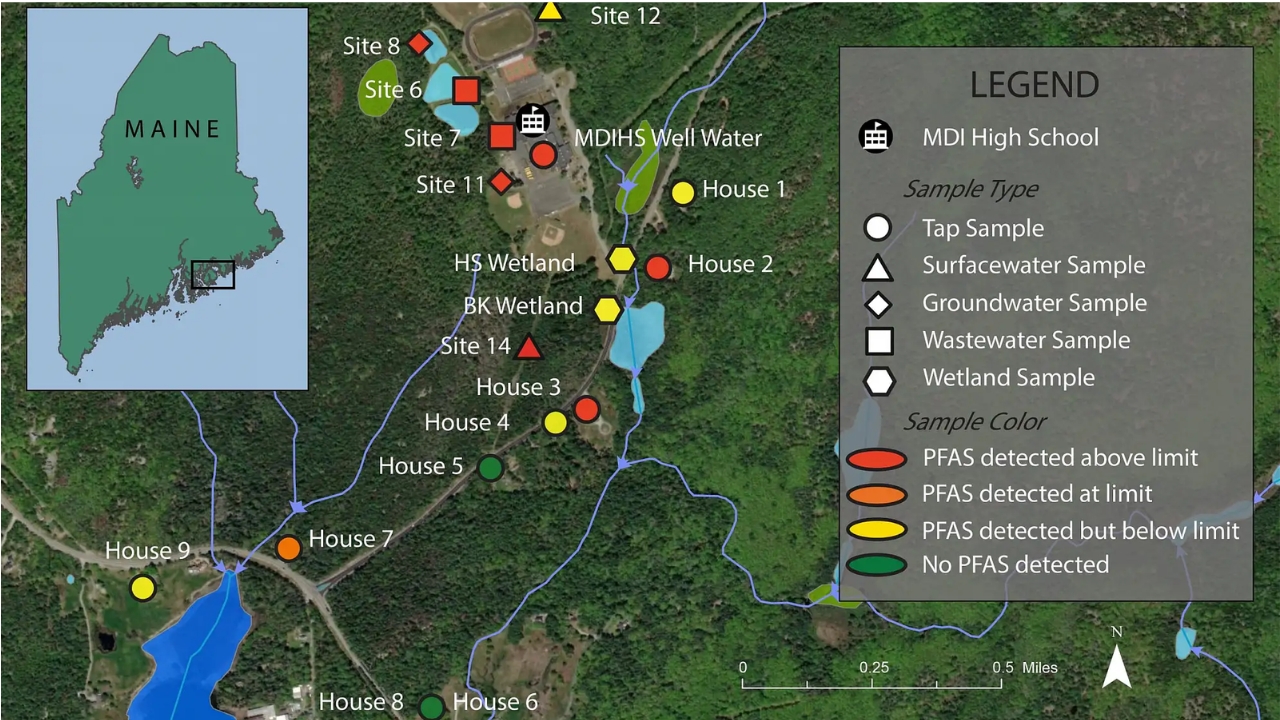
A multi-institutional consortium in the United States, including the College of the Atlantic, MDI Biological Laboratory, Northern Tilth, Maine Laboratories, and the Roux Institute at Northeastern University, recently secured a $50,000 grant to develop specialized filtration systems. Awarded at the Life Sciences Impact Forum, the funding supports a collaborative initiative to intercept per- and polyfluoroalkyl substances (PFAS) before they infiltrate coastal ecosystems. The project focuses on the design and deployment of “BiocharBiochar is a carbon-rich material created from biomass decomposition in low-oxygen conditions. It has important applications in environmental remediation, soil improvement, agriculture, carbon sequestration, energy storage, and sustainable materials, promoting efficiency and reducing waste in various contexts while addressing climate change challenges. More Bags” as a strategic barrier against point-source pollution entering marine environments.
The primary challenge addressed by this initiative is the migration of “forever chemicals” from terrestrial groundwater into sensitive maritime habitats. In Maine, researchers identified a direct link between PFAS-contaminated groundwater and elevated chemical levels in tidal mud flats, affecting local populations of clams and crabs. Traditional remediation often struggles with the scalability and cost-effectiveness required to treat dispersed runoff. Without intervention, these contaminants threaten high-yield shellfish harvesting areas and licensed aquaculture sites, posing long-term risks to both ecological health and the commercial viability of the regional seafood industry.
The proposed solution involves the engineering of Biochar Bags, which utilize a charcoal-like filtering medium derived from organic matter. By placing these bags at critical junctions, such as culverts and drainage points, the team intends to create a functional filter that captures PFAS molecules from flowing water. This method leverages the high adsorption capacity of biochar to sequester contaminants in situ. The project combines the expertise of soil scientists, who specialize in organic waste recycling and biochar production, with environmental health researchers and earth systems faculty to optimize the filter design for coastal hydrology.
Projected outcomes for the initiative include the deployment of field prototypes by early 2026, specifically targeting a culvert near Somes Sound in Acadia National Park. Success in this pilot phase could lead to a scalable, low-cost commercial product for broader PFAS mitigation. Furthermore, the implementation of this technology may provide a regulatory and marketing advantage for the aquaculture sector; successful filtration could allow producers to certify products as “harvested from a PFAS-protected area.” This collaboration serves as a model for cross-institutional efforts to address localized environmental contamination using sustainable materials.



Leave a Reply