
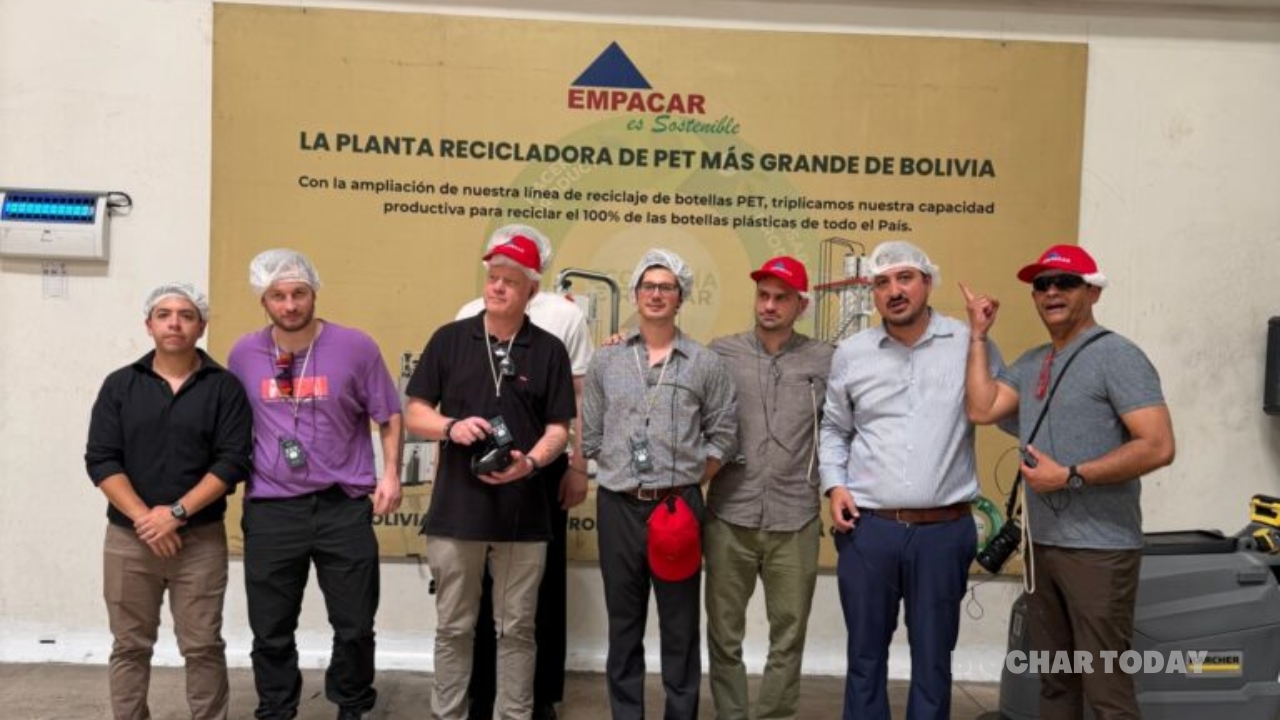
In Bolivia, packaging company Empacar S.A. launched CarbonX, a dedicated business unit designed to enter the global voluntary carbon market by scaling biocharBiochar is a carbon-rich material created from biomass decomposition in low-oxygen conditions. It has important applications in environmental remediation, soil improvement, agriculture, carbon sequestration, energy storage, and sustainable materials, promoting efficiency and reducing waste in various contexts while addressing climate change challenges. More carbon removal. Supported by carbon removal advisory firm BioFlux, the initiative aims to remove approximately 70,000 tonnes of carbon dioxide equivalent annually by establishing pyrolysisPyrolysis is a thermochemical process that converts waste biomass into bio-char, bio-oil, and pyro-gas. It offers significant advantages in waste valorization, turning low-value materials into economically valuable resources. Its versatility allows for tailored products based on operational conditions, presenting itself as a cost-effective and efficient More operations in the Guarayos region of Santa Cruz department. The project leverages Guarayos’ position as a major forestry corridor, aggregating low-value woody residues such as bark, chips, offcuts, and branch wood from a dense network of regulated sawmills. This industrial concentration of biomassBiomass is a complex biological organic or non-organic solid product derived from living or recently living organism and available naturally. Various types of wastes such as animal manure, waste paper, sludge and many industrial wastes are also treated as biomass because like natural biomass these More provides consistent feedstockFeedstock refers to the raw organic material used to produce biochar. This can include a wide range of materials, such as wood chips, agricultural residues, and animal manure. More density while mitigating uncontrolled stockpiling and the risk of destructive wildfires caused by open burning.
A primary challenge facing the project involves navigating complex equipment validation and establishing regulatory frameworks for an emerging sector in Latin America. Because national forestry regulations managed by Bolivia’s land authorities were historically designed for traditional timber and charcoalCharcoal is a black, brittle, and porous material produced by heating wood or other organic substances in a low-oxygen environment. It is primarily used as a fuel source for cooking and heating. More operations, they lacked specific protocols for biochar tracking and certification. Empacar addressed this by collaborating with local authorities to align regional chain-of-custody documentation with carbon removal standards. Furthermore, validating industrial-scale technology required iterative design testing, while rigorous supply chain due diligence was necessary to confirm that biomass originates exclusively from legal, residual forestry activities without driving secondary harvesting incentives.
To resolve supply chain and certification constraints, BioFlux guided CarbonX through an audit-ready framework targeting Puro.earth methodology standards. The operational model incorporates a diversified network of regional sawmill suppliers rather than relying on a single source, using mass-balance checks and digital tracking via dynamic measurement, reporting, and verification supplier Cula. Sourcing residues within a tight radius minimizes lifecycle transportation emissions. For the downstream strategy, the project prioritizes local agricultural soil application, including direct soil amendmentA soil amendment is any material added to the soil to enhance its physical or chemical properties, improving its suitability for plant growth. Biochar is considered a soil amendment as it can improve soil structure, water retention, nutrient availability, and microbial activity. More and composting for soy plantations, which anchors a verifiable carbon sink close to the production site while reducing transport logistics.
The initiative establishes a transparent, auditable carbon removal pipeline capable of generating verified carbon removal certificates for global buyers. Beyond target carbon sequestration, converting forestry waste into biochar addresses severe regional environmental issues by mitigating agricultural slash-and-burn practices, reducing wildfire hazards, and improving air quality for local indigenous communities. Agronomically, the biochar enhances soil health in degraded lowlands by improving water retention, neutralizing acidity, and increasing nutrient efficiency. CarbonX intends to replicate this integrated forestry-agriculture business model across additional sites in Bolivia and broader Latin American markets.



Leave a Reply