
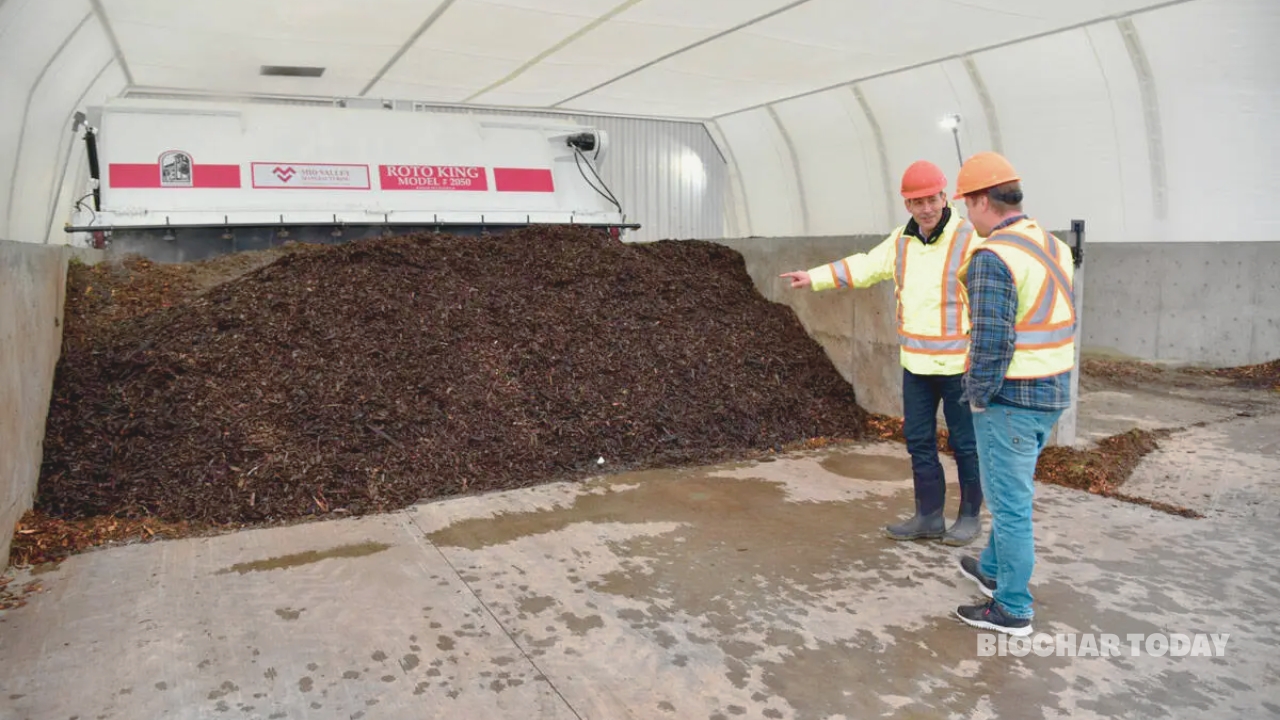
The Capital Regional District (CRD) in Canada has launched a public engagement process regarding future biosolids treatment options in Saanich, Canada. The initiative includes facility tours and an online survey designed to inform residents and gather feedback on long-term biosolids management strategies. The process forms part of the CRD’s broader planning effort to address wastewater byproducts and evaluate advanced thermal technologies, including systems capable of converting biosolids into biocharBiochar is a carbon-rich material created from biomass decomposition in low-oxygen conditions. It has important applications in environmental remediation, soil improvement, agriculture, carbon sequestration, energy storage, and sustainable materials, promoting efficiency and reducing waste in various contexts while addressing climate change challenges. More. Public consultation reflects a governance-driven approach to infrastructure planning that integrates technical assessment with community participation.
The primary challenge addressed by the CRD centers on managing increasing volumes of biosolids generated through regional wastewater treatment while maintaining regulatory compliance and environmental standards. Existing disposal and out-of-region management methods present logistical, economic, and environmental constraints. The regional authority must also navigate public concerns related to treatment technologies, facility siting, and long-term environmental impacts. Ensuring transparent decision-making and securing social acceptance remain central issues as the region evaluates alternatives that differ substantially from traditional biosolids handling practices.
The proposed solution under review involves advanced thermal processing technologies, such as pyrolysisPyrolysis is a thermochemical process that converts waste biomass into bio-char, bio-oil, and pyro-gas. It offers significant advantages in waste valorization, turning low-value materials into economically valuable resources. Its versatility allows for tailored products based on operational conditions, presenting itself as a cost-effective and efficient More or gasificationGasification is a high-temperature, thermochemical process that converts carbon-based materials into a gaseous fuel called syngas and solid by-products. It takes place in an oxygen-deficient environment at temperatures typically above 750°C. Unlike combustion, which fully burns material to produce heat and carbon dioxide (CO2), gasification More, that convert biosolids into biochar and other usable outputs. These processes reduce waste volume and transform residual material into stable carbon products suitable for beneficial applications. The CRD’s long-term management strategy prioritizes development of a demonstration facility to test operational viability and environmental performance. Public consultation is intended to shape project direction, inform technology selection, and support regulatory approvals required for implementation.
Expected outcomes from the engagement process include improved public understanding of biosolids management options and clearer guidance for regional decision-makers. The consultation may influence facility design, technology deployment, and implementation timelines for advanced thermal processing projects. If pursued, biosolids-to-biochar conversion could support resource recovery objectives and reduce reliance on external disposal pathways. More broadly, the process illustrates how regional governments are incorporating stakeholder input into infrastructure transitions that emphasize circular resource management and environmental accountability.


Leave a Reply