
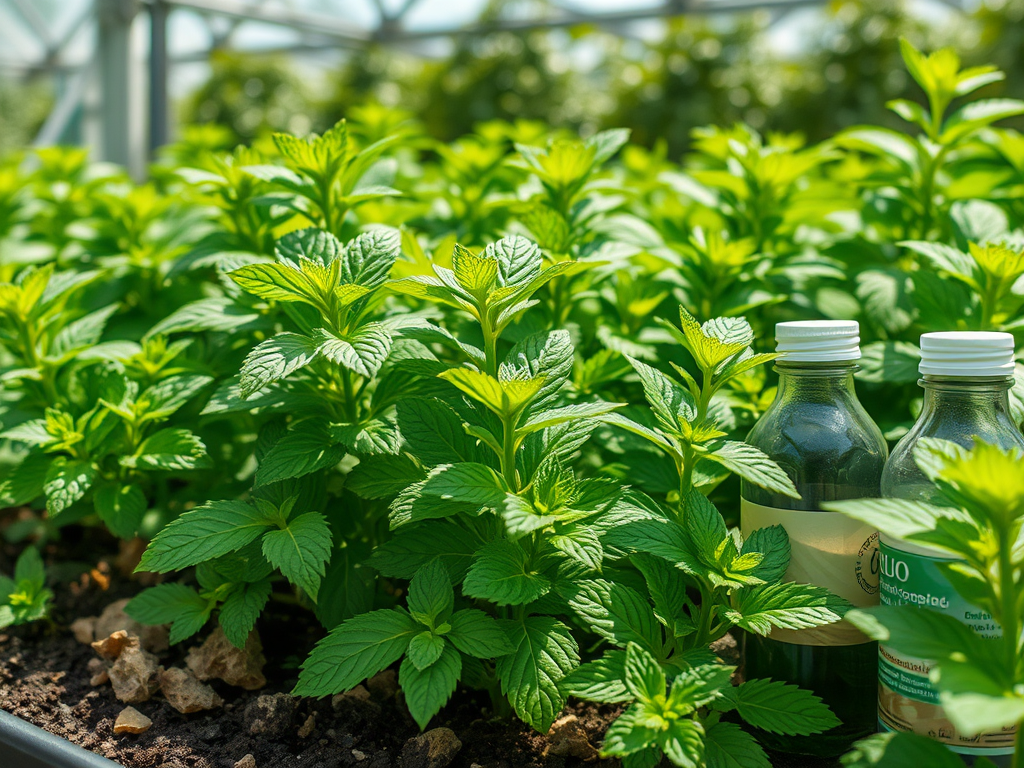
Mint (Mentha spicata) is a valuable plant used in food, medicine, and cosmetics. Its growth depends on nutrients and soil quality, which biocharBiochar is a carbon-rich material created from biomass decomposition in low-oxygen conditions. It has important applications in environmental remediation, soil improvement, agriculture, carbon sequestration, energy storage, and sustainable materials, promoting efficiency and reducing waste in various contexts while addressing climate change challenges. More and liquid organic fertilizer (LOF) from fish waste can improve. In a study published in BIO Web of Conferences, Muji Rahayu and colleagues explored how these amendments affect mint’s physiological activities, such as photosynthesis, transpiration, and chlorophyll production.
The researchers tested three types of biochar (none, palm fiber, and rice husk) and four levels of fish waste LOF (none, 5 ml/L, 10 ml/L, and 15 ml/L). The results were mixed. Palm fiber biochar significantly increased chlorophyll levels, making leaves greener and enhancing photosynthesis potential. Fish waste LOF, at 15 ml/L, boosted the plant’s transpiration rate, improving water and nutrient uptake. However, neither treatment significantly affected photosynthesis rate, stomatal conductance, or growth rate over the study period.
Why? Biochar releases nutrients slowly, requiring time to impact plant physiology. Likewise, the fish waste fertilizer may not have provided enough nitrogen to trigger rapid changes. Environmental factors, such as high temperatures in the greenhouse, may have also influenced the results.
This study highlights the potential of biochar and organic fertilizers in sustainable agriculture but underscores the need for long-term research to refine their effectiveness. Future studies could explore different biochar compositions, higher fertilizer doses, or extended growth periods to maximize their benefits for mint cultivation.
SOURCE: Rahayu, M., Rahmawan, B., Sakya, A. T., Setyawati, A., Handoyo, G. C., & Anggraini, R. K. (2025). The effect of biochar and liquid organic fertilizer on Mentha spicata physiological activities. BIO Web of Conferences, 155, 01030. https://doi.org/10.1051/bioconf/202515501030



Leave a Reply