
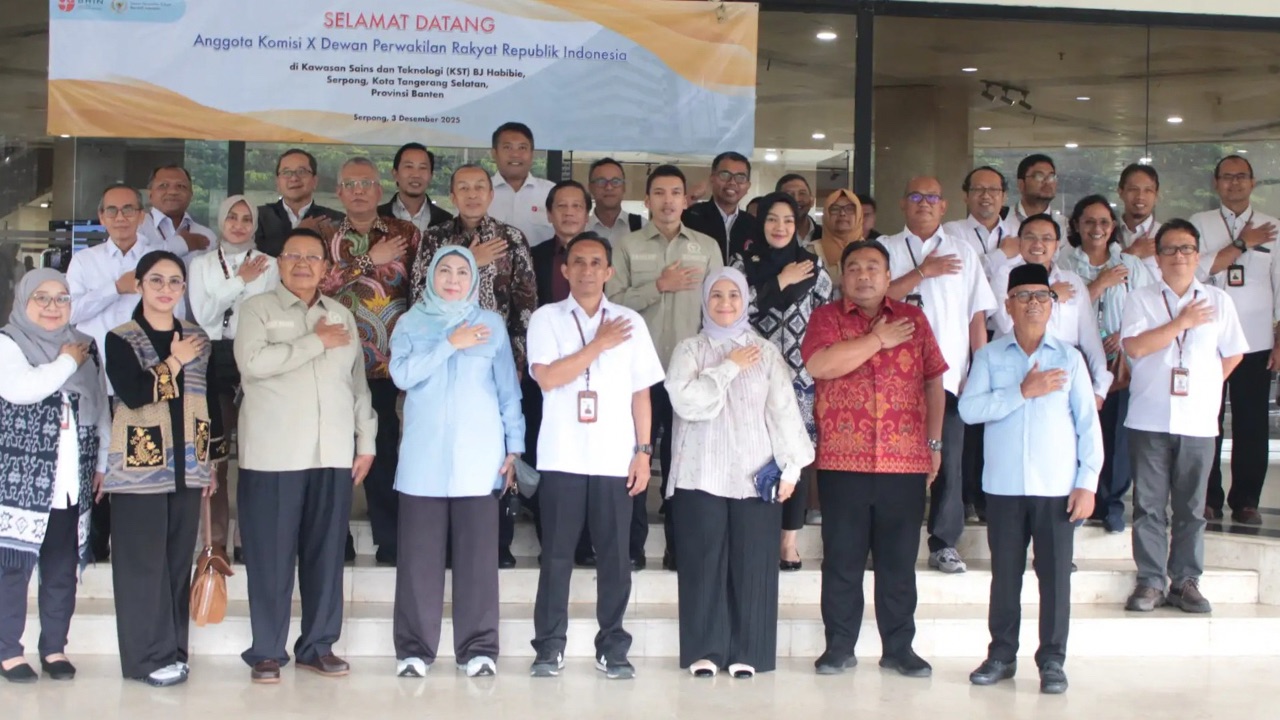
The National Research and Innovation Agency (BRIN) in Indonesia has identified the development of palm oil-based derivatives as a priority within its Research Center for Molecular Chemistry. During a recent review by Commission X of the House of Representatives at the B.J. Habibie Science and Technology Area (KST) in Serpong, agency leadership highlighted ongoing efforts to innovate within the chemical sector. The visit underscored the agency’s broader initiative to align scientific output with national industrial needs, utilizing the extensive facilities available at the KST to foster advancements in material science and biological applications.
The primary challenge addressed by this initiative is the critical need for strategic materials capable of supporting future industrial demands. As global markets evolve, there is increasing pressure to transition from raw resource extraction to the creation of high-value derivatives that serve specific industrial functions. BRIN’s leadership noted that developing these strategic materials is essential for securing a competitive edge in future manufacturing and industrial sectors. Furthermore, the challenge lies in ensuring that these sophisticated innovations successfully transition from the laboratory bench to practical, widespread application in the commercial sector.
To tackle these issues, the Research Center for Molecular Chemistry is actively conducting research into biocharBiochar is a carbon-rich material created from biomass decomposition in low-oxygen conditions. It has important applications in environmental remediation, soil improvement, agriculture, carbon sequestration, energy storage, and sustainable materials, promoting efficiency and reducing waste in various contexts while addressing climate change challenges. More derived from palm oil. This specific research stream is part of a larger portfolio of palm oil-based innovations, which also includes the development of surfactants for poultry vaccines. By focusing on molecular chemistry, researchers are engineering biochar products designed to meet specific material standards. This development is supported by BRIN’s state-of-the-art infrastructure, including a laboratory of advanced imaging and spectroscopy—cited as one of the most complete in Southeast Asia—and high-performance instruments like the 700 MHz NMR, which allow for precise characterization of material properties essential for advanced biochar applications.
The anticipated outcome of this research is the integration of these palm oil-based materials into the broader industrial ecosystem, supported by robust policy and infrastructure. The Deputy for Research and Innovation Facilitation expressed optimism that the oversight visit would help expand the utilization of BRIN’s research results across various sectors, including industry and local government. By leveraging advanced characterization facilities, the agency aims to ensure that the new biochar materials are rigorously tested and ready for downstream adoption, thereby fulfilling the strategic goal of enhancing the value chain of national commodities.
For biochar industry stakeholders, this development illustrates the vital role of advanced instrumentation and government alignment in accelerating material science. The effective characterization of feedstock-specific biochar requires access to high-level spectroscopic and imaging technology, a resource often centralized in national research bodies. The collaboration between legislative bodies and research institutions serves as a powerful catalyst for ensuring that such scientific resources are effectively directed toward creating commercially viable, sustainable industrial materials.




Leave a Reply