
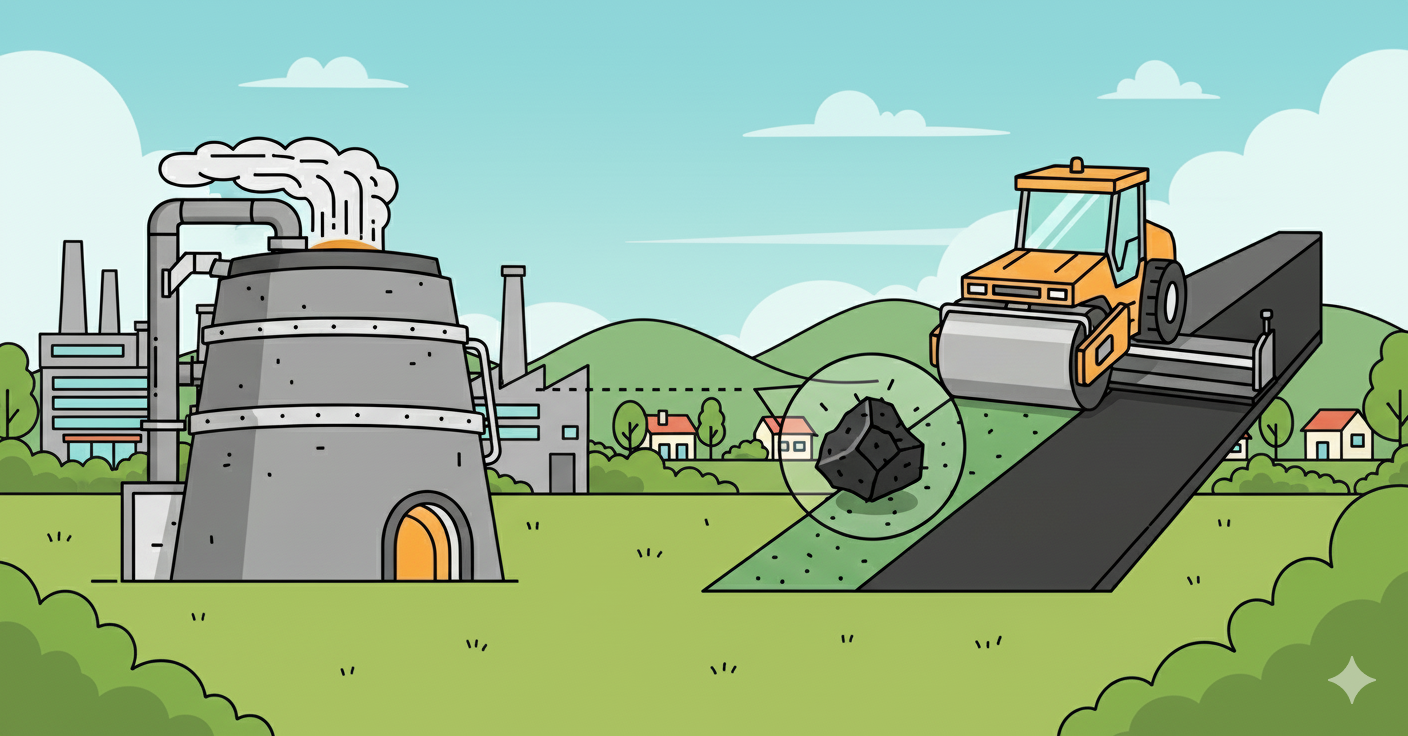
In a move to expand the application of carbon removal technologies, BluSky Carbon Inc. and Carbonpave USA have announced a new strategic partnership aimed at developing and commercializing a carbon-based solution for the asphalt industry. The collaboration will take the form of a joint venture, where BluSky Carbon will hold a 70% ownership stake, with Carbonpave USA owning the remaining 30%. This agreement is designed to deploy a new “green asphalt” technology throughout the North American market.
The partnership is contingent on BluSky Carbon securing an initial investment of $4.75 million USD by February 18, 2026. This funding will be used to establish the first joint production facility, which will be the central hub for manufacturing the innovative asphalt product. The technology leverages BluSky’s position as a clean technology company in the carbon removal sector, utilizing materials like biocharBiochar is a carbon-rich material created from biomass decomposition in low-oxygen conditions. It has important applications in environmental remediation, soil improvement, agriculture, carbon sequestration, energy storage, and sustainable materials, promoting efficiency and reducing waste in various contexts while addressing climate change challenges. More to enhance the environmental profile of traditional construction materials.
Under the terms of the agreement, the newly formed joint venture will have exclusive rights to utilize Carbonpave’s proprietary technologies across North America. In exchange for these rights, the joint venture will pay a royalty fee to Carbonpave. This arrangement is set up to ensure that the technology can be scaled effectively while maintaining a clear and equitable business structure for both parties.
The initiative represents a tangible step in connecting the biochar and carbon removal industries with the large-scale needs of the construction and infrastructure sector. By incorporating carbon-negative materials, such as biochar, into asphalt production, the project aims to create a product that is not only a functional building material but also a form of long-term carbon sequestration. This approach aligns with growing global interest in developing circular economy models and finding new end-use markets for carbon-sequestering materials, providing an example of how waste biomassBiomass is a complex biological organic or non-organic solid product derived from living or recently living organism and available naturally. Various types of wastes such as animal manure, waste paper, sludge and many industrial wastes are also treated as biomass because like natural biomass these More can be transformed into a valuable, climate-beneficial resource.
SOURCE: BluSky Carbon Announces Partnership with Carbonpave



Leave a Reply