

Key Takeaways
- Natural water found inside raw biomassBiomass is a complex biological organic or non-organic solid product derived from living or recently living organism and available naturally. Various types of wastes such as animal manure, waste paper, sludge and many industrial wastes are also treated as biomass because like natural biomass these More directly slows down the overall speed of the chemical reactions during high heat processing.
- Having water present in the raw materials helps retain more organic matter in the solid phase, leading to a higher output of biocharBiochar is a carbon-rich material created from biomass decomposition in low-oxygen conditions. It has important applications in environmental remediation, soil improvement, agriculture, carbon sequestration, energy storage, and sustainable materials, promoting efficiency and reducing waste in various contexts while addressing climate change challenges. More.
- Bound water locked inside plant cells breaks down the structure of hemicellulose much faster and lets it decompose at far lower temperatures.
- Bound water forms a protective, tightly bound network with cellulose that makes it tougher to break down and requires more energy to decompose.
- To perfectly balance production energy costs with the total amount of biochar produced, the wetness of the raw biomass should be kept near thirty percent.
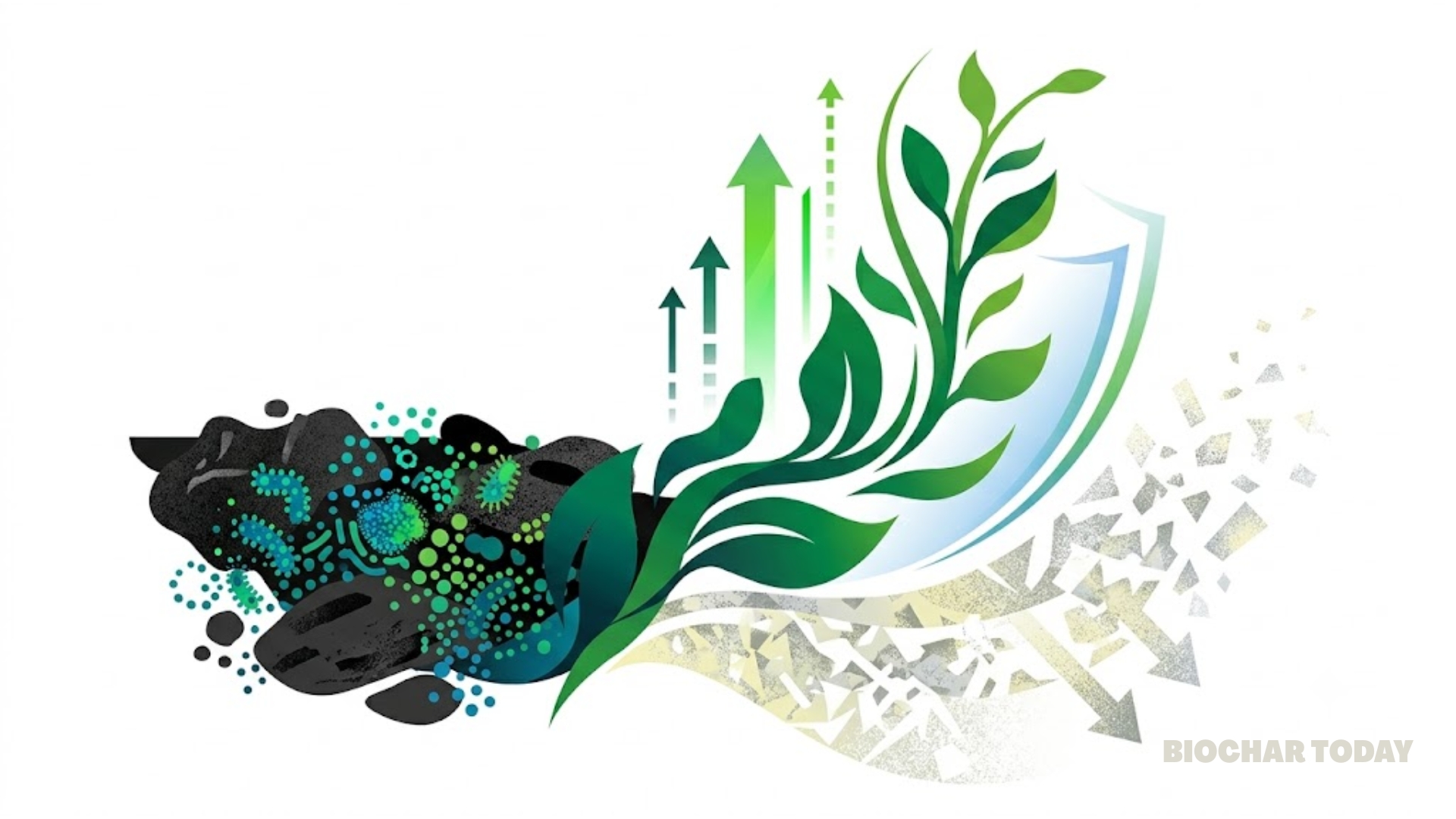
In a recent study published in the journal Biochar, researchers Wenmei Tao, Linjian Gao, Mengzi Li, Yunzhu Wang, Lin Shi, Chengcheng Xu, Xinyuan Lu, and Bo Pan investigated how the initial water content of lignocellulosic biomass shifts its thermochemical behavior during high-temperature conversion. While conventional industrial pyrolysisPyrolysis is a thermochemical process that converts waste biomass into bio-char, bio-oil, and pyro-gas. It offers significant advantages in waste valorization, turning low-value materials into economically valuable resources. Its versatility allows for tailored products based on operational conditions, presenting itself as a cost-effective and efficient More typically prioritizes completely dried feedstocks to minimize thermal requirements, natural biomass frequently contains substantial moisture levels ranging from twenty-five percent to sixty percent. The research team evaluated pure cellulose, pure lignin, and raw rice straw using specialized online thermal analysis and infrared spectroscopy to map how different forms of moisture actively participate in the breakdown of plant components. Their discoveries clarify a major theoretical gap in how wet materials decompose, proving that water behaves as an active chemical participant rather than just an inert secondary element during the manufacturing of biochar.
The experimental findings reveal that both free water, which sits loosely within plant capillaries, and bound water, which is hydrogen-bonded directly to cell walls, fundamentally reduce the maximum thermal decomposition rate across all tested samples. By absorbing large quantities of latent heat during endothermic vaporization, the moisture decreases the actual internal heating rate and lowers the instantaneous reaction intensity. This controlled, slower degradation footprint effectively prevents volatile carbon gases from escaping too rapidly, ensuring that more raw organic matter stays locked inside the solid phase. Consequently, increasing the initial moisture content from ten percent to sixty percent directly increased the final biochar yield across all materials, with pure lignin demonstrating the highest ultimate char retention at seventy-eight percent.
Crucially, the study proved that bound water exerts completely opposing kinetic effects on hemicellulose and cellulose due to their unique molecular geometries. For amorphous hemicellulose, the bound water readily links with hydrophobic acetyl groups and breaks apart the plant’s internal bonds, acting as a chemical plasticizer that lowers the overall activation energy required for thermal cleavage. This hydration mechanism accelerates the total decomposition process, shifting the release of volatile acetic acid gas to significantly lower temperatures. Conversely, crystalline cellulose reacts in the opposite direction. Because cellulose is composed of highly ordered glucose chains, the infiltrating bound water molecules generate an extensive, highly stable secondary hydrogen bond network. This newly formed molecular web shields the cellulose strands, acting as a powerful thermal buffer that significantly increases its activation energy and demands far higher temperatures to break down.
Advanced two-dimensional correlation spectroscopy mapped the exact chronological sequence of how distinct chemical groups respond to water as pyrolysis advances. The precise reaction order follows a path moving from hydroxyl groups to carboxyl groups, continuing through aliphatic carbon bonds, then to carbohydrate structures, and finally ending at stable aromatic rings. This chemical progression indicates that moisture actively encourages the rapid fading of simple volatile groups while accelerating the formation of deeply condensed, stable aromatic carbon blocks inside the final biochar. However, because evaporating excessive moisture consumes heavy amounts of additional process energy, the authors concluded that operators must systematically regulate moisture inputs. Balancing the increased biochar yields against the added operational heating costs, the study determines that the initial water content of biomass feedstocks should be controlled at approximately thirty percent to optimize real-world commercial production.
Source: Tao, W., Gao, L., Li, M., Wang, Y., Shi, L., Xu, C., Lu, X., & Pan, B. (2026). Effect of initial water content on the pyrolysis mechanism of lignocellulosic biomass. Biochar, 8(116), 1-14.



Leave a Reply