
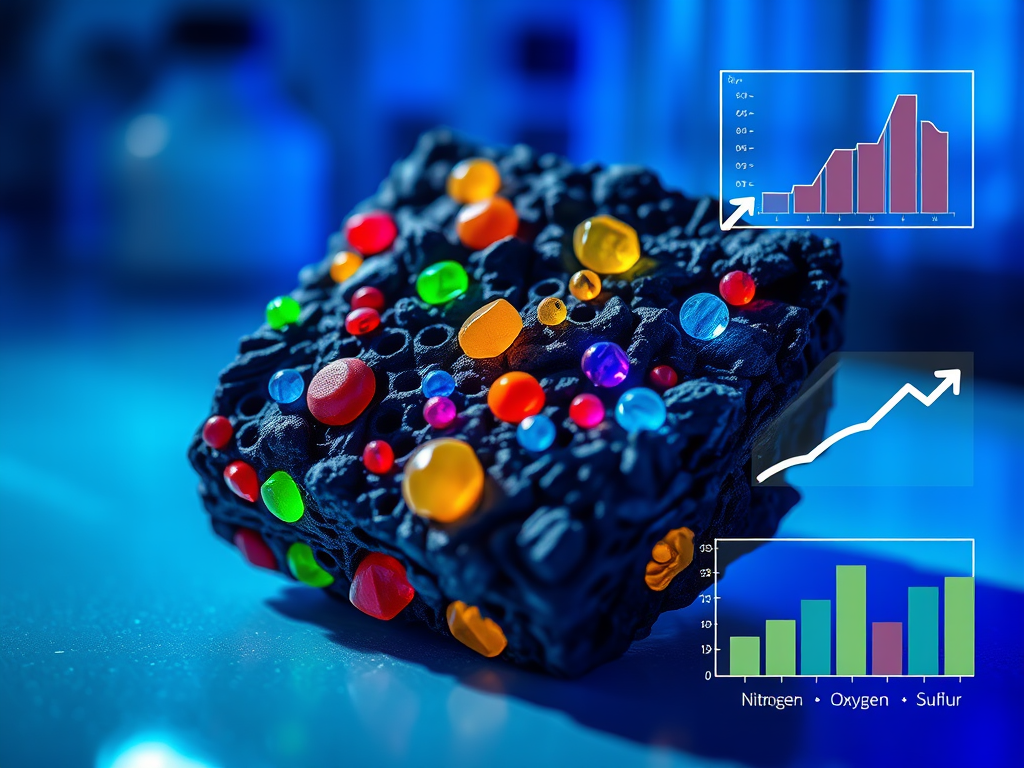
In a recent comprehensive review published in BiocharBiochar is a carbon-rich material created from biomass decomposition in low-oxygen conditions. It has important applications in environmental remediation, soil improvement, agriculture, carbon sequestration, energy storage, and sustainable materials, promoting efficiency and reducing waste in various contexts while addressing climate change challenges. More, authors Junqi Zhao, Yunqiu Jiang, Xinyu Chen, Chongqing Wang, and Hongyan Nan explore how strategically introducing elements into biochar dramatically enhances its properties and expands its applications across various fields, from environmental cleanup to energy storage. Biochar, a carbon-rich material created by heating biomassBiomass is a complex biological organic or non-organic solid product derived from living or recently living organism and available naturally. Various types of wastes such as animal manure, waste paper, sludge and many industrial wastes are also treated as biomass because like natural biomass these More in the absence of oxygen, is already recognized for its potential in carbon sequestration and soil improvement. However, this review delves into “element-doped” biochar, a modified form that exhibits significantly improved functionalities. This innovative approach tailors biochar for specific uses by altering its physical and chemical characteristics.
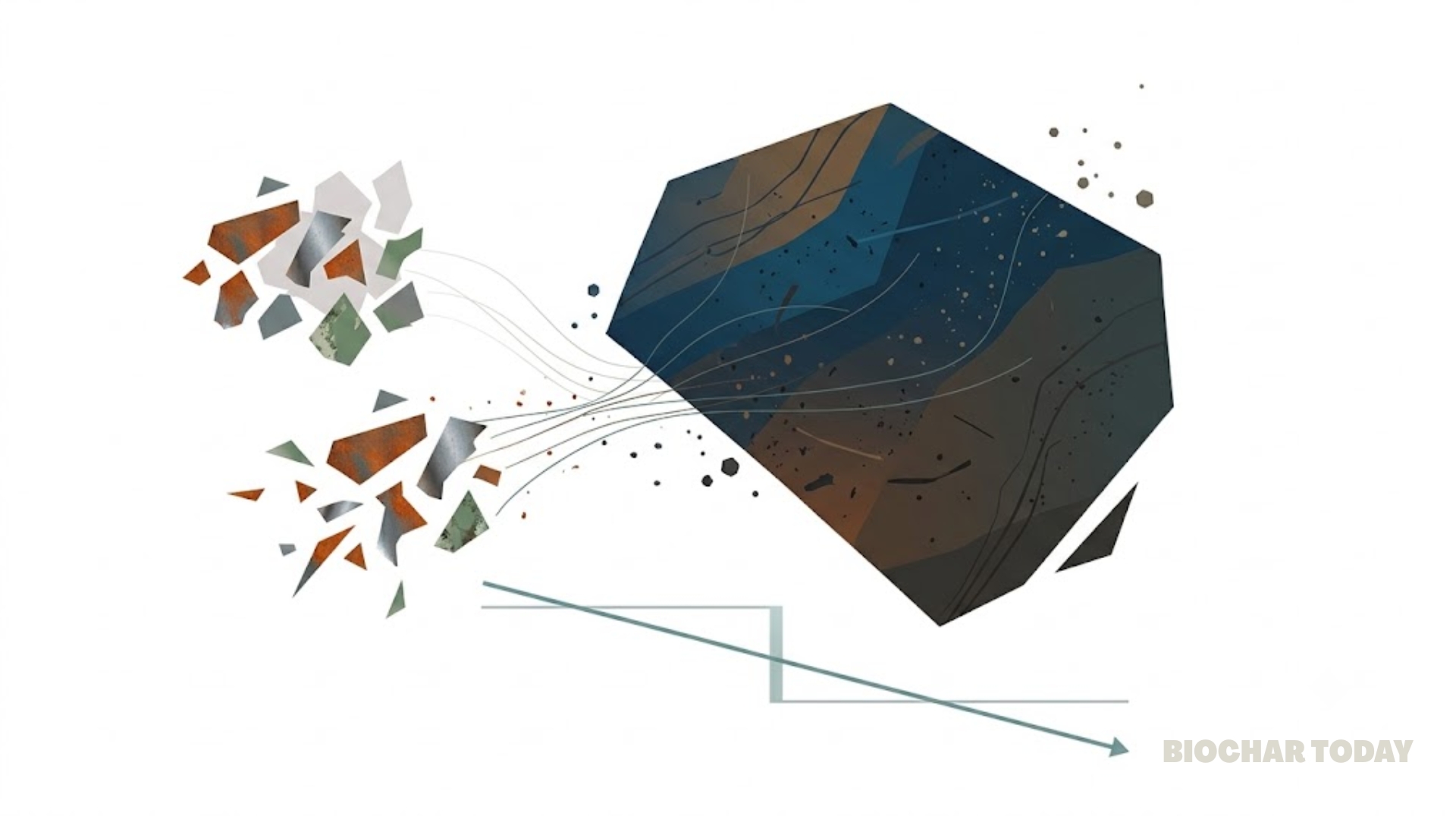
The core of this advancement lies in two primary doping methods: “in-situ” and “exogenous.” In-situ doping involves directly carbonizing biomass that naturally contains desired elements, while exogenous doping introduces external elements to the biochar during or after its creation. While in-situ doping is simpler and cost-effective, exogenous methods offer superior control over the type and quantity of introduced elements, making the final product more predictable and effective for targeted applications.
Element doping profoundly impacts biochar’s surface morphology, pore structure, and graphitization—critical factors for its performance. For instance, adding nitrogen (N) or phosphorus (P) can increase surface roughness and promote the formation of new microporous structures. Oxygen (O) and sulfur (S) doping also create more micropores and expand the specific surface area, providing more active sites for reactions. Quantitatively, N-Fe co-doped biochar derived from wheat straw saw its specific surface area (SBET) skyrocket from 202.3 to 3625 m²g⁻¹, an increase of approximately 17.8 times compared to untreated biochar. This vastly improved surface area translates directly into enhanced adsorption and catalytic capabilities.
The impact of element doping extends significantly to environmental remediation. Biochar’s inherent adsorption capabilities for heavy metals and organic pollutants are dramatically enhanced through doping. For example, phosphorus (P)-doped biochar showed an adsorption capacity over 400 times higher than untreated biochar for flue-gas conditions. In terms of catalysis, doped biochar acts as an excellent catalyst carrier, facilitating redox processes and advanced oxidation reactions. For instance, S-doped biochar has shown an impressive tetracycline adsorption capacity of 505.68 mg g⁻¹.
Beyond pollution control, element-doped biochar offers exciting prospects for carbon sequestration and energy storage. While traditional biochar typically stabilizes about 50% of its carbon from biowaste, studies show that certain metal oxides formed during pyrolysisPyrolysis is a thermochemical process that converts waste biomass into bio-char, bio-oil, and pyro-gas. It offers significant advantages in waste valorization, turning low-value materials into economically valuable resources. Its versatility allows for tailored products based on operational conditions, presenting itself as a cost-effective and efficient More act as physical barriers, significantly improving carbon retention. Phosphorus-doped biochar, for example, demonstrates superior thermal stability, with an initial thermal decomposition temperature 100 to 200°C higher and a mass loss rate reduced by 15-30% in the 600-800°C range, attributed to stable C-P bonds and a more ordered carbon structure. In energy storage, element-doped biochar excels in supercapacitors and ion batteries. A notable achievement is the S-doped activated biochar, which retained 98% of its capacitance after an astonishing 15,000 charge-discharge cycles. Similarly, an N, O co-doped biochar retained 99.2% capacitance after 10,000 cycles. Silicon-doped biochar has also shown a reversible capacity of 478.0 mAh g⁻¹ after 1,000 cycles in lithium-ion batteries.
Emerging applications include cosmetics and advanced bio-composites. Zinc-doped biochar, for instance, effectively adsorbs oils and pollutants from the skin’s surface and inhibits tyrosinase activity, which can reduce melanin production. Silver-doped biochar provides antimicrobial and anti-inflammatory benefits, making it suitable for acne treatments. In bio-composites, element-doped biochar can enhance mechanical strength, durability, and even impart antimicrobial or flame retardant properties.
Despite these transformative advancements, challenges remain, including the precise control of dopant concentration, understanding complex interaction mechanisms, and developing greener doping methods. Future research will focus on addressing these issues to unlock the full potential of element-doped biochar, ensuring its safe, efficient, and sustainable integration into various industries, driving progress in sustainable materials science.
Source: Zhao, J., Jiang, Y., Chen, X., Wang, C., & Nan, H. (2025). Unlocking the potential of element-doped biochar: from tailored synthesis to multifunctional applications in environment and energy. Biochar, 7(77).


Leave a Reply