

BiocharBiochar is a carbon-rich material created from biomass decomposition in low-oxygen conditions. It has important applications in environmental remediation, soil improvement, agriculture, carbon sequestration, energy storage, and sustainable materials, promoting efficiency and reducing waste in various contexts while addressing climate change challenges. More is increasingly seen as a solution for both low-quality soil and heavy metal pollution. A new meta-analysis, “Effects of biochar on soil properties as well as available and TCLP-extractable Cu contents: a global meta-analysis,” published in Scientific Reports, synthesizes data from 41 peer-reviewed studies (2012–2024) to quantify how specific biochar traits maximize its effectiveness. Authored by Xiaowen Teng, Dan Liu, Weijie Xu, and a team of colleagues, the study confirms that applying biochar provides a significant, measurable benefit: it improves soil health markers while drastically reducing the mobility and availability of copper (Cu), a pervasive soil contaminant. The pooled results show that, overall, biochar application raises soil pHpH is a measure of how acidic or alkaline a substance is. A pH of 7 is neutral, while lower pH values indicate acidity and higher values indicate alkalinity. Biochars are normally alkaline and can influence soil pH, often increasing it, which can be beneficial More, cation exchange capacity (CEC), and electrical conductivity (EC), while simultaneously decreasing the harmful presence of Cu.
Copper is an essential micronutrient, but its presence in excess from sources like mining and over-fertilization poses a critical threat to agriculture and ecological stability. Cu is the third-largest source of heavy metal pollution in China. In-situ stabilization, a cost-effective method for cleaning up contaminated soil, relies on amendments like biochar to reduce the harmful concentration of Cu. This global analysis provides the evidence-based roadmap for choosing the right biochar for the job.
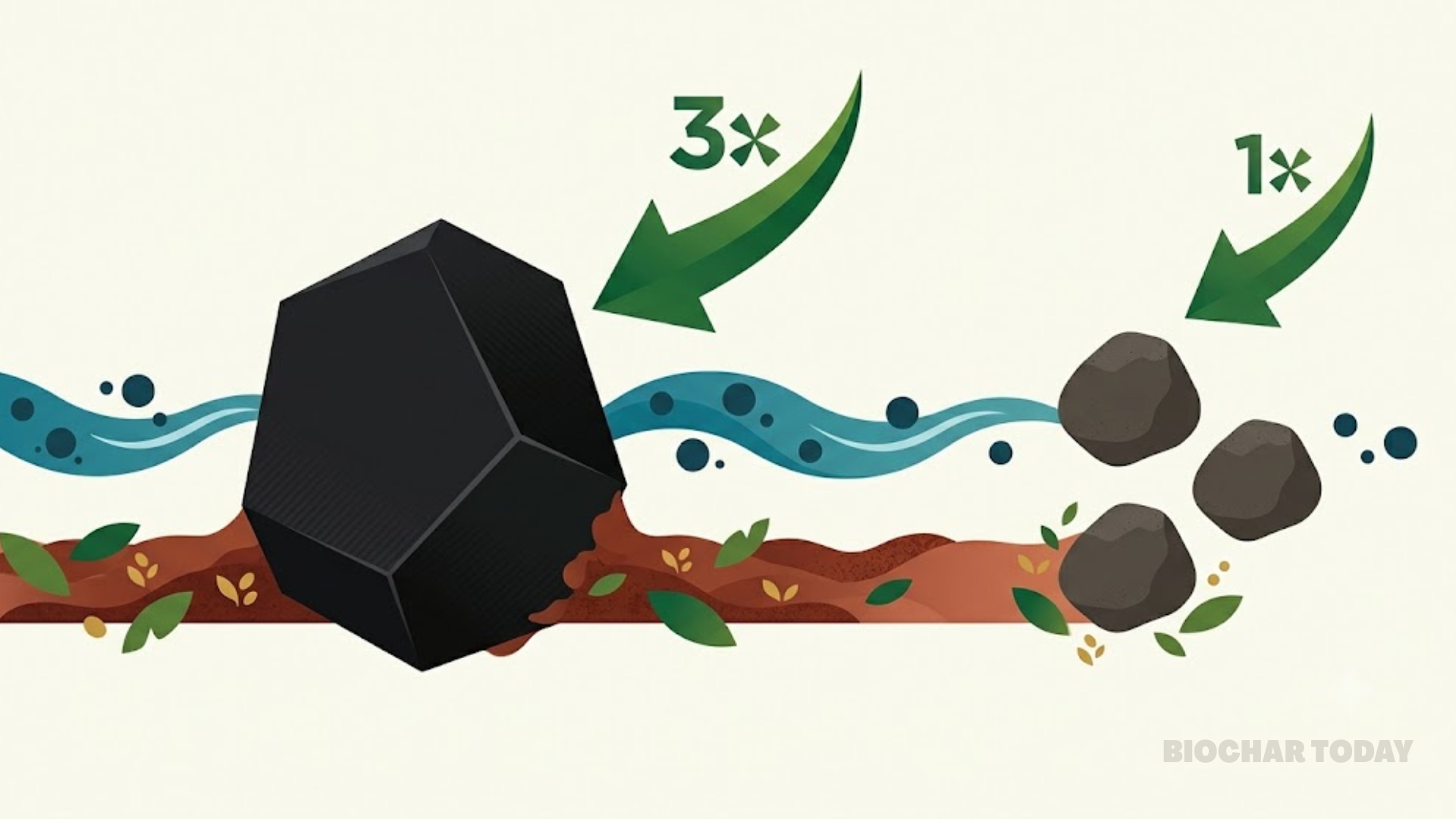
The meta-analysis highlights biochar’s pervasive positive influence on soil chemistry. Across all studies, biochar application increased soil pH by 12.6%, CEC by 26%, and EC by a substantial 70.30% compared to control groups. These enhancements were most dramatic in acidic soils (initial pH<6.5), where the pH increase was a notable 66%. In fact, the most significant pH improvement was observed in highly acidic soils with an initial pH of 3. The composition of the biochar strongly influenced these changes: biochar with an ashAsh is the non-combustible inorganic residue that remains after organic matter, like wood or biomass, is completely burned. It consists mainly of minerals and is different from biochar, which is produced through incomplete combustion. Ash Ash is the residue that remains after the complete More content greater than 60% elevated the soil pH by 32.4% , while biochar with a specific surface area (SSA) of 50−100 m2/g was a powerhouse for nutrient retention, enhancing CEC by an impressive 183%. Furthermore, biochar with a low nitrogen content (N%<2%) led to the largest rise in soil EC, increasing it by 61.27%.
Beyond improving fertility, the study’s key insight is defining the ideal biochar for mitigating Cu contamination. Overall, biochar application reduced available Cu concentrations by 34.35% and decreased the more mobile, leachable TCLP-extractable Cu by 30.97%. The most effective Cu reduction—a maximum of 69% for available Cu—was observed in acidic soils.
The meta-analysis pinpoints two crucial characteristics for maximizing Cu immobilization: high pH and high oxygen content. Biochar with a pH greater than 7.5 was the most potent, achieving reductions of 37.72% for available Cu and 34.97% for TCLP-extractable Cu. Similarly, biochar with an oxygen content (O%) greater than 20% reduced available Cu by 22.31% and TCLP-extractable Cu by 24.07%.
This mechanism is primarily driven by the biochar-induced rise in soil pH. The elevated pH promotes the immobilization of Cu through precipitation into insoluble compounds like Cu(OH)2 and through surface complexation with oxygen-containing functional groups on the biochar surface. This process significantly lowers Cu mobility and bioavailability. The reduction in TCLP-extractable Cu improved in soils with a higher original pH. However, a key finding was that the biochar-mediated reduction in available Cu was independent of the soil’s original pH. This suggests that the biochar’s internal porous structure may immobilize Cu through physical adsorption and micropore trapping, a process less dependent on pH.
The study provides clear, quantitative guidance for future sustainable soil management. To enhance fertility and alleviate acidity in acidic soils, select biochar with a high ash content (>60%), high SSA, and low nitrogen content (<2%). For maximum Cu remediation, the recommendation is to use alkaline biochar with a pH>7.5 and an O content exceeding 20%. These results move beyond general observations, giving practitioners precise criteria for tailoring biochar to their specific needs.
Source: Teng, X., Huang, D., Zhi, Y., Li, Y., Dong, D., Wu, X., Wang, Y., Jiang, Z., Huang, H., Tang, Y., Liu, D., & Xu, W. (2025). Effects of biochar on soil properties as well as available and TCLP-extractable Cu contents: a global meta-analysis. Scientific Reports, 15:32853.



Leave a Reply