
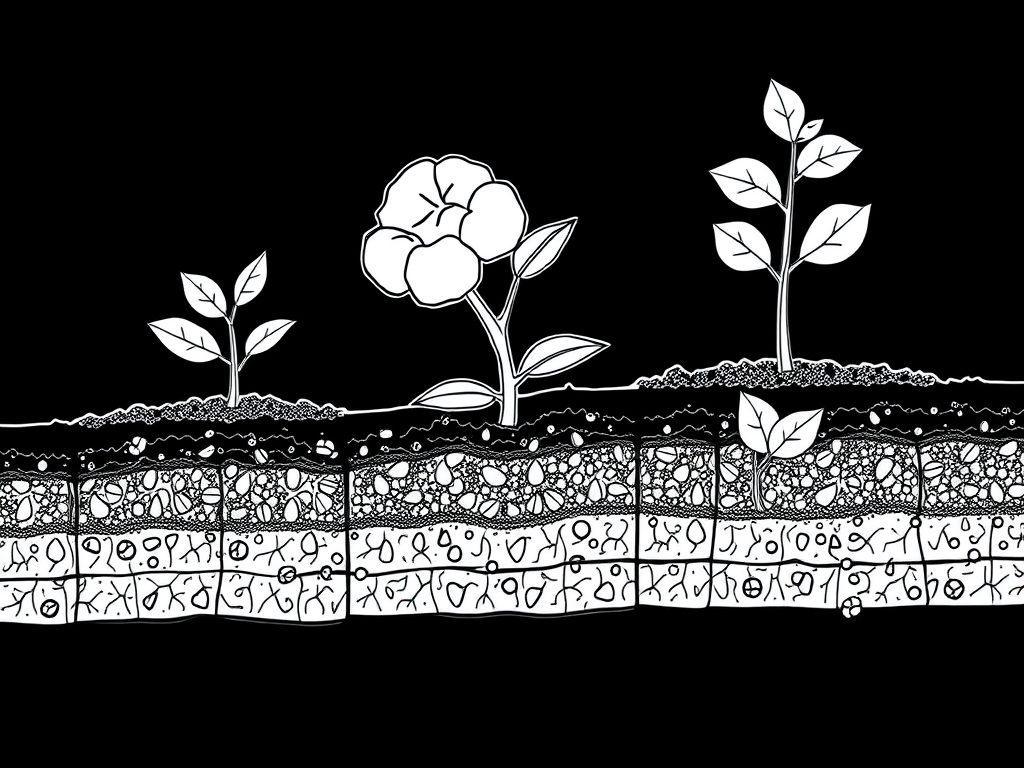
In the journal Environmental Geochemistry and Health, Bowei Lv and colleagues explored how different types of biocharBiochar is a carbon-rich material created from biomass decomposition in low-oxygen conditions. It has important applications in environmental remediation, soil improvement, agriculture, carbon sequestration, energy storage, and sustainable materials, promoting efficiency and reducing waste in various contexts while addressing climate change challenges. More affect soil health, focusing on microbial communities and carbon stabilization in red soil. The research compared biochar made from maize stover (low lignin), cotton stover (high lignin), and sludge (no lignin) to understand how each influences soil properties and carbon cycling. Their findings indicate that biochar derived from cotton stover, which has high lignin content, leads to more favorable changes in the microbial community structure, ultimately improving the soil’s ability to control carbon cycling.
Red soil in southern China is naturally rich in minerals but low in organic matter. Unfortunately, human activities have degraded these soils, reducing their fertility. Biochar amendments are a common method for improving soil health. This study specifically investigates how biochar with varying lignin content impacts soil properties, microbial communities, and carbon stabilization.
The researchers prepared three types of biochar: maize stover biochar (Maize-BC), cotton stover biochar (Cotton-BC), and sludge biochar (Sludge-BC). These biochars were then mixed with red soil, and the resulting changes in soil properties, enzyme activity, and microbial communities were monitored over 30 days.
The study revealed that all three biochars increased soil inorganic carbon, stable organic carbon, microbial carbon, and dissolved organic carbon. However, Maize-BC, with lower lignin content, led to higher abundance and diversity in soil microbial communities. In contrast, Cotton-BC, with higher lignin content, primarily shifted the composition of specific bacterial groups (Actinobacteria and Proteobacteria). Overall, Cotton-BC was more effective in promoting a microbial community that favors a lower carbon cycle, which helps microorganisms better regulate soil carbon.
This research suggests that biochar, particularly that derived from feedstocks high in lignin, can be a valuable tool for improving soil health and managing carbon cycling in degraded red soils.
Source: Lv, B., Ma, B., Li, Y., Wu, L., Huang, M., He, X., Xue, J., & Yang, L. (2025). Biochar derived from feedstockFeedstock refers to the raw organic material used to produce biochar. This can include a wide range of materials, such as wood chips, agricultural residues, and animal manure. More with high lignin content leads to better soil improvement performance in red soils: from the perspective of soil microbial regulation and carbon stabilization. Environmental Geochemistry and Health, 47, 203-217.




Leave a Reply