
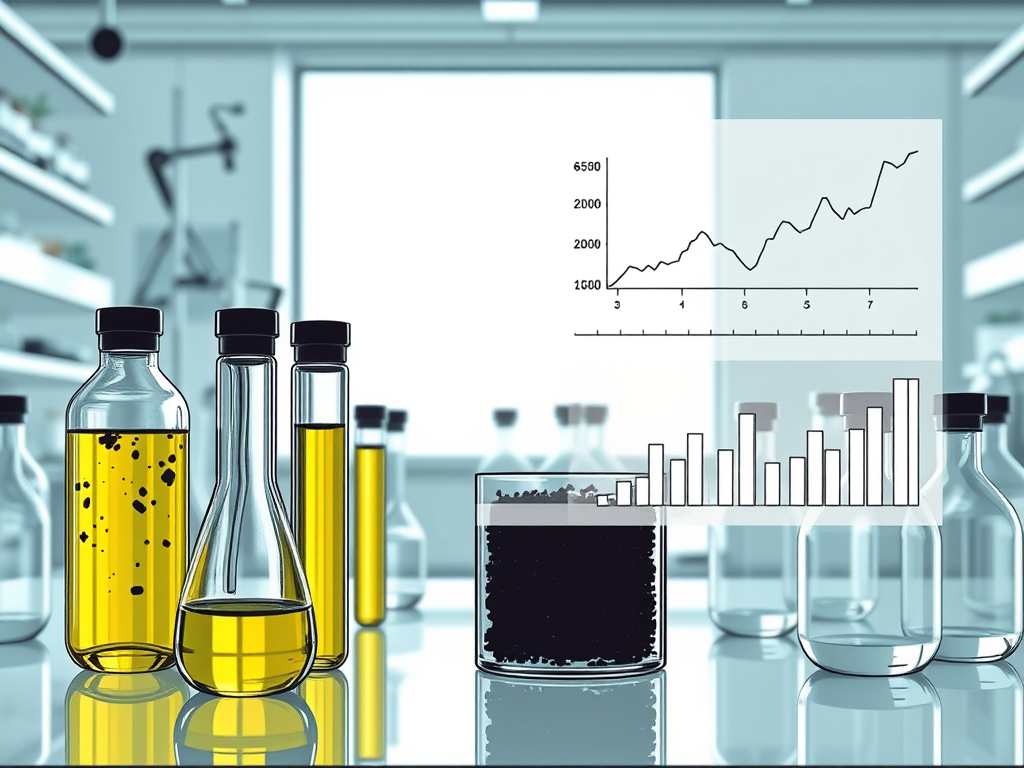
A recent bibliometric study by Ping Wu, Yingdong Fu, Tony Vancov, Hailong Wang, Yujun Wang, and Wenfu Chen, published in BiocharBiochar is a carbon-rich material created from biomass decomposition in low-oxygen conditions. It has important applications in environmental remediation, soil improvement, agriculture, carbon sequestration, energy storage, and sustainable materials, promoting efficiency and reducing waste in various contexts while addressing climate change challenges. More, offers a comprehensive analysis of advancements in biochar applications from 2022 to 2023. The study, which reviewed 13,357 bibliographic records from the Web of Science Core Collection, reveals a continuous rise in annual publications since 2009, with a notable growth trend in recent years. China stands out as the leading contributor, accounting for 27.92% (3730) of all publications, followed by the USA (4.39%, 587 publications) and India (3.87%, 517 publications). Hailong Wang is identified as a prominent figure in this field. Keyword analysis highlights six main research hotspots.
Biochar’s role in mitigating global climate change is a key focus, particularly its potential for carbon sequestration and reducing greenhouse gas emissions. Biochar’s high content of stable carbon forms makes it effective for long-term carbon sequestration, with stability increasing at higher treatment temperatures and retention times. Engineered biochar, specifically N/O co-doped porous biochar, has demonstrated a high CO2 adsorption capacity of 6.09 mol kg⁻¹, owing to synergistic effects between nitrogen and oxygen atoms. Another innovation, lignin-treated biochar, exhibits a superior CO2 uptake capacity of 178.75 mg g⁻¹ due to its super-microporous structure. Biochar can also significantly reduce N2O emissions, with one meta-analysis observing a 12.7% decrease in cumulative N2O emissions due to biochar application. Furthermore, a deep learning model indicated that biochar characteristics contribute to 62.5% of
CH4 mitigation, with the carbon-to-nitrogen ratio being the most influential factor, accounting for 67.9% of the overall efficiency. Another critical area is biochar’s role in ameliorating salinity and drought stress in soils. Biochar application enhances soil physicochemical properties, structure, fertility, nutrient availability, and microbial activity in salt-affected soils. Ball-milled red phosphorus-loaded biochar, for instance, has been shown to reduce soil salinity and alkalinity while improving soil quality and maize growth. For toxic metal immobilization, a “hot” topic, biochar has emerged as an effective material due to its unique surface properties. Biochar derived from manganese hyperaccumulators demonstrates high cadmium sorption capacities, reaching up to 337 mg g⁻¹.
Biochar is also widely studied for organic pollutant removal, particularly through sorption and advanced oxidation processes. Engineered biochar demonstrates strong sorption capabilities for per- and poly-fluoroalkyl substances (PFAS), sometimes comparable to activated carbons. An innovative porous Fe-doped graphitized biochar showed excellent sorption capacity, reaching 10.1 mg g⁻¹ for short-chain perfluorobutyric acid and 39.1 mg g⁻¹ for perfluorooctanoic acid. In advanced oxidation processes, biochar-based nanocomposites activate oxidants like hydrogen peroxide and peroxymonosulfate to degrade organic contaminants.
Furthermore, biochar serves as an additive in enhanced anaerobic digestion (AD), a technology for renewable energy recovery and waste management. Biochar improves AD performance by promoting granular sludge formation, accelerating organic compound decomposition, mitigating toxicity, enhancing methane quality, and facilitating direct interspecies electron transfer. S-doped biochar, for example, demonstrated superior biogas production (623 mL g⁻¹VS) compared to N-doped biochar, due to increased electrical conductivity and reduced pore volume. Incorporating a green magnetic-straw-based biochar significantly increased methane yield in AD systems by 45.36%.
Finally, biochar is gaining traction as an electrode material in microbial fuel cells (MFCs), offering an eco-friendly solution for wastewater treatment and bioelectricity generation. Highly crystalline biochar produced via plasma-based processes, with high electrical conductivity, promotes microbial colonization and enhances electrocatalytic performance in MFC electrodes. For instance, a novel Fe/Co-decorated N-rich porous biochar demonstrated remarkable performance as an air-cathode catalyst in MFCs, improving electrical energy output.
Despite the promising potential of biochar across these applications, the study highlights ongoing concerns regarding its economic viability, potential negative eco-environmental impacts, and the need for long-term assessments. Future research should focus on addressing these challenges to ensure the sustainable and widespread adoption of biochar.
Source: Wu, P., Fu, Y., Vancov, T., Wang, H., Wang, Y., & Chen, W. (2024). Analyzing the trends and hotspots of biochar’s applications in agriculture, environment, and energy: a bibliometrics study for 2022 and 2023. Biochar, 6(78).



Leave a Reply