
Key Takeaways
- Using specific types of plant waste and precise heating temperatures can trap more than 30 percent of carbon permanently.
- Adding this recycled carbon material to steel production can reduce harmful greenhouse gas emissions by roughly one-fifth.
- Mixing small amounts of this material into cement and concrete can actually turn buildings into carbon storage sites.
- When used in farming, this material helps soil hold on to significantly more natural carbon while helping plants grow better.
- Advanced computer models can now accurately predict how much carbon will be saved based on the type of waste used.
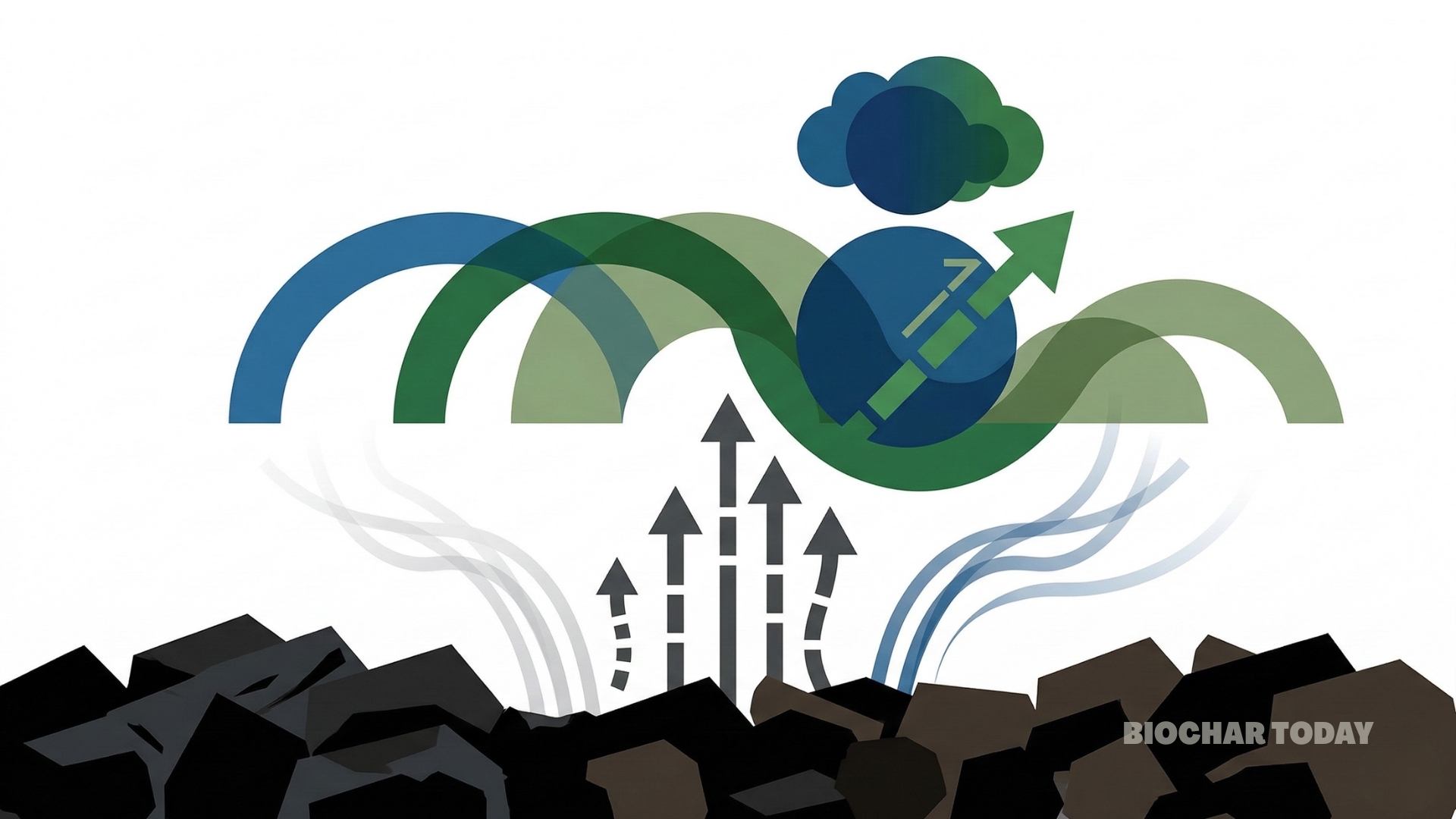
A comprehensive review published in the journal Carbon Neutral Technologies by authors Pin Lv, Qun Huan, and Min Song explores the strategic role of biocharBiochar is a carbon-rich material created from biomass decomposition in low-oxygen conditions. It has important applications in environmental remediation, soil improvement, agriculture, carbon sequestration, energy storage, and sustainable materials, promoting efficiency and reducing waste in various contexts while addressing climate change challenges. More in achieving global climate goals. The research emphasizes that biochar serves as a permanent storage vessel for carbon that would otherwise return to the atmosphere as greenhouse gases during the natural decay of organic matter. By analyzing a wide array of existing data, the authors demonstrate how the physical and chemical properties of the starting materials, combined with specific settings during the heating process, determine exactly how much carbon can be successfully locked away. The study frames biochar not merely as a soil additive but as a versatile industrial tool capable of decarbonizing some of the most carbon-intensive sectors of the global economy, including metal smelting and large-scale construction.
The findings indicate that the efficiency of carbon trapping is largely a result of the coupling effect between the raw material and the production environment. Feedstocks that are naturally high in carbon but low in ashAsh is the non-combustible inorganic residue that remains after organic matter, like wood or biomass, is completely burned. It consists mainly of minerals and is different from biochar, which is produced through incomplete combustion. Ash Ash is the residue that remains after the complete More and volatile matterVolatile matter refers to the organic compounds that are released as gases during the pyrolysis process. These compounds can include methane, hydrogen, and carbon monoxide, which can be captured and used as fuel or further processed into other valuable products. More, such as peanut shells or certain types of wood, are the most effective candidates for sequestration. When these materials are processed through pyrolysisPyrolysis is a thermochemical process that converts waste biomass into bio-char, bio-oil, and pyro-gas. It offers significant advantages in waste valorization, turning low-value materials into economically valuable resources. Its versatility allows for tailored products based on operational conditions, presenting itself as a cost-effective and efficient More at temperatures ranging from 500 to 600 degrees Celsius for two to three hours, they consistently achieve sequestration rates higher than 30 percent. This specific temperature range is identified as a sweet spot where the carbon structure becomes highly stable and resistant to decomposition. The researchers utilized multiple regression analysis to clarify that the total carbon content and the final weight of the produced material are the most critical factors in determining how much atmospheric carbon is ultimately removed from the cycle.
In the realm of heavy industry, the study details significant benefits for the iron and steel sector, which is responsible for a substantial portion of global emissions. By substituting traditional fossil fuels like coal and coke with biochar, steel manufacturers can achieve a carbon reduction of more than 20 percent. This is possible because biochar has a high surface area and unique burning characteristics that improve combustion efficiency within blast furnaces. Large-scale pilots have already demonstrated that this substitution does not compromise the quality of the metal produced. Beyond just reducing emissions, the process of using biochar in these furnaces can effectively offset the carbon footprint of the entire manufacturing chain, providing a viable pathway for the industry to transition toward greener operations without abandoning existing infrastructure.
The construction industry also stands to gain from these findings through the development of carbon-negative building materials. The research shows that blending as little as 5 percent biochar into cement or concrete can have a significant negative carbon effect, sequestering between 541 and 980 kilograms of carbon dioxide equivalent per ton of material. The porous nature of the biochar allows it to act as a internal reservoir for water and gas, facilitating chemical reactions that form stable minerals like calcium carbonate within the concrete structure. This not only traps carbon permanently but often enhances the mechanical strength and durability of the buildings. These results suggest that the built environment could eventually function as a massive, decentralized carbon sink, helping to mitigate the environmental impact of urban expansion.
Agricultural applications remain a cornerstone of biochar technology, with the study confirming that applying 20 to 40 tons per hectare can increase soil organic carbon stocks by 26 to 30 percent. This increase is vital for restoring degraded lands and improving the resilience of food systems against climate change. The highly aromatic structure of biochar means it can remain in the soil for centuries, unlike raw manure or straw which break down quickly. Furthermore, the study highlights how biochar reduces the release of other potent greenhouse gases like methane and nitrous oxide from farmland. By using advanced machine learning models like Random Forests and Neural Networks, the researchers have provided a new toolkit for scientists to predict these environmental benefits with greater precision, ensuring that biochar production can be tailored to the specific needs of the land or industry it serves.
Source: Lv, P., Huan, Q., & Song, M. (2026). A review of biochar toward carbon neutrality: Production optimization and carbon sequestration potential assessment. Carbon Neutral Technologies, 1(100019).




Leave a Reply