
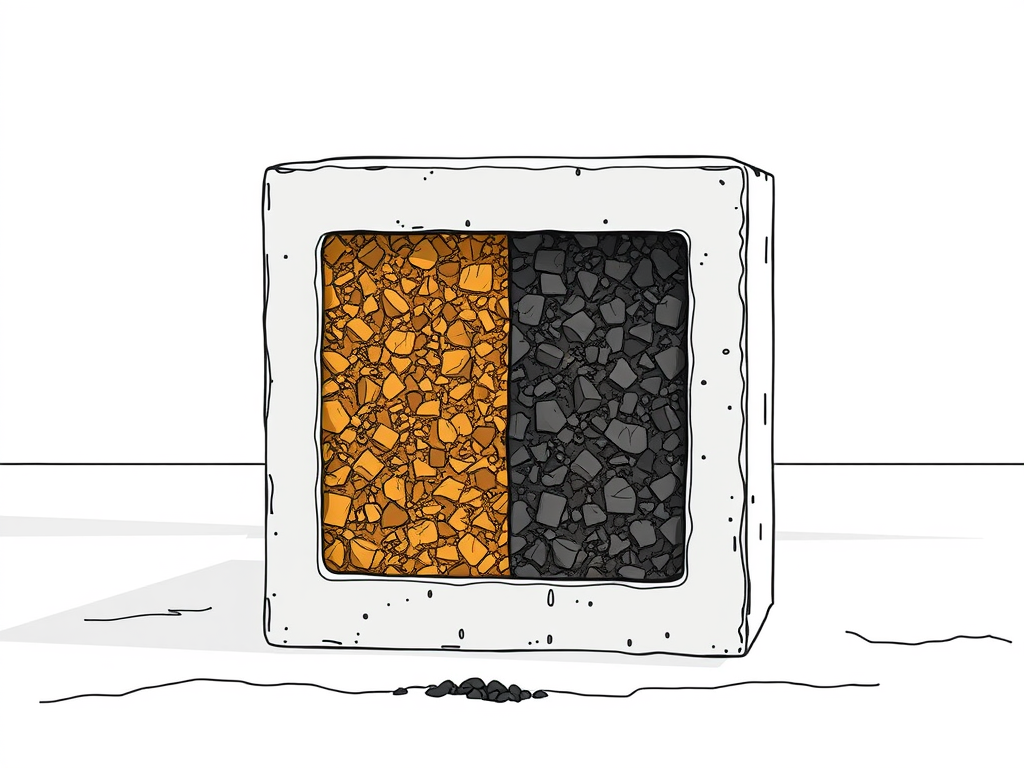
The construction industry, a major contributor to global carbon dioxide emissions, is actively seeking sustainable alternatives to conventional materials like cement. Cement production alone accounts for 8% of the world’s CO2 emissions. In response, researchers are exploring innovative solutions, including the incorporation of biochar—a carbon-rich byproduct of biomassBiomass is a complex biological organic or non-organic solid product derived from living or recently living organism and available naturally. Various types of wastes such as animal manure, waste paper, sludge and many industrial wastes are also treated as biomass because like natural biomass these More pyrolysis—into concrete mixtures. A recent study in REVISTA MATÉRIA by Arunya Alagesan, Vijaya Bhaskar Raju, Maruthasalam Veerapathran, and Prakash Arunachalam, investigated the effects of adding various ratios of biocharBiochar is a carbon-rich material created from biomass decomposition in low-oxygen conditions. It has important applications in environmental remediation, soil improvement, agriculture, carbon sequestration, energy storage, and sustainable materials, promoting efficiency and reducing waste in various contexts while addressing climate change challenges. More to concrete on its performance properties.
The study examined concrete mixtures containing biochar at 4%, 8%, and 12% ratios by cement weight. The researchers cast 100 mm cubes and measured their compressive strength after 28 and 56 days. They also assessed workability, density, microstructure, and chemical composition. The findings revealed that adding biochar significantly impacted the concrete’s workability, making the mixes much less fluid. This is likely due to biochar’s water-absorbing properties. For instance, concrete with 8% and 12% biochar was considered “dry”. To counteract this, the water-to-cement ratio was increased for higher biochar concentrations (0.44 for 8% and 12% biochar, compared to 0.40 for 0% and 4%).
Density also decreased as the biochar ratio increased. Biochar has a significantly lower density (0.145 g/cm3 in this study) compared to cement, which contributes to this reduction. For example, a 12% biochar replacement resulted in an approximate 5% decrease in density. This density reduction could be advantageous for construction by lowering transportation energy consumption and potentially reducing the self-weight of structures.
Regarding compressive strength, the study observed a decrease with increasing biochar content. After 28 days, the control sample exhibited a compressive strength of 69 MPa, while the sample with 12% biochar had a strength of 48 MPa—a reduction of approximately 30%. However, a crucial insight emerged after an additional 28 days of curing. The sample with 12% biochar showed the greatest gain in compressive strength, increasing by 16%, compared to a 10% gain for the control sample. This suggests that biochar-containing concrete undergoes a secondary curing process, likely due to biochar’s ability to retain water within its porous structure, prolonging the cement’s hydration.
Microstructural analysis using Scanning Electron Microscopy (SEM) supported these findings, showing that biochar-containing samples, especially the 12% sample, exhibited a more homogeneous matrix, indicating continued hydration. Fourier-transform infrared (FTIR) analysis revealed no significant chemical bonding differences between concrete with and without biochar, suggesting that any strength changes are likely due to mechanical interlocking or altered crack patterns rather than new chemical reactions.
While the immediate reduction in workability and 28-day compressive strength presents challenges for practical application—as stiff concrete is less convenient for real-world use —the long-term strength gains and the environmental benefits of carbon sequestration make biochar a promising material for sustainable concrete. Future research will need to focus on optimizing mixtures to address workability issues and further investigate long-term performance under various real-world conditions.
Source: Alagesan, A., Raju, V. B., Veerapathran, M., & Arunachalam, P. (2025). Investigation the effects of adding biochar to concrete mixture experimentally on performance properties. REVISTA MATÉRIA, 30, e20240965.



Leave a Reply