
The escalating concentration of carbon dioxide (CO2) in our atmosphere demands innovative solutions for industrial emission control. In a significant stride toward this goal, a recent research article in Frontiers in Energy authored by Chen Zhang, Duoyong Zhang, Xinqi Zhang, Yongqiang Tian, and Liwei Wang, introduces a novel material for CO2 capture. Their work, titled “Core-membrane microstructured amine-modified mesoporous biocharBiochar is a carbon-rich material created from biomass decomposition in low-oxygen conditions. It has important applications in environmental remediation, soil improvement, agriculture, carbon sequestration, energy storage, and sustainable materials, promoting efficiency and reducing waste in various contexts while addressing climate change challenges. More templated via ZnCl2/KCI for CO2 capture,” highlights the potential of biomass-derived mesoporous biochar, enhanced with polyethyleneimine (PEI), as an effective and sustainable sorbent. This research focuses on optimizing material properties to achieve superior CO2 adsorption, offering a promising pathway for mitigating greenhouse gas emissions.
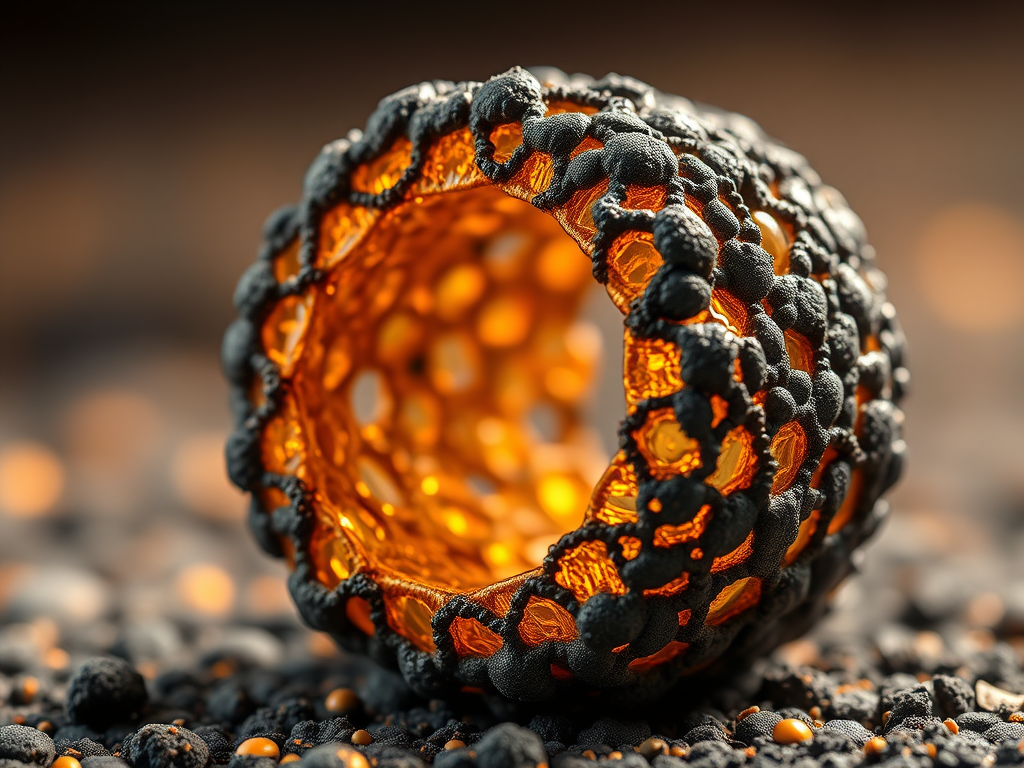
The core of this research lies in the creation of a sophisticated material: a core-membrane microstructured amine-modified mesoporous biochar (PEI@MC). This material is synthesized from waste corncob, a readily available biomassBiomass is a complex biological organic or non-organic solid product derived from living or recently living organism and available naturally. Various types of wastes such as animal manure, waste paper, sludge and many industrial wastes are also treated as biomass because like natural biomass these More, using a dual-salt templating method with zinc chloride (ZnCl2) and potassium chloride (KCl). This templating process is crucial as it engineers a highly intricate network of micropores and abundant mesopores within the biochar. These structural features, combined with defects in the material’s graphitic framework, provide ideal anchoring sites for the subsequent impregnation with polyethyleneimine (PEI). PEI, a polymer known for its excellent CO2 sorption capacity, is introduced under vacuum conditions, forming a unique core-membrane structure where PEI molecules extend from the mesopores to the biochar surface. This design facilitates efficient chemical reactions with CO2 molecules, a key mechanism for effective capture.
A standout finding from the study is the exceptional CO2 sorption performance of the PEI-600@MC sample, which refers to biochar modified with PEI having an average molecular weight of 600. This particular variant demonstrated the highest CO2 sorption capacity, achieving approximately 3.35 mmol/g at 0.1 MPa and a temperature of 70°C. This temperature is identified as optimal for the chemical adsorption of CO2 by the amine functional groups within the PEI. Furthermore, the material exhibited an impressive amine efficiency of 0.32 mmol CO2/mmol N, indicating a high utilization rate of the nitrogen-containing active sites for CO2 capture. When compared to the bare mesoporous biochar (MC), which showed a modest sorption capacity of only 0.19 mmol/g, the PEI modification dramatically enhanced the capture capability, underscoring the critical role of the amine functional groups.
The researchers also investigated the impact of different PEI molecular weights on sorption performance and thermal stability. While PEI with lower average molecular weights, such as PEI-600, showed superior sorption at low pressures, they exhibited reduced thermal stability compared to their higher molecular weight counterparts (PEI-1800 and PEI-10000). This suggests a trade-off between low-pressure performance and thermal robustness, which is an important consideration for practical applications. Despite this, the PEI@MC sorbents generally demonstrated remarkable thermal robustness below 240°C, a temperature range suitable for typical CO2 capture operations without significant material deactivation. The study also found that the equilibrium sorption isotherms were accurately modeled by the Langmuir equation, predicting a maximum sorption capacity of approximately 3.53 mmol/g at 70°C, further validating the material’s high potential.
Beyond its impressive capture capacity, the material also demonstrated good cyclic robustness under vacuum temperature swing sorption. The PEI-600@MC maintained a stable sorption capacity of approximately 3.11 mmol/g over 20 cycles, with an average attenuation of less than 7.2%. This indicates that the material can be effectively regenerated and reused multiple times without significant loss of performance, a crucial factor for the economic viability and sustainability of CO2 capture technologies. The findings collectively highlight the significant potential of this dual-salt templated, biomass-derived, amine-modified mesoporous biochar as an effective, widely available, and cost-efficient material for CO2 capture, paving the way for further research and development in this vital field.
Source: Zhang, C., Zhang, D., Zhang, X., Tian, Y., & Wang, L. (2024). Core-membrane microstructured amine-modified mesoporous biochar templated via ZnCl2/KCI for CO2 capture. Frontiers in Energy, 18(6), 863-874.




Leave a Reply