
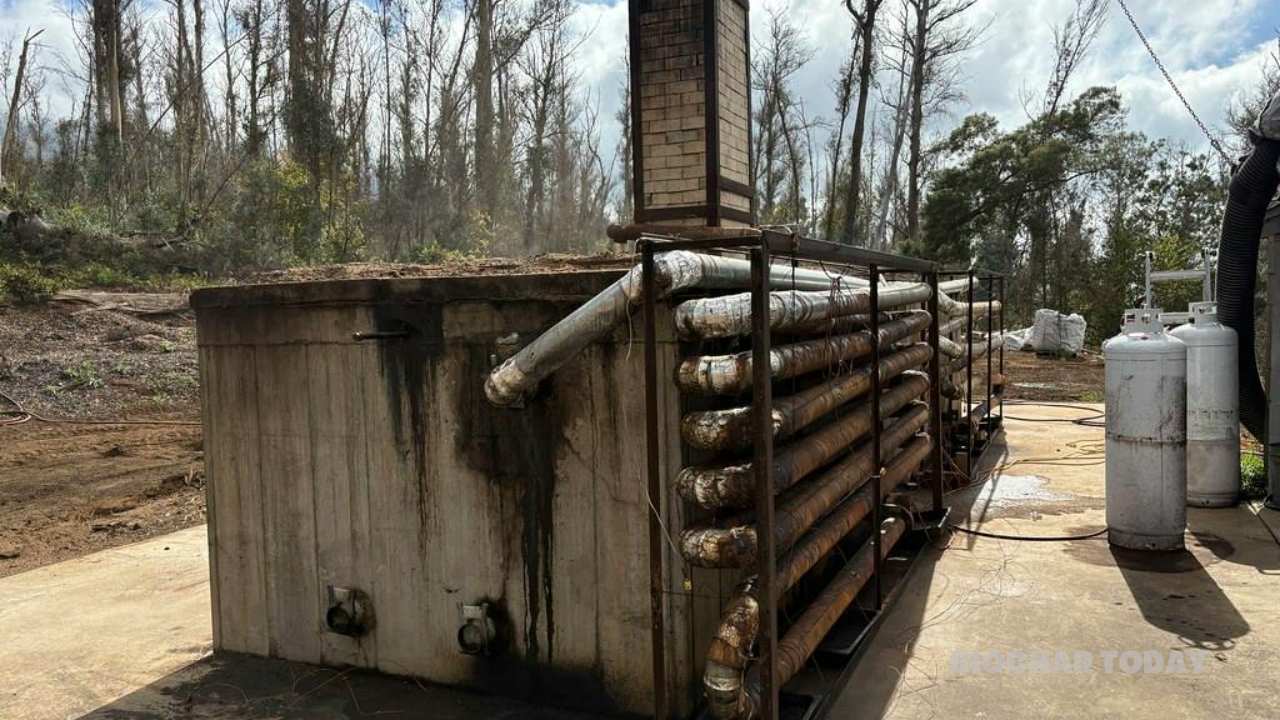
BiocharBiochar is a carbon-rich material created from biomass decomposition in low-oxygen conditions. It has important applications in environmental remediation, soil improvement, agriculture, carbon sequestration, energy storage, and sustainable materials, promoting efficiency and reducing waste in various contexts while addressing climate change challenges. More Industrial Group (BIG), an Africa-based biochar developer, has raised $1.5 million in pre-seed funding to expand its factory-based carbon removal model. The investment round will support the installation of biochar production units directly at food processing facilities across Sub-Saharan Africa. By embedding processing infrastructure within existing industrial agricultural operations, the enterprise secures a continuous supply of biomassBiomass is a complex biological organic or non-organic solid product derived from living or recently living organism and available naturally. Various types of wastes such as animal manure, waste paper, sludge and many industrial wastes are also treated as biomass because like natural biomass these More feedstockFeedstock refers to the raw organic material used to produce biochar. This can include a wide range of materials, such as wood chips, agricultural residues, and animal manure. More while expanding durable carbon sequestration capabilities across the region.
Industrial carbon removal developers operating in emerging markets routinely face operational hurdles, including high feedstock transportation costs, inconsistent biomass availability, and fragmented supply chains. Collecting dispersed agricultural residues for centralized processing often imposes prohibitive logistics costs and increases the carbon intensity of carbon dioxide removal (CDR) operations. Without localized, cost-effective processing infrastructure, scaling biochar projects across Sub-Saharan Africa remains economically challenging despite the abundance of organic waste generated by agricultural processing activities.
To resolve these supply chain and cost inefficiencies, Biochar Industrial Group deploys a decentralized, factory-integrated production architecture. The enterprise places specialized biochar conversion units at active food processing sites, utilizing agricultural residues immediately as they are produced during routine operations. Tapping into co-located organic waste streams eliminates long-haul biomass logistics, significantly lowers feedstock acquisition costs, and minimizes the overall operational footprint. This localized configuration allows food processors to convert waste into durable biochar on-site while generating high-integrity carbon removal credits.
The primary outcome of this $1.5 million funding round is the rapid geographic and operational scaling of factory-integrated biochar manufacturing across Sub-Saharan Africa. By pairing low-cost, localized agricultural biomass with industrial processing, the initiative establishes a capital-efficient pathway for scaling high-permanence carbon removal in emerging markets. The investment demonstrates growing venture capital interest in decentralized CDR architectures, validating factory-based biochar production as a commercially viable mechanism to expand carbon credit supply, reduce industrial waste, and lower regional execution costs.


Leave a Reply