
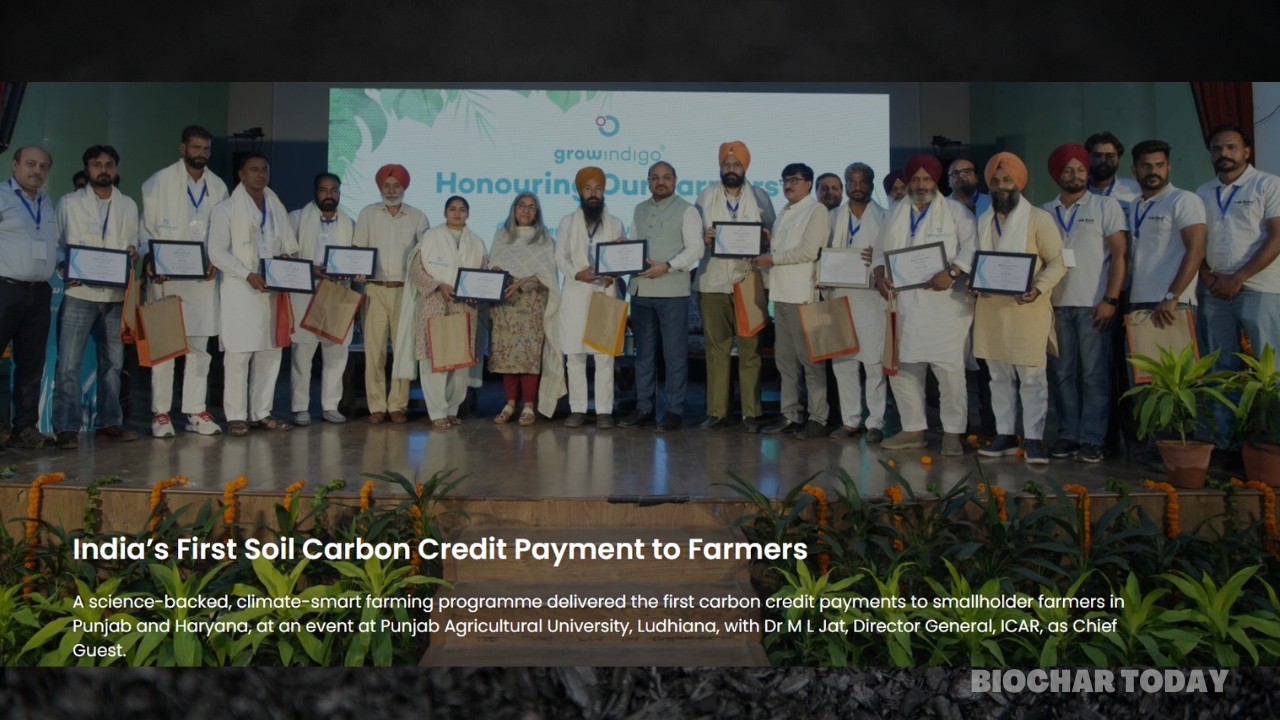
Grow Indigo, in collaboration with the Indian Council of Agricultural Research, successfully distributed digital soil carbon credit payments to more than 2,500 smallholder farmers across Punjab and Haryana in India. Announced at Punjab Agricultural University in Ludhiana, the milestone marks India’s first agricultural carbon credit disbursements issued under the Verra VM0042 methodology. Participating farmers received direct digital disbursements funded in advance by Grow Indigo, rewarding adoption practices established between 2019 and 2022.
The primary challenge addressed involves overcoming the financial and technical barriers smallholder farmers face in transitioning to regenerative agriculture. Historically, adopting sustainable land management practices requires upfront labor and operational adjustments without immediate financial returns. Furthermore, establishing rigorous, scientifically verified carbon accounting systems that satisfy international registry standards presents significant administrative hurdles in fragmented agricultural landscapes.
To resolve these barriers, Grow Indigo deployed its Aadi carbon farming programme, utilizing advanced crop-simulation models and remote-sensing protocols guided by the ICAR-Indian Agricultural Research Institute. Farmers integrated practices such as direct-seeded rice, reduced tillage, and residue management to enhance soil organic carbon and curtail greenhouse gas emissions. To protect participants from prolonged market waiting periods, Grow Indigo provided upfront digital payments directly from corporate funds, offering an immediate payout option or a deferred share of net credit revenue.
The initiative delivered broad socio-environmental outcomes alongside direct financial compensation, averaging Rs 11,478 per participating farmer. Beyond carbon sequestration, the regenerative practices saved an estimated 45 billion liters of irrigation water, diverted over two hundred thousand tonnes of crop residue from open burning, and significantly reduced particulate matter emissions. These results establish a scalable framework for incentivizing soil health and aligning agricultural productivity with climate resilience.




Leave a Reply