
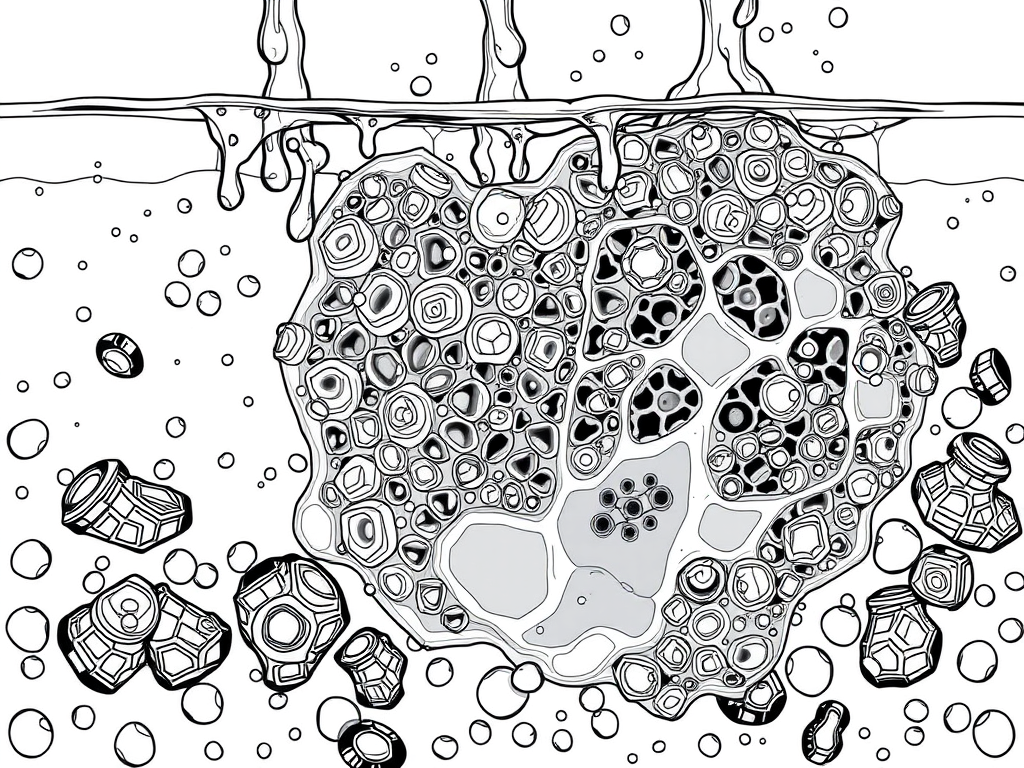
Wastewater from industries, agriculture, and homes contains many pollutants, posing a serious threat to the environment and human health. Current methods for treating wastewater often struggle to remove these pollutants effectively. However, a new approach using biochar-hydrogel composites offers a promising solution. BiocharBiochar is a carbon-rich material created from biomass decomposition in low-oxygen conditions. It has important applications in environmental remediation, soil improvement, agriculture, carbon sequestration, energy storage, and sustainable materials, promoting efficiency and reducing waste in various contexts while addressing climate change challenges. More, a material derived from burning biomassBiomass is a complex biological organic or non-organic solid product derived from living or recently living organism and available naturally. Various types of wastes such as animal manure, waste paper, sludge and many industrial wastes are also treated as biomass because like natural biomass these More, has a high surface area and can adsorb various contaminants. When combined with hydrogels, which are materials that can hold large amounts of water, the resulting composite can efficiently remove pollutants from wastewater.
Biochar-hydrogel composites combine the unique properties of biochar and hydrogels to create a powerful tool for wastewater treatment. Biochar’s porous structure and large surface area allow it to capture pollutants effectively. Hydrogels provide a three-dimensional network that stabilizes the biochar and allows it to interact with pollutants. This combination enhances the composite’s ability to remove pollutants through both physical and chemical processes.
Researchers have developed various methods to synthesize biochar-hydrogel composites. These methods involve combining biochar with different types of hydrogels using techniques like in situ polymerization, free radical polymerization, and microwave-assisted methods. The resulting composites exhibit a range of beneficial properties, including high porosityPorosity of biochar is a key factor in its effectiveness as a soil amendment and its ability to retain water and nutrients. Biochar’s porosity is influenced by feedstock type and pyrolysis temperature, and it plays a crucial role in microbial activity and overall soil health. Biochar More, large surface area, and the presence of chemical groups that can effectively bind to pollutants.
Biochar-hydrogel composites have shown promise in removing various pollutants from wastewater. They can effectively adsorb dyes, heavy metal ions, and pharmaceutical residues. The adsorption process involves complex interactions between the composite material and the pollutants, including electrostatic forces, chemical bonding, and pore diffusion. Researchers are also exploring the potential of biochar-hydrogel composites to remove multiple pollutants simultaneously.
To ensure the sustainability and cost-effectiveness of biochar-hydrogel composites, regeneration and desorption studies are crucial. Regeneration involves restoring the composite’s ability to adsorb pollutants, allowing for its reuse. Various regeneration methods exist, including thermal, chemical, and biological approaches. Researchers are working to optimize these methods to maximize the composite’s lifespan and minimize waste.
The future of biochar-hydrogel composites in wastewater treatment is promising. Ongoing research focuses on improving their performance, reducing their cost, and ensuring their safety. The integration of artificial intelligence (AI) is expected to play a significant role in optimizing the design and application of these composites. Biochar-hydrogel composites represent a significant advancement in wastewater treatment technology, offering a sustainable and effective solution to a critical environmental problem.
Source: Chame, S., Mayilswamy, N., & Kandasubramanian, B. (2025). Next generation biochar-hydrogel composite for contaminant sequestration. Clean Technologies and Environmental Policy.





Leave a Reply