
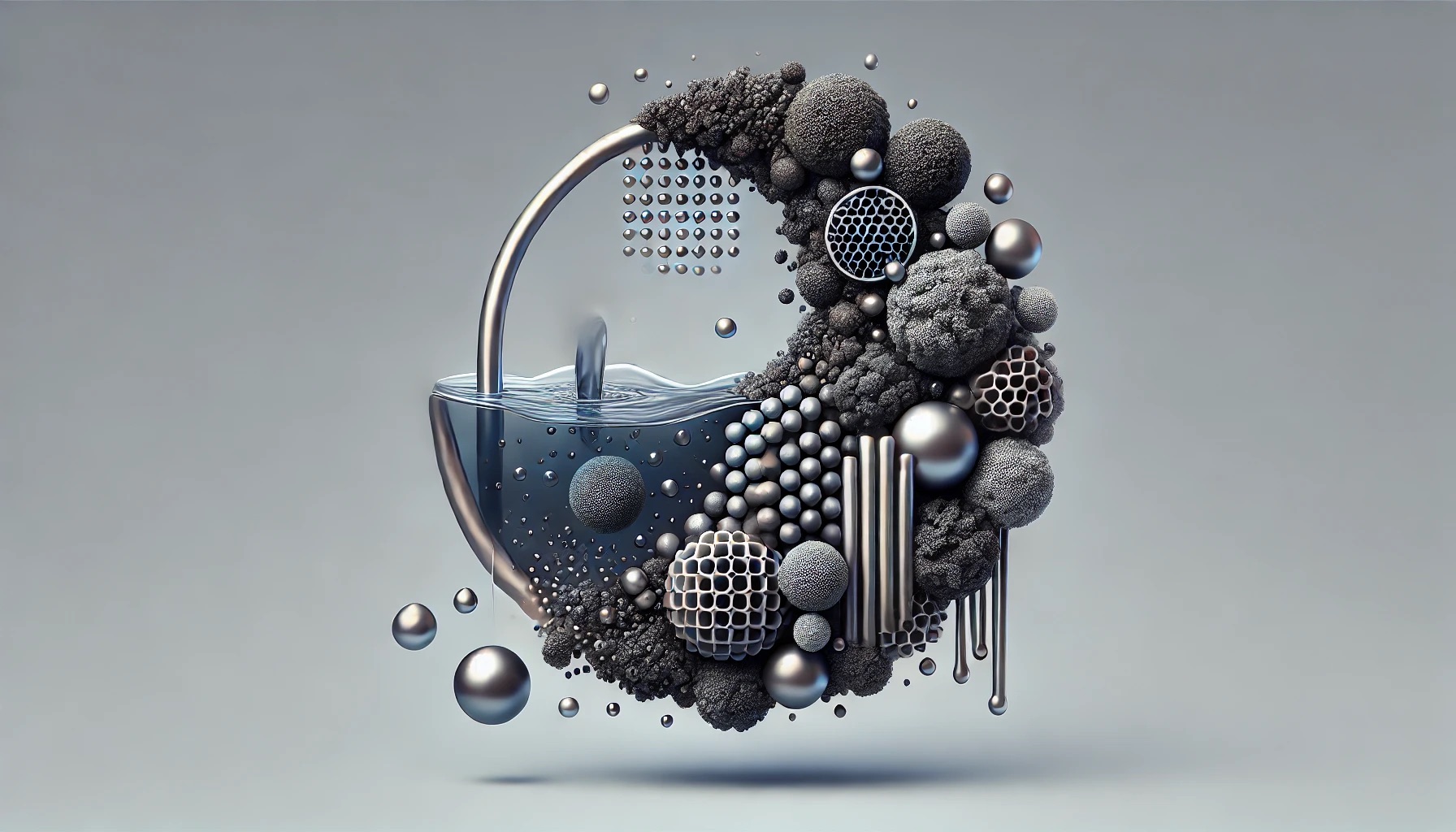
A recent study by Domagoj Nakić and colleagues, published in Sustainability, investigates biocharBiochar is a carbon-rich material created from biomass decomposition in low-oxygen conditions. It has important applications in environmental remediation, soil improvement, agriculture, carbon sequestration, energy storage, and sustainable materials, promoting efficiency and reducing waste in various contexts while addressing climate change challenges. More derived from sewage sludge (SS) gasificationGasification is a high-temperature, thermochemical process that converts carbon-based materials into a gaseous fuel called syngas and solid by-products. It takes place in an oxygen-deficient environment at temperatures typically above 750°C. Unlike combustion, which fully burns material to produce heat and carbon dioxide (CO2), gasification More as an adsorbent for heavy metal removal from wastewater. The research aimed to address both the increasing production of SS and the need for effective water treatment solutions.
The study tested biochar produced from SS at an experimental gasification plant in Croatia, evaluating its ability to remove cadmium (Cd), chromium (Cr), copper (Cu), and lead (Pb) from synthetic wastewater. A total of 104 experiments were conducted, varying biochar mass, initial metal concentration, pHpH is a measure of how acidic or alkaline a substance is. A pH of 7 is neutral, while lower pH values indicate acidity and higher values indicate alkalinity. Biochars are normally alkaline and can influence soil pH, often increasing it, which can be beneficial More, and contact time. Results showed exceptionally high adsorption capacities: 46.64 mg/g for Cd, 43.89 mg/g for Cr, 42.42 mg/g for Cu, and 72.66 mg/g for Pb. Under optimal conditions (0.67 g biochar, pH 3, 84.4 mg/L initial concentration, 6-hour treatment), removal efficiencies exceeded 99% for all tested metals.
Adsorption followed pseudo-second-order kinetics, suggesting chemisorption as the dominant mechanism. The study also found that Cd adsorption fit the Langmuir model, while Pb, Cr, and Cu followed the Freundlich model, indicating a mix of monolayer and multilayer adsorption.
These findings highlight the potential of SS-derived biochar as an effective, low-cost adsorbent for wastewater treatment. Future research will explore its reuse in construction materials after adsorption, ensuring a sustainable approach to both SS management and water purification.
SOURCE: Nakić, D., Posavčić, H., Licht, K., & Vouk, D. (2025). Application of novel biochar derived from experimental sewage sludge gasification as an adsorbent for heavy metals removal. Sustainability, 17(997). https://doi.org/10.3390/su17030997


![Eucalyptus Wood Waste-Derived Biochar Achieves a Ninety-Eight Percent Removal Efficiency for Benzo[ghi]perylene in Vehicle-Wash Wastewater](https://biochartoday.com/wp-content/uploads/2026/10/SCIENCE-BLOGS-2026-2026-10-19T160523.703.jpg)

Leave a Reply