
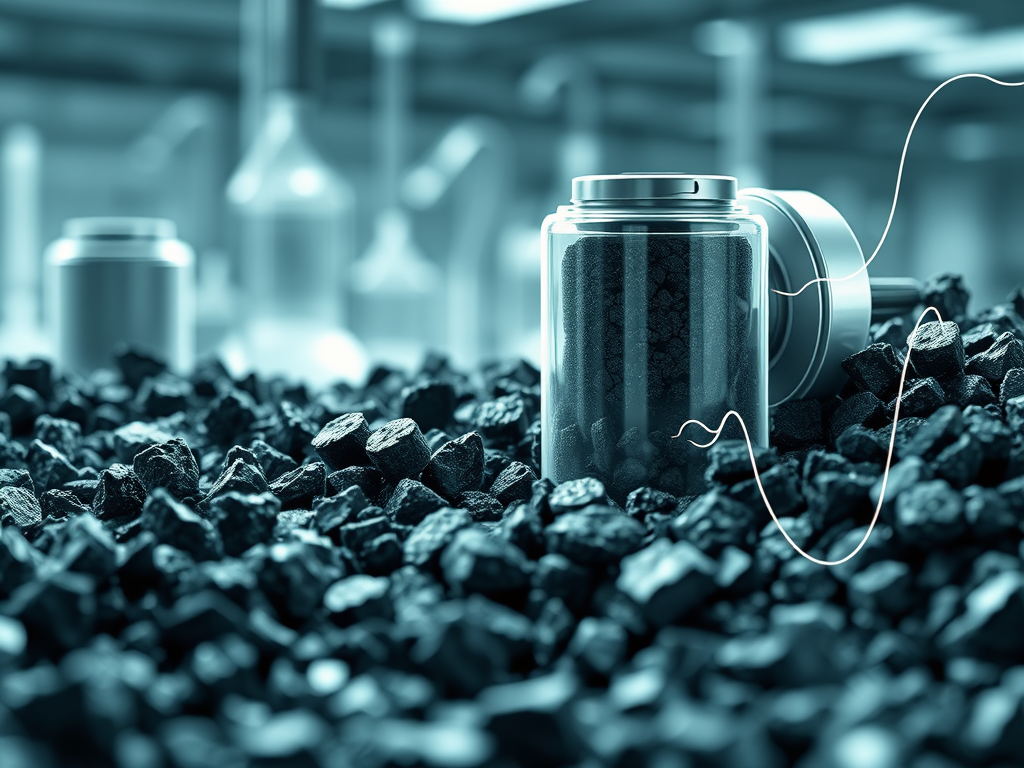
In a recent review published in the Journal of Electronic Materials, Rishikesh Sonawane and Balasubramanian Kandasubramanian explore the exciting potential of biocharBiochar is a carbon-rich material created from biomass decomposition in low-oxygen conditions. It has important applications in environmental remediation, soil improvement, agriculture, carbon sequestration, energy storage, and sustainable materials, promoting efficiency and reducing waste in various contexts while addressing climate change challenges. More to enhance the performance of secondary batteries. The review highlights that biochar, derived from various biomassBiomass is a complex biological organic or non-organic solid product derived from living or recently living organism and available naturally. Various types of wastes such as animal manure, waste paper, sludge and many industrial wastes are also treated as biomass because like natural biomass these More sources, can significantly improve the electrochemical properties of batteries, offering a promising avenue for sustainable energy storage.
Biochar is gaining recognition for its potential in energy storage applications, including secondary batteries. This review, analyzing over 200 research papers from the past 13 years, focuses on how biochar modification can enhance secondary battery systems. The properties of biochar, including its large surface area, porosityPorosity of biochar is a key factor in its effectiveness as a soil amendment and its ability to retain water and nutrients. Biochar’s porosity is influenced by feedstock type and pyrolysis temperature, and it plays a crucial role in microbial activity and overall soil health. Biochar More, and electrical conductivity, make it an ideal material for improving battery capacity and durability.
Biochar can be produced through several methods, including pyrolysisPyrolysis is a thermochemical process that converts waste biomass into bio-char, bio-oil, and pyro-gas. It offers significant advantages in waste valorization, turning low-value materials into economically valuable resources. Its versatility allows for tailored products based on operational conditions, presenting itself as a cost-effective and efficient More, gasificationGasification is a high-temperature, thermochemical process that converts carbon-based materials into a gaseous fuel called syngas and solid by-products. It takes place in an oxygen-deficient environment at temperatures typically above 750°C. Unlike combustion, which fully burns material to produce heat and carbon dioxide (CO2), gasification More, and hydrothermal carbonization, each influencing its final characteristics. To enhance its performance in secondary batteries, biochar can be modified using various techniques such as acid, alkali, oxidant, metal ion, or carbon-based additive treatments. These modifications improve biochar’s electrical conductivity and electrochemical reactivity, addressing its natural limitations and making it more suitable for battery applications.
In lithium-ion batteries, biochar functions as a sustainable electrode material, capitalizing on its porous structure to facilitate lithium-ion transport during charging and discharging. This enhances the battery’s charge capacity and long-term stability. Research indicates that biochar-derived anodes can achieve performance comparable to traditional graphite anodes, with added benefits in sustainability and cost-effectiveness.
Despite its potential, the use of biochar in batteries faces challenges, including variations in material properties and long-term cycling stability. However, ongoing research and innovations in surface modification and composite formation are effectively mitigating these issues. These advancements are paving the way for biochar to become a competitive material in next-generation batteries. Biochar’s versatility extends to various battery types, including sodium-ion and lithium-sulfur batteries, where its structural and compositional advantages enhance energy storage and cycling stability.
The review concludes that biochar holds substantial promise for advancing sustainable energy storage. Continued research and development in biochar synthesis, modification, and application will be crucial for realizing its full potential in creating efficient, eco-friendly, next-generation battery technologies.
SOURCE: Sonawane, R., & Kandasubramanian, B. (2025). Harnessing Functionalized Biochar for Enhanced Electrochemical Properties in Secondary Batteries. Journal of Electronic Materials.




Leave a Reply