
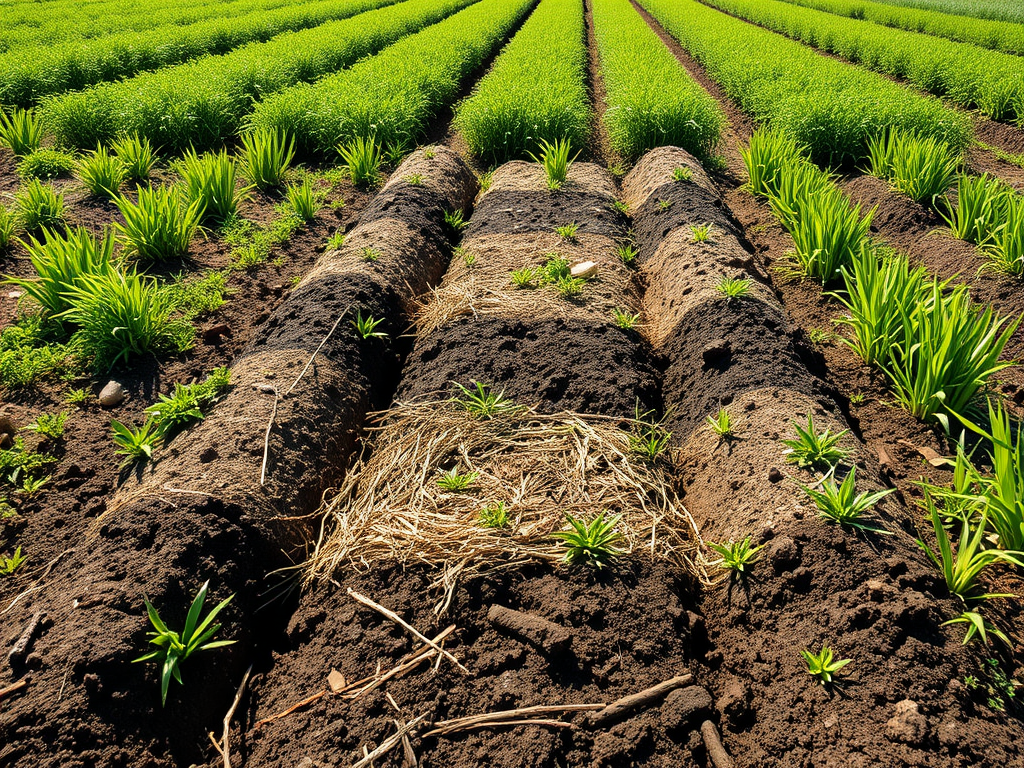
Omidvar et al., in GCB Bioenergy, investigated the effects of combining biochar-based fertilizers and reactive barriers (RBs) on soil carbon storage, moisture retention, and crop yield. The study focused on the use of a biocharBiochar is a carbon-rich material created from biomass decomposition in low-oxygen conditions. It has important applications in environmental remediation, soil improvement, agriculture, carbon sequestration, energy storage, and sustainable materials, promoting efficiency and reducing waste in various contexts while addressing climate change challenges. More reactive barrier (RB) made by layering wood-based biochar, straw mulch, and cow manure into a series of open surface trenches, and a liquid biochar mineral complex (BMC) applied to one side of the RB (fertilized area), while the other side received no treatments (non-fertilized area).
Moisture concentration within the RB ranged from 6.76% up to 56.68% after large rainfall, more than double the surrounding soils and gradually started migrating from the RB outwards. Soil within 50 cm distance of the RB showed a 24.5% increase in non-biochar soil C compared with soil at 600 cm distance of the RB, 2.54% versus 2.04%, respectively, in the non-fertilized area, which was supported with lowering soil microbial activity. Pasture yield increase was associated with liquid BMC fertilizer rather than proximity to the RB. Pasture yield was 44% higher in the fertilized area compared with the non-fertilized area 27.89 t ha−1 versus 19.31 t ha−1. Approximately 158 kg CO2e was removed from the atmosphere for each cubic meter of RB and an annual removal of 150 kg CO2e ha−1 was estimated by liquid BMC application. Income earned by increased yield was still profitable even though applied liquid BMC could cost between USD 400 and 520 ha−1 including shipping costs.
Overall, the study suggested biochar-based RB and BMC fertilizers can effectively increase soil moisture retention while building non-biochar soil C storage in the surrounding soil. The adoption of biochar-based techniques has the potential to improve drought resilience while increasing soil C in a wide range of non-irrigated cropping systems.
SOURCE: Omidvar, N., Joseph, S., Dissanayake, L., Farrar, M. B., Reverchon, F., Burnett, R.,… & Bai, S. H. (2025). Combination of biochar-based fertilizers and reactive barriers improved soil carbon storage, soil moisture retention, and crop yield in short term. GCB Bioenergy, 17, e70021. https://doi.org/10.1111/gcbb.70021





Leave a Reply