
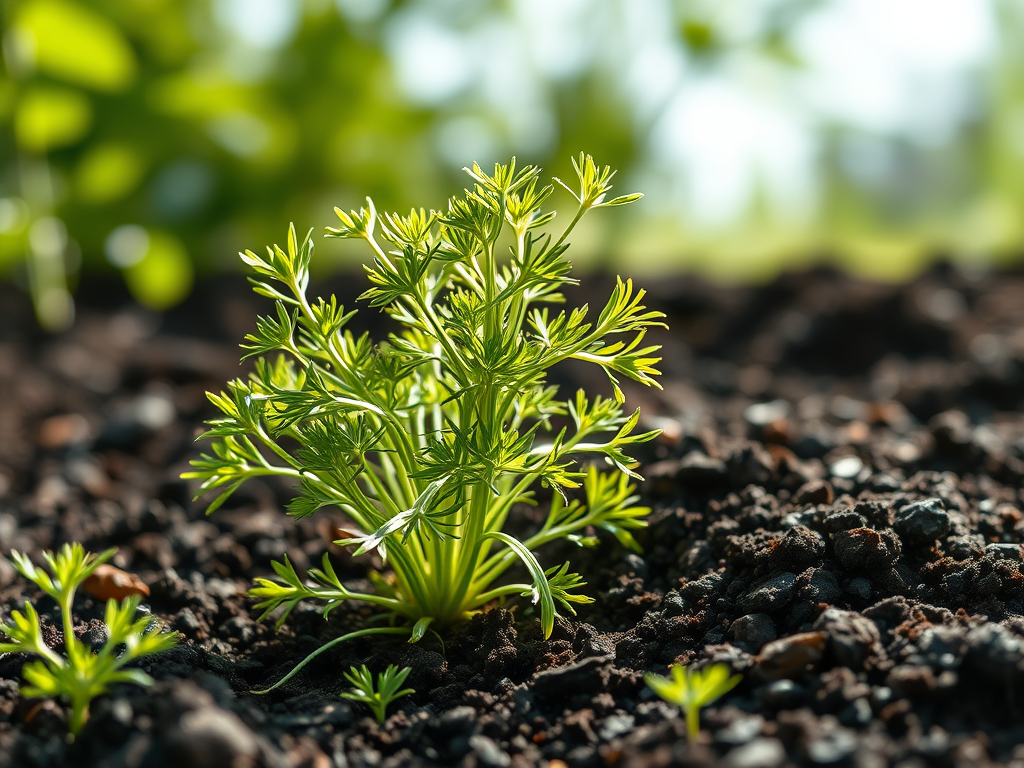
In a study published in Scientific Reports, Kazem Ghassemi-Golezani, Sedigheh Latifi, and Salar Farhangi-Abriz investigated the effects of biocharBiochar is a carbon-rich material created from biomass decomposition in low-oxygen conditions. It has important applications in environmental remediation, soil improvement, agriculture, carbon sequestration, energy storage, and sustainable materials, promoting efficiency and reducing waste in various contexts while addressing climate change challenges. More on dill plants grown in soil contaminated with heavy metals. The research focused on how biochar influences the plants’ physiological processes and growth under copper and nickel stress.
The experiment involved growing dill plants in soil treated with varying levels of plum tree biochar (0, 15, 30, and 45 g/kg) and different combinations of copper and nickel sulfates. The results showed that copper stress reduced biomassBiomass is a complex biological organic or non-organic solid product derived from living or recently living organism and available naturally. Various types of wastes such as animal manure, waste paper, sludge and many industrial wastes are also treated as biomass because like natural biomass these More by 31%, nickel stress by 27%, and combined stress by 37.7%. However, the addition of biochar to the soil mitigated these harmful effects.
Specifically, biochar decreased the uptake of heavy metals, reduced oxidative stress, and lowered the production of osmotic regulators in dill plants. Additionally, it enhanced the uptake of essential nutrients like nitrogen, potassium, calcium, magnesium, iron, and zinc, and improved photosynthetic pigments and overall plant biomass. Notably, increasing the biochar application rate beyond 15 g/kg did not provide additional benefits.
The study concluded that a low application rate of biochar (15 g/kg) derived from agricultural waste is effective in remediating copper and nickel pollution, improving nutrient availability and supporting plant growth. The authors suggest that future research should explore the long-term effectiveness of biochar in various field conditions, soil types, and plant species to optimize sustainable agricultural practices.
SOURCE: Ghassemi-Golezani, K., Latifi, S., & Farhangi-Abriz, S. (2025). Biochar-mediated remediation of nickel and copper improved nutrient availability and physiological performance of dill plants. Scientific Reports, 15(1), 13660.



Leave a Reply