
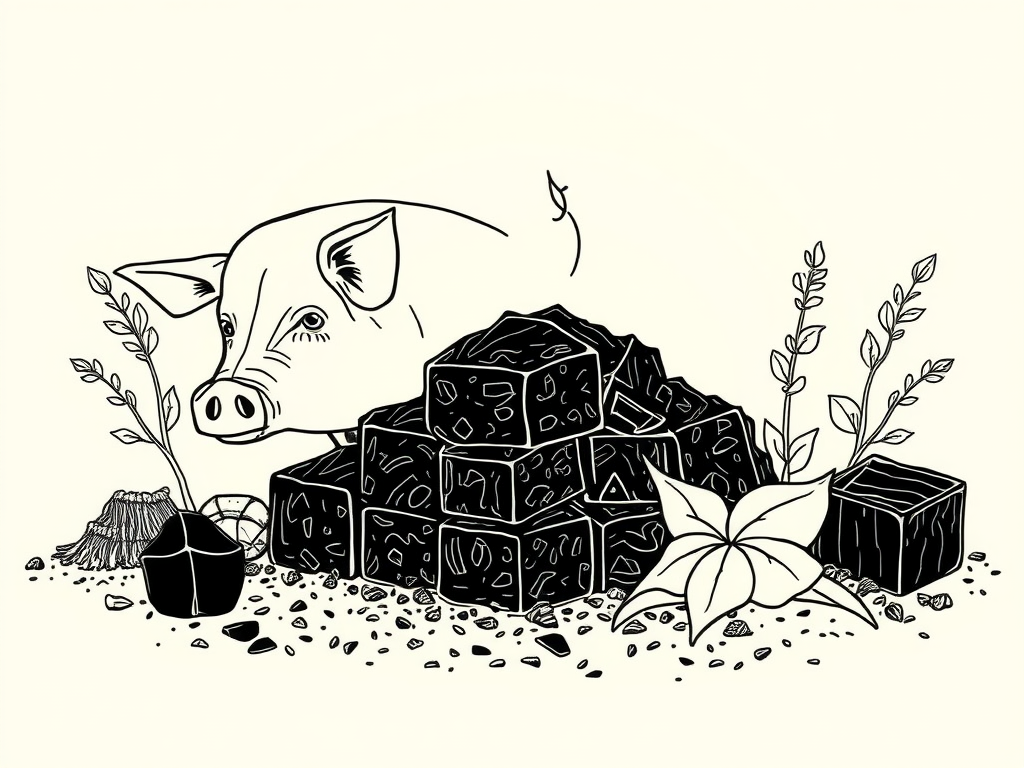
In research published in Agronomy, Zhang et al., examined how biocharBiochar is a carbon-rich material created from biomass decomposition in low-oxygen conditions. It has important applications in environmental remediation, soil improvement, agriculture, carbon sequestration, energy storage, and sustainable materials, promoting efficiency and reducing waste in various contexts while addressing climate change challenges. More affects pig manure composting, with a focus on reducing the bioavailability of heavy metals like copper (Cu) and zinc (Zn) and improving compost maturity. The accumulation of Cu and Zn in pig manure, largely from piglet feed additives, poses a risk for the use of this manure as fertilizer.
The study used self-organizing maps (SOMs) and fluorescence spectroscopy to evaluate compost maturity and heavy metal passivation with varying biochar dosages (0%, 8%, 10%, and 12%). SOMs proved effective in tracking the phases of composting and the transformation of organic matter. Key results showed that 12% biochar accelerated compost maturation, increasing Luteimonas abundance by 241.98% and reducing Terrisporobacter by 92%. This level of biochar also led to the highest passivation rates: 36.36% for Cu and 32.34% for Zn. While 10% biochar promoted the synthesis of some humic substances, it inhibited others. However, it achieved a similar level of compost maturity and comparable Cu (34.85%) and Zn (27.89%) passivation to the 12% biochar treatment. The researchers suggest 10% biochar as a potentially more cost-effective option.
In summary, this research indicates that biochar is a beneficial amendment for pig manure composting, enhancing compost maturity and reducing heavy metal bioavailability. The study also demonstrates the usefulness of SOMs for evaluating compost quality and optimizing biochar application in waste treatment.
SOURCE: Zhang, H., Yu, X., Luo, L., Sun, Y., Zhou, L., & Fu, H. (2025). Self-Organizing Map-Based Assessment of Compost Maturity and Cu/Zn Passivation in Biochar-Amended Pig Manure. Agronomy, 15(778).




Leave a Reply