
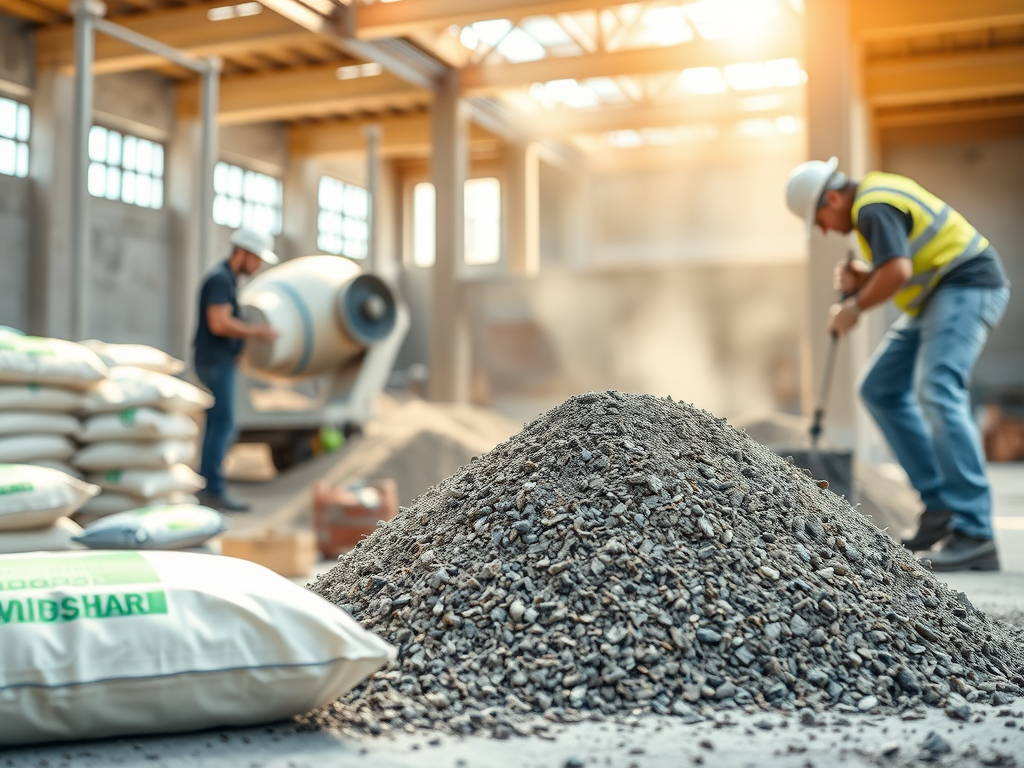
The construction industry is a major contributor to global carbon dioxide (CO2) emissions, primarily due to the production of ordinary Portland cement (OPC). With rising global temperatures and increasing demands for infrastructure, there is a critical need for sustainable construction materials that can reduce this carbon footprint. A research paper published in Discover Sustainability by G. Uday Kiran, G. Nakkeeran, Dipankar Roy, and George Uwadiegwu Alaneme, investigates the impact of incorporating biocharBiochar is a carbon-rich material created from biomass decomposition in low-oxygen conditions. It has important applications in environmental remediation, soil improvement, agriculture, carbon sequestration, energy storage, and sustainable materials, promoting efficiency and reducing waste in various contexts while addressing climate change challenges. More, a material derived from biomassBiomass is a complex biological organic or non-organic solid product derived from living or recently living organism and available naturally. Various types of wastes such as animal manure, waste paper, sludge and many industrial wastes are also treated as biomass because like natural biomass these More waste through pyrolysisPyrolysis is a thermochemical process that converts waste biomass into bio-char, bio-oil, and pyro-gas. It offers significant advantages in waste valorization, turning low-value materials into economically valuable resources. Its versatility allows for tailored products based on operational conditions, presenting itself as a cost-effective and efficient More, as a partial replacement for cement in cementitious composites.
The study’s experimental results demonstrated that including biochar in proportions up to 5 weight percent (wt%) significantly improved the mechanical properties of cementitious composites. Specifically, it enhanced compressive, tensile, and flexural strength. This improvement is primarily attributed to biochar’s ability to promote enhanced hydration, refine the pore structure within the material, and facilitate better interfacial bonding. For instance, studies have shown that replacing 5% of cement with biochar can lead to a 10% increase in compressive strength after 28 days. In terms of flexural strength, incorporating hazelnut-derived biochar as a partial replacement for cement resulted in a significant 30% increase. Optimal mechanical performance is generally observed at 1-5 wt% biochar replacement, with higher proportions potentially compromising workability and increasing porosityPorosity of biochar is a key factor in its effectiveness as a soil amendment and its ability to retain water and nutrients. Biochar’s porosity is influenced by feedstock type and pyrolysis temperature, and it plays a crucial role in microbial activity and overall soil health. Biochar More.
Beyond mechanical strength, the research also found that biochar improved the durability of these materials. This was evidenced by a reduction in water absorption and shrinkage. For example, adding 1 wt% regular biochar and 0.25-2 wt% ground biochar decreased water absorption by 30% and 16-19% respectively, compared to control mixes. The inclusion of 1-3 wt% wood sawdust biochar enhanced water resistance, leading to up to a 35% decrease in water penetration. In terms of shrinkage, incorporating 2 wt% weed tree biochar resulted in a 16.3% decrease in autogenous shrinkage after 180 hours of drying.
These findings highlight biochar’s potential as a sustainable supplementary cementitious material, offering a pathway to reduce concrete’s carbon footprint and contribute to climate change mitigation. Biochar’s capacity to sequester atmospheric CO2 and repurpose biomass waste provides substantial environmental advantages. Its unique physical properties, such as high porosity (40-70%) and large surface area (200-500 m2/g), contribute to its ability to retain water and nutrients, and facilitate carbon trapping. Chemically, its high carbon content and alkaline properties (average pHpH is a measure of how acidic or alkaline a substance is. A pH of 7 is neutral, while lower pH values indicate acidity and higher values indicate alkalinity. Biochars are normally alkaline and can influence soil pH, often increasing it, which can be beneficial More of 6.5-10) enable it to function as a carbon sink and neutralize acidity.
A bibliometric analysis within the study revealed a growing global interest in biochar-based cement technologies, with significant research contributions from Asia and Europe. The number of publications on “biochar in cement” has shown a rapid increase, particularly since 2013, demonstrating a heightened dedication to environmental awareness and sustainable construction.While the study affirms biochar’s role as a viable, eco-friendly alternative in sustainable construction, it also identifies areas for future research. These include the need for long-term durability studies, detailed microstructural interaction analysis, and exploring the synergistic use of biochar with other supplementary cementitious materials. Optimizing biochar production techniques and feedstockFeedstock refers to the raw organic material used to produce biochar. This can include a wide range of materials, such as wood chips, agricultural residues, and animal manure. More selection are crucial for further improving material qualities and maximizing its benefits.
Source: Kiran, G. U., Nakkeeran, G., Roy, D., & Alaneme, G. U. (2025). Impact of biochar on strength, durability, and carbon sequestration in cement based materials. Discover Sustainability, 6(579).



Leave a Reply