
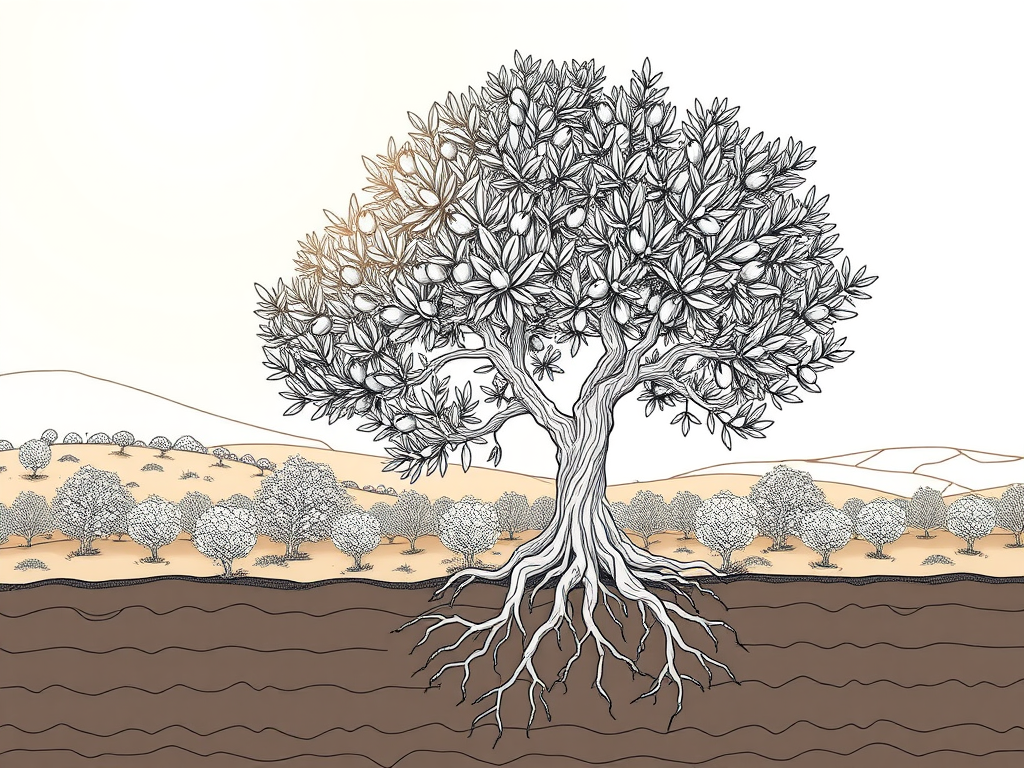
Soil salinization poses a significant threat to agriculture and ecological stability worldwide. Coastal areas are particularly vulnerable, with high salt accumulation, poor water permeability, and nutrient loss hindering plant growth. However, a promising solution may lie in the combined application of bone biocharBiochar is a carbon-rich material created from biomass decomposition in low-oxygen conditions. It has important applications in environmental remediation, soil improvement, agriculture, carbon sequestration, energy storage, and sustainable materials, promoting efficiency and reducing waste in various contexts while addressing climate change challenges. More (BC) and humic acid (HA) as soil amendments. A study published in Biochar by Zhao et al., explores how these amendments can improve soil quality and promote the growth of olive seedlings (Olea europaea L.) in coastal saline soil by enhancing the stoichiometric homeostasis of nutrient elements.
This research highlights that the combined application of BC and HA at a 5% rate significantly improved soil properties. It led to increased soil porosityPorosity of biochar is a key factor in its effectiveness as a soil amendment and its ability to retain water and nutrients. Biochar’s porosity is influenced by feedstock type and pyrolysis temperature, and it plays a crucial role in microbial activity and overall soil health. Biochar More and a notable decrease in soil sodium content, creating a more favorable environment for plant development. BH treatments significantly enhanced chlorophyll ‘a’ content by 23%-26%, chlorophyll ‘b’ content by 25%-30%, total chlorophyll content by 23%-27%, and transpiration rate by 54%-84% compared to the control. These improvements in photosynthetic pigments and gas exchange capacity likely contributed to the better growth observed with BH treatments. Furthermore, the amendments mitigated lipid peroxidation, with BH treatments decreasing malondialdehyde (MDA) content by 8%-30%. The activity of antioxidant enzymes like superoxide dismutase (SOD) also significantly increased by 24%-40% under BH treatments, demonstrating a reduction in salt-induced stress.
The study also revealed the positive impact of these amendments on nutrient uptake and stoichiometric balance in Olea europaea. While carbon and phosphorus content didn’t change significantly, nitrogen content in shoots and roots increased by 39%-58% and 24%-46% respectively, under BC treatments. This led to a significant reduction in the carbon:nitrogen (C:N) ratio in the aboveground parts and an increase in the nitrogen:phosphorus (N:P) ratio. The ecological stoichiometric homeostatic index, which indicates an organism’s ability to maintain stable nutrient composition, was stronger under BH treatment, indicating a more stable plant-soil system. This suggests that combined BC and HA application helps olive trees maintain nutrient stability by absorbing and storing nutrients in their roots, leading to better growth.
Overall, the findings suggest that the combined application of bone biochar and humic acid is a more efficient and cost-effective ecological restoration technology for coastal saline areas. This approach can facilitate the large-scale cultivation of Olea europaea as both a coastal shelter forest and a cash crop, offering valuable insights for optimizing biochar use in sustainable agriculture. While these conclusions are based on greenhouse experiments, they provide a strong foundation for future long-term field trials to confirm these promising results.
Source: Zhao, W., Xiao, J., Wang, S., Gai, X., & Chen, G. (2025). Bone biochar and humic acid improved soil quality and promoted Olea europaea growth in coastal saline soil by enhancing the stoichiometric homeostasis of nutrient elements. Biochar, 7(70).


![Eucalyptus Wood Waste-Derived Biochar Achieves a Ninety-Eight Percent Removal Efficiency for Benzo[ghi]perylene in Vehicle-Wash Wastewater](https://biochartoday.com/wp-content/uploads/2026/10/SCIENCE-BLOGS-2026-2026-10-19T160523.703.jpg)

Leave a Reply