
Key Takeaways
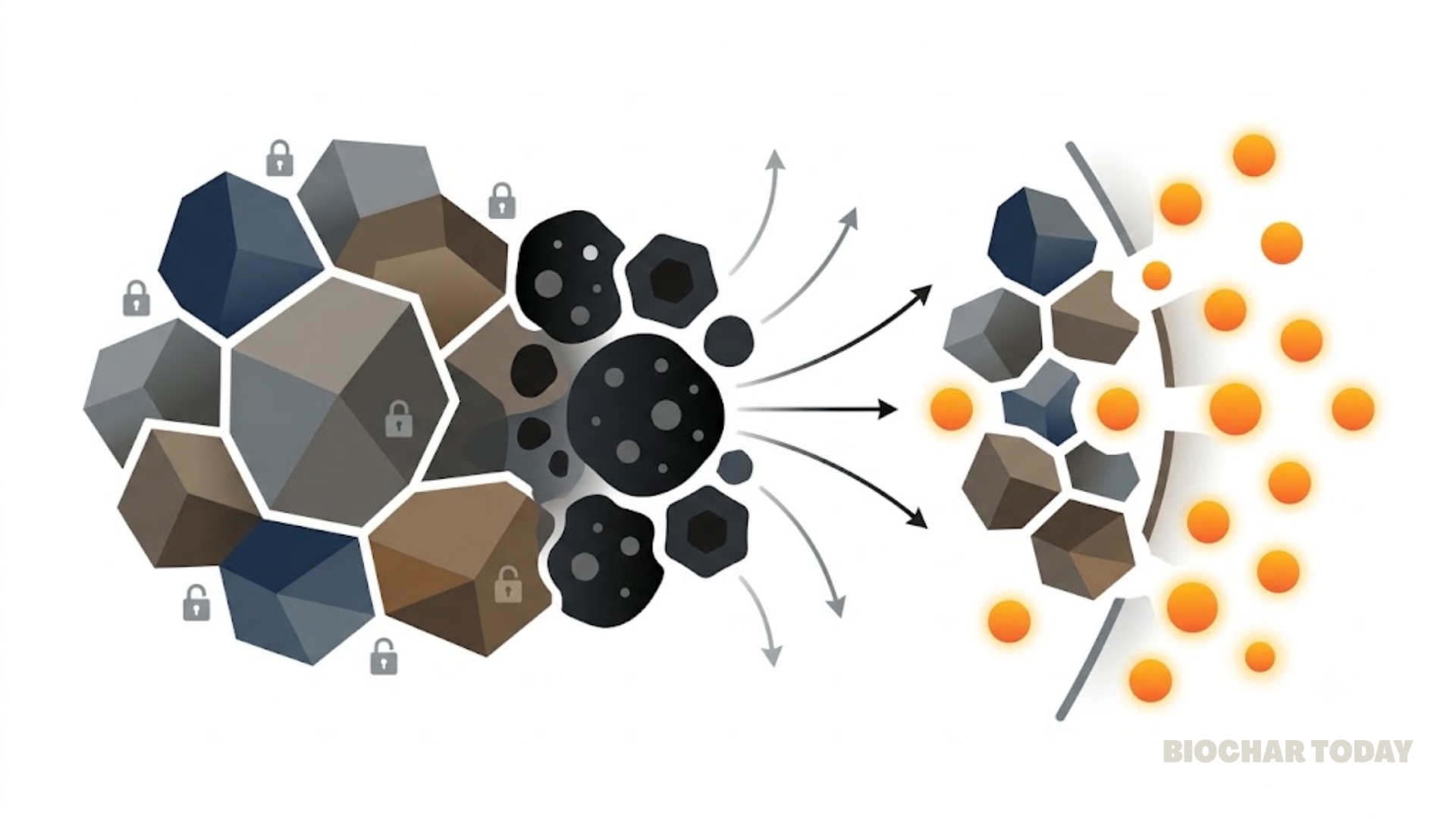
- Adding biocharBiochar is a carbon-rich material created from biomass decomposition in low-oxygen conditions. It has important applications in environmental remediation, soil improvement, agriculture, carbon sequestration, energy storage, and sustainable materials, promoting efficiency and reducing waste in various contexts while addressing climate change challenges. More to organic waste compost activates locked nutrients so crops can use them.
- Biochar boosts the growth and diversity of beneficial soil bacteria during the composting process.
- Specialized bacteria release natural compounds that break down trapped minerals.
- Mixing biochar creates a stronger and more stable community of helpful microbes.
- This technique offers a sustainable way to recycle waste and reduce reliance on chemical fertilizers.
Phosphorus is an essential nutrient for growing healthy crops, but much of it remains locked away in soils as insoluble minerals that plant roots cannot absorb. Traditional chemical fertilizers help overcome this limitation, yet their overuse creates environmental challenges and relies on finite natural reserves. Agricultural waste, such as crop residues and animal manure, contains large amounts of phosphorus that could serve as a sustainable alternative. In a study published in Scientific Reports by authors Fengzhen Fu, Liqin Zhao, Bowen Fan, Ning Wang, and Fengjun Yang, researchers explored how adding biochar to a mixture of rice stover and sheep manure could transform trapped nutrients into usable plant food.
The research team set up a fifty-nine-day composting experiment comparing standard compost against a mixture containing ten percent biochar. Over the course of the process, the addition of biochar altered the physical and chemical environment within the compost piles, creating optimal conditions for specialized microbes to thrive. The porous surface of the biochar provided protective homes and better air movement, allowing bacteria to multiply and perform their essential ecological jobs.
A major finding of the research was the significant breakdown of tightly bound, non-usable phosphorus compounds. In standard compost, stable mineral forms of phosphorus remain locked away and unavailable. However, biochar addition led to a thirty-three percent reduction in tricalcium-bound phosphorus during the early heating stages and a nearly sixteen percent drop in occluded phosphorus by the final maturation stage. At the same time, the proportion of moderately available phosphorus increased, indicating that hard-to-reach nutrient pools were successfully converted into forms that crops can access more easily.
The driving force behind this chemical transformation was a specific group of alkaline phosphatase-harboring bacteria. High-throughput genetic sequencing revealed that biochar significantly elevated both the richness and overall diversity of these specialized bacterial populations. The biochar treatment also increased enzyme activity throughout the middle and late stages of composting. Rather than acting alone through direct chemical interactions, these bacteria secreted organic acids and altered local microenvironments, effectively dissolving stubborn mineral coatings and liberating trapped nutrients.
Detailed network analyses showed that biochar strengthened the complex social web among these helpful bacteria. The microbial communities developed tighter connections, greater structural stability, and better resistance to environmental stresses. Researchers successfully isolated five key bacterial strains capable of breaking down hard minerals, belonging to common soil groups such as Bacillus and Pseudomonas. Removing these key strains in digital models caused a dramatic increase in network vulnerability, proving that biochar supports vital anchor species that keep the whole nutrient-recycling system functioning smoothly.
Statistical modeling further confirmed a major shift in how compost dynamics work. In traditional compost, nutrient changes were mostly dictated by physical conditions like moisture, carbon levels, and acidity. By contrast, adding biochar allowed biological forces to take center stage, turning active microbial communities and enzyme production into the primary drivers of nutrient release. By harnessing natural bacterial networks, biochar-amended composting offers a practical, high-efficiency pathway for recycling agricultural waste into high-value organic fertilizers.
Source: Fu, F., Zhao, L., Fan, B., Wang, N., & Yang, F. (2026). Biochar promotes the dissolution of inorganic inactive phosphorus by strengthening phoD-harboring bacterial communities during rice stover and sheep manure co-composting. Scientific Reports, 16, Article 70373.


Leave a Reply