
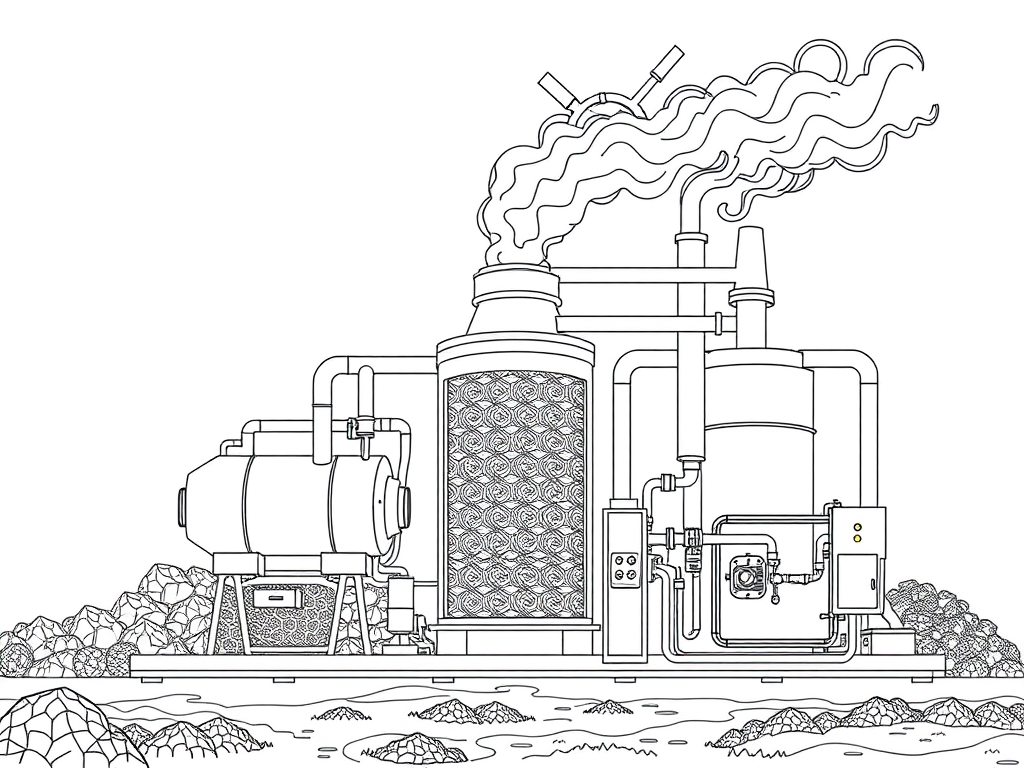
In a review published in Resources Chemicals and Materials, Aghietyas Choirun Az Zahra and fellow researchers discuss how biocharBiochar is a carbon-rich material created from biomass decomposition in low-oxygen conditions. It has important applications in environmental remediation, soil improvement, agriculture, carbon sequestration, energy storage, and sustainable materials, promoting efficiency and reducing waste in various contexts while addressing climate change challenges. More can be used to improve the biomassBiomass is a complex biological organic or non-organic solid product derived from living or recently living organism and available naturally. Various types of wastes such as animal manure, waste paper, sludge and many industrial wastes are also treated as biomass because like natural biomass these More gasificationGasification is a high-temperature, thermochemical process that converts carbon-based materials into a gaseous fuel called syngas and solid by-products. It takes place in an oxygen-deficient environment at temperatures typically above 750°C. Unlike combustion, which fully burns material to produce heat and carbon dioxide (CO2), gasification More process.
Biomass gasification stands out as a promising thermochemical conversion method to transform solid biomass (organic matter from plants) into valuable energy carriers, most notably hydrogen. This technology is seen as a key player in the transition towards cleaner energy systems, offering a renewable alternative to traditional fossil fuels like coal and oil. Unlike simply burning biomass, gasification converts it into a gas mixture (syngasSyngas, or synthesis gas, is a fuel gas mixture consisting primarily of hydrogen and carbon monoxide. It is produced during gasification and can be used as a fuel source or as a feedstock for producing other chemicals and fuels. More) that can be used for various applications. However, a significant and persistent challenge in biomass gasification is the generation of tar. Tar is not the stuff used to pave roads; in this context, it refers to a complex mixture of hydrocarbons, including aromatic compounds, that are produced during the gasification process. These tar compounds can condense and cause a multitude of operational problems. They can clog pipes, foul equipment, deactivate catalysts used in downstream processes, and ultimately reduce the overall efficiency of the energy production.
This review emphasizes the crucial role of biochar as a catalyst to mitigate tar formation and enhance its removal. Biochar is a carbon-rich solid material produced through the pyrolysisPyrolysis is a thermochemical process that converts waste biomass into bio-char, bio-oil, and pyro-gas. It offers significant advantages in waste valorization, turning low-value materials into economically valuable resources. Its versatility allows for tailored products based on operational conditions, presenting itself as a cost-effective and efficient More (thermal decomposition in the absence of oxygen) of biomass. The authors highlight that biochar isn’t just a byproduct; it actively participates in the gasification process. The effectiveness of biochar lies in its capacity to interact synergistically with biomass during gasification. This “synergistic effect” means that the combined action of biochar and biomass is more effective than the sum of their individual effects. Specifically, biochar promotes “tar reforming,” which involves breaking down the complex tar molecules into simpler, less problematic gases. This not only reduces the tar problem but can also increase the yield of valuable products like hydrogen.
SOURCE: Az Zahra, A. C. A., Alahakoon, A. M. Y. W., Zhu, L., Prakoso, T., Abudula, A., & Guan, G. (2025). Biochar-assisted gasification of raw biomass: a review on the reactivity and synergistic effect on tar reforming. Resources Chemicals and Materials, (1), 100115.





Leave a Reply