

The escalating presence of microplastics in our aquatic environments has become a critical global concern, threatening both marine and freshwater ecosystems and potentially impacting human health. These tiny plastic fragments, typically smaller than 5 mm, originate from the breakdown of larger plastic waste and various industrial sources. Traditional methods for removing microplastics, such as filtration and coagulation, have often fallen short, proving either ineffective or economically unviable on a large scale. However, a new review by C. O. Obadimu, S. E. Shaibu, and I. O. Ekwere in the World Journal of Innovative Research highlights biocharBiochar is a carbon-rich material created from biomass decomposition in low-oxygen conditions. It has important applications in environmental remediation, soil improvement, agriculture, carbon sequestration, energy storage, and sustainable materials, promoting efficiency and reducing waste in various contexts while addressing climate change challenges. More as a highly promising, sustainable, and efficient alternative for mitigating this pervasive pollution.
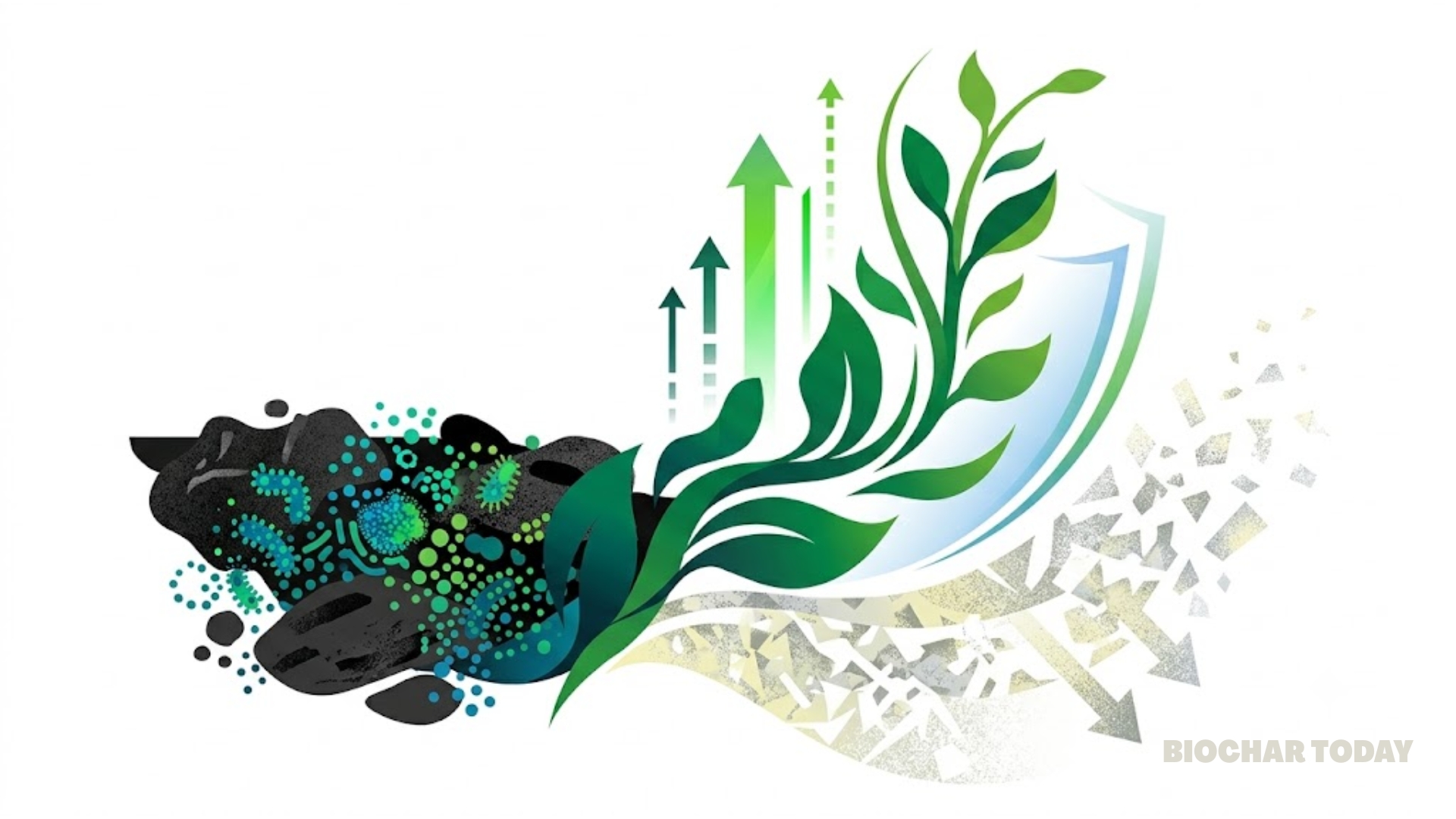
Biochar’s effectiveness as an adsorbent stems from its unique properties: a high surface area, a porous structure, and a functionalized carbon surface. These characteristics allow it to effectively adsorb various pollutants, including microplastics, heavy metals, and organic contaminants. This application of biochar aligns well with circular economy principles by repurposing agricultural and organic waste materials.
The adsorption of microplastics onto biochar occurs through several key mechanisms including hydrophobic, electrostatic and strong π-π electron donor-acceptor interactions with aromatic microplastics. The effectiveness of these interactions depends on the pyrolysisPyrolysis is a thermochemical process that converts waste biomass into bio-char, bio-oil, and pyro-gas. It offers significant advantages in waste valorization, turning low-value materials into economically valuable resources. Its versatility allows for tailored products based on operational conditions, presenting itself as a cost-effective and efficient More temperature, as higher temperatures lead to increased structural ordering and improved π-π interactions.
Several factors influence biochar’s microplastic adsorption efficiency, including its surface area and porosityPorosity of biochar is a key factor in its effectiveness as a soil amendment and its ability to retain water and nutrients. Biochar’s porosity is influenced by feedstock type and pyrolysis temperature, and it plays a crucial role in microbial activity and overall soil health. Biochar More, surface functional groups, pyrolysis temperature, and modifications. Biochar produced at higher temperatures (e.g., 750°C) tends to exhibit higher removal efficiency due to a more developed porous structure and larger surface area. However, excessively high temperatures (above 800°C) can lead to a loss of surface functional groups, potentially reducing electrostatic interactions. Modifications such as chemical activation (using acids or bases), metal impregnation (with iron, magnesium, or manganese), and functionalization with nanomaterials (like graphene oxide) have been shown to significantly enhance biochar’s adsorption capabilities. For example, studies have shown that modified biochar can achieve over 90% removal efficiency for polystyrene microplastics.
When compared to other microplastic remediation techniques, biochar consistently demonstrates superior efficiency. For instance, photocatalysis (ultraviolet treatment) yielded only 89.3% removal for polyethylene terephthalate (PET) and a mere 6.4% for polyethylene (PE). Microbial degradation by bacteria like Bacillus cereus and Bacillus subtilis showed even lower efficiencies, ranging from 1.6% to 7.4% weight loss for various microplastics. In contrast, biochar, including woodchip biochar, has been reported to achieve nearly 100% removal rates for polystyrene microplastics. Rice-straw-derived biochar even showed a 99.6% removal efficiency for polystyrene nanoplastics.
The advantages of biochar extend beyond its high efficacy. It is an inexpensive and readily available resource, being derived from agricultural and forestry waste. Advancements in pyrolysis technology have also improved production efficiency and reduced costs. Furthermore, biochar production and use contribute to greenhouse gas mitigation and carbon sequestration, offering additional environmental benefits. Despite its significant potential, ongoing research is needed to address challenges such as ensuring biochar’s long-term stability, managing desorption risks, and developing effective regeneration methods in dynamic water systems. Nevertheless, biochar represents a promising and eco-friendly strategy that could revolutionize plastic pollution management in aquatic environments.
Source: Obadimu, C. O., Shaibu, S. E., & Ekwere, I. O. (2025). Biochar As a Microplastic Adsorbent: Mitigating Plastic Pollution in Aquatic Systems. World Journal of Innovative Research, 18(2), 01-11.



Leave a Reply