
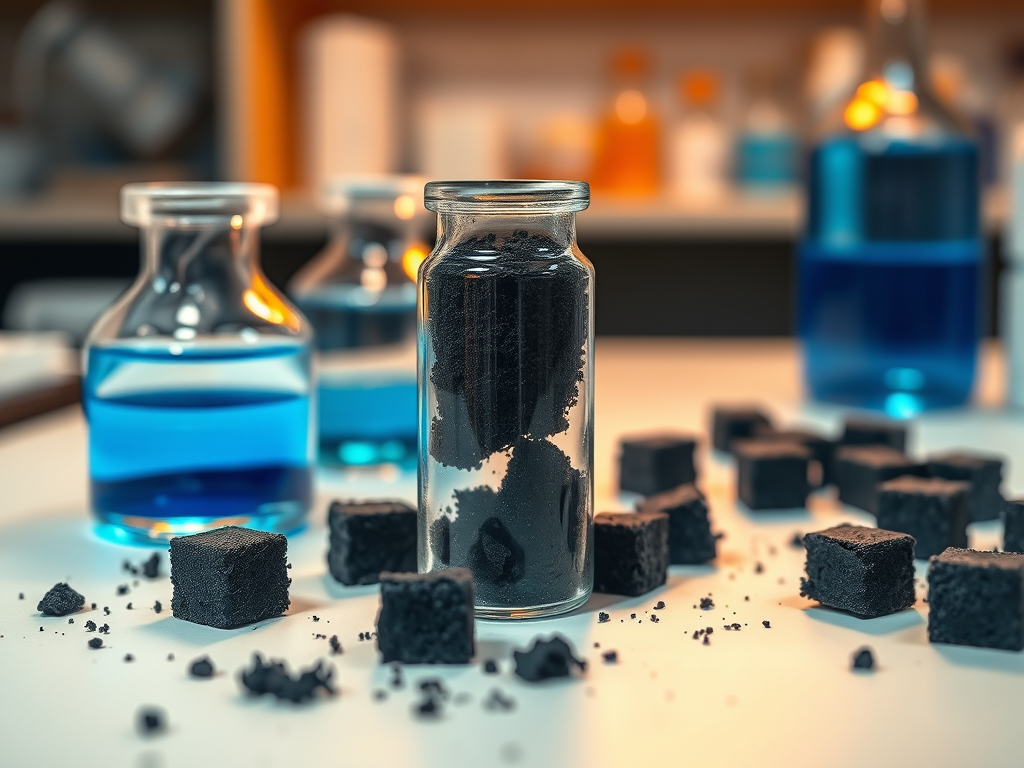
In a study published in Water, Ana Paula Soares Dias and colleagues explored the use of biocharBiochar is a carbon-rich material created from biomass decomposition in low-oxygen conditions. It has important applications in environmental remediation, soil improvement, agriculture, carbon sequestration, energy storage, and sustainable materials, promoting efficiency and reducing waste in various contexts while addressing climate change challenges. More derived from seaweed biomassBiomass is a complex biological organic or non-organic solid product derived from living or recently living organism and available naturally. Various types of wastes such as animal manure, waste paper, sludge and many industrial wastes are also treated as biomass because like natural biomass these More to treat dye-contaminated wastewater. The research focused on the effectiveness of this biochar in removing methylene blue (MB), a common dye pollutant.
The researchers prepared biochar from seaweed collected from Portuguese seashores by carbonizing it at 300°C and 400°C. The biochar’s adsorption capacity was tested with methylene blue solutions. Results showed that biochar carbonized at 400°C and then ball-milled exhibited the best adsorption performance, achieving a maximum adsorption capacity of 500 mg of MB per gram of biochar.
The study also found that higher temperatures and pHpH is a measure of how acidic or alkaline a substance is. A pH of 7 is neutral, while lower pH values indicate acidity and higher values indicate alkalinity. Biochars are normally alkaline and can influence soil pH, often increasing it, which can be beneficial More levels up to 12 improved the adsorption efficiency of the biochar. Further analysis using infrared reflectance spectra confirmed that π−π interactions and hydrogen bonding were involved in the adsorption process.
The authors concluded that seaweed-derived biochar is a promising, sustainable, and effective material for water purification, offering a simple preparation method without the need for high-temperature thermal activation or chemical treatment.
SOURCE: Soares Dias, A. P., Santos, F. A., Rijo, B., Simes, D. C., Pereira, L., & Pereira, M. F. C. (2025). Seaweed-Derived Biochar for Effective Treatment of Dye-Contaminated Wastewater. Water, 17(8), 1215.


Leave a Reply