

Key Takeaways
- Ball milling biocharBiochar is a carbon-rich material created from biomass decomposition in low-oxygen conditions. It has important applications in environmental remediation, soil improvement, agriculture, carbon sequestration, energy storage, and sustainable materials, promoting efficiency and reducing waste in various contexts while addressing climate change challenges. More with iron powder creates an effective composite for treating persistent antibiotic pollutants in wastewater.
- Combining the biochar composite with a chemical activator removes 98% of the targeted antibiotic within 60 minutes.
- The composite speeds up the chemical breakdown rate by nearly four times compared to using iron alone.
- The process works via multiple reactive pathways and breaks down 62.7% of the total organic carbon in the water.
- Performance depends heavily on acidic conditions, with efficiency dropping significantly in natural spring water or alkaline environments.
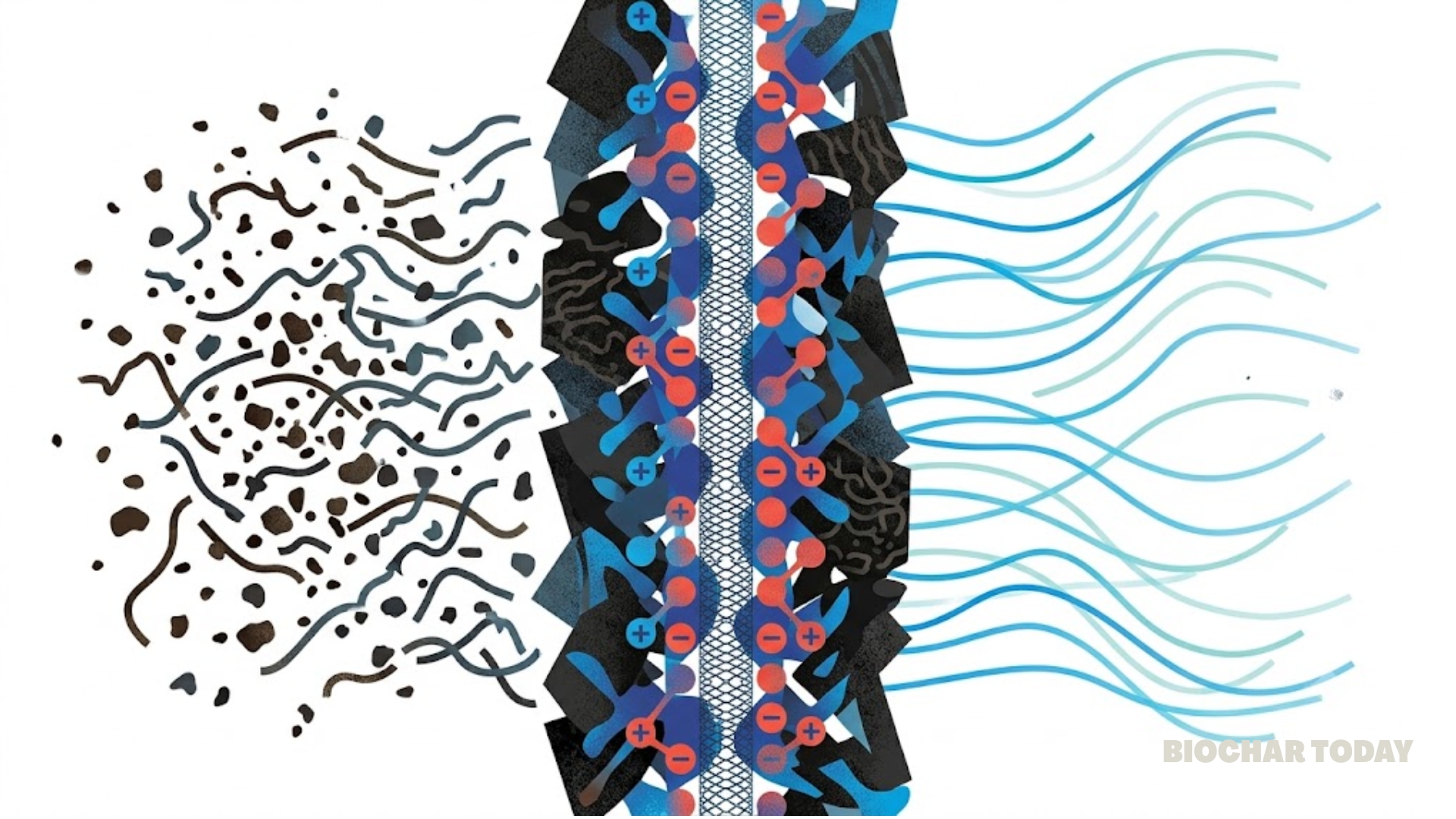
A recent study in Scientific Reports by Jianfeng Wang, Zhijun Wang, Jingting Geng, and Yong Zhu evaluates a ball-milled biochar-supported zero-valent iron composite as a chemical activator for treating the persistent antibiotic sulfamethoxazole in water.Conventional wastewater treatment facilities often fail to remove persistent pharmaceutical compounds like sulfamethoxazole, allowing these substances to enter natural waterways and contribute to antibiotic resistance. Sulfate radical-based advanced oxidation processes using peroxymonosulfate offer a promising solution for breaking down such refractory pollutants. However, zero-valent iron activators tend to suffer from severe particle aggregation and surface passivation, which drastically limits their long-term reactivity. To overcome these material drawbacks, researchers synthesized a composite material by ball milling coconut shell-derived biochar with zero-valent iron powder. The process disrupts iron oxide layers and creates close carbon-iron contact, forming an optimized 1:10 mass ratio composite that resists particle clump formation and enhances chemical reaction sites.
When tested under baseline acidic laboratory conditions, the composite system removed 98.0% of sulfamethoxazole within 60 minutes. The observed pseudo-first-order rate constant reached 0.0628 per minute, representing a 3.69-fold enhancement over a standard zero-valent iron system and an 8.16-fold increase over an unmilled mixture. Comprehensive chemical probing, electron paramagnetic resonance analysis, and solvent-isotope tests revealed that degradation occurred through coexisting radical and non-radical pathways, including sulfate radicals, hydroxyl radicals, superoxide radicals, and singlet oxygen. The process achieved a total organic carbon removal rate of 62.7%, confirming that the antibiotic was partially mineralized into basic molecules rather than merely broken into minor secondary compounds.
Despite these high laboratory removal rates, the study identified key operating boundaries that currently limit real-world deployment. The reaction rate proved highly pH-dependent, dropping by approximately 30-fold when the initial pHpH is a measure of how acidic or alkaline a substance is. A pH of 7 is neutral, while lower pH values indicate acidity and higher values indicate alkalinity. Biochars are normally alkaline and can influence soil pH, often increasing it, which can be beneficial More increased from acidic pH 3 to alkaline pH 9. When tested in unadjusted natural spring water at pH 6.36, removal dropped to 65.34% due to natural organic matter competition and decreased iron reactivity. Additionally, repeated testing over five cycles saw removal efficiency decline to 69.0% alongside measurable iron leachingLeaching is the process where nutrients are dissolved and carried away from the soil by water. This can lead to nutrient depletion and environmental pollution. Biochar can help reduce leaching by improving nutrient retention in the soil. More. Addressing these environmental limitations through improved interfacial engineering will be essential for advancing biochar-iron composites toward practical wastewater treatment applications.
Source: Wang, J., Wang, Z., Geng, J., & Zhu, Y. (2026). Biochar supported zero valent iron activates peroxymonosulfate to degrade sulfamethoxazole through radical and nonradical pathways. Scientific Reports, 16, Article 71614.




Leave a Reply