

Key Takeaways
- Adding a moderate amount of rice straw biocharBiochar is a carbon-rich material created from biomass decomposition in low-oxygen conditions. It has important applications in environmental remediation, soil improvement, agriculture, carbon sequestration, energy storage, and sustainable materials, promoting efficiency and reducing waste in various contexts while addressing climate change challenges. More to agricultural soil significantly increases crop yields and improves plant growth.
- Biochar improves soil health by helping the ground hold more nutrients and water, creating a better environment for useful soil microbes.
- Plants become much better at absorbing and using applied nitrogen fertilizers when biochar is present.
- Using an optimal amount of biochar works best, as applying excessive amounts does not provide extra benefits.
- The positive effects of biochar on nitrogen absorption actually grow stronger over time in intensive farming setups.
A recent study published in Nitrogen Cycling by authors Zonghai Chen, Yige Liu, Jiashuai Hu, Ying Lu, Lars Elsgaard, and Bo Li evaluated the impacts of rice straw biochar on vegetable production in intensive farming systems. Intensive vegetable farming often involves excessive fertilizer application to maximize short-term production, leading to low nutrient efficiency and degraded soil health. Subtropical red soils in regions like Southern China are especially vulnerable to soil acidification and nutrient loss. To find a sustainable solution, researchers conducted a two-year field experiment assessing how various biochar application rates affect vegetable yields, nitrogen utilization, and underlying soil health metrics.
The field trial compared five biochar application levels ranging from zero to forty tons per hectare. Over two years, the study measured changes in crop production, nitrogen absorption, physical soil structure, nutrient levels, and microbial activity. The findings demonstrated that applying biochar significantly improves the overall quality of degraded agricultural soils. Specifically, biochar treatments increased soil organic carbon, boosted available potassium levels, and enhanced the stability of soil aggregates, which helps the ground resist erosion and maintain vital pore space. Biochar also fostered a more active microbial community, showing notable increases in total microbial biomassBiomass is a complex biological organic or non-organic solid product derived from living or recently living organism and available naturally. Various types of wastes such as animal manure, waste paper, sludge and many industrial wastes are also treated as biomass because like natural biomass these More.
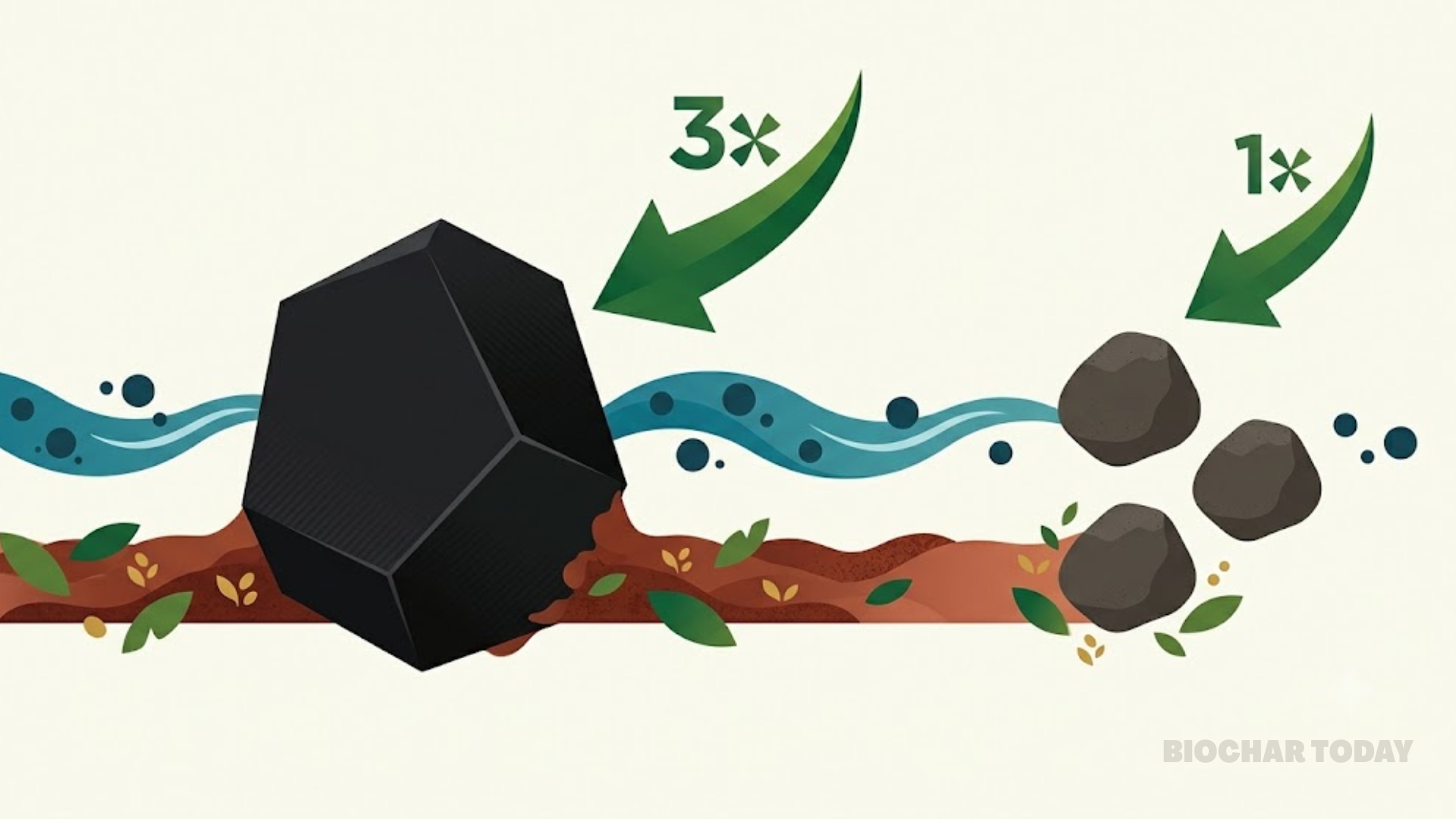
The physical and chemical enhancements in the soil directly translated into superior agricultural performance. Vegetable crops grown with biochar achieved notable increases in total yield alongside substantial improvements in nitrogen uptake and nitrogen use efficiency. Interestingly, the beneficial effects on nitrogen efficiency grew even stronger during the second year of the experiment, demonstrating the long-term utility of biochar amendments. Furthermore, biochar helped balance soil nutrient dynamics by reducing excess available phosphorus, mitigating the environmental risks associated with over-fertilization in intensive farming systems.
The research highlighted a non-linear relationship between biochar application rates and agricultural gains. The optimal benefits occurred at a moderate application rate of twenty tons per hectare. Increasing the application rate beyond this threshold to thirty or forty tons per hectare failed to generate additional increases in vegetable yield or nutrient efficiency. High application rates led to diminishing returns due to potential nutrient imbalances or temporary disruptions to beneficial soil microbes. Advanced modeling confirmed that biochar drives higher crop yields indirectly by enhancing nutrient availability and promoting a healthier soil microbiome.
Source: Chen, Z., Liu, Y., Hu, J., Lu, Y., Elsgaard, L., & Li, B. (2026). Biochar enhanced the vegetable production and nitrogen use efficiency by improving soil quality in intensive vegetable fields in Southern China. Nitrogen Cycling, 2, e026.



Leave a Reply