
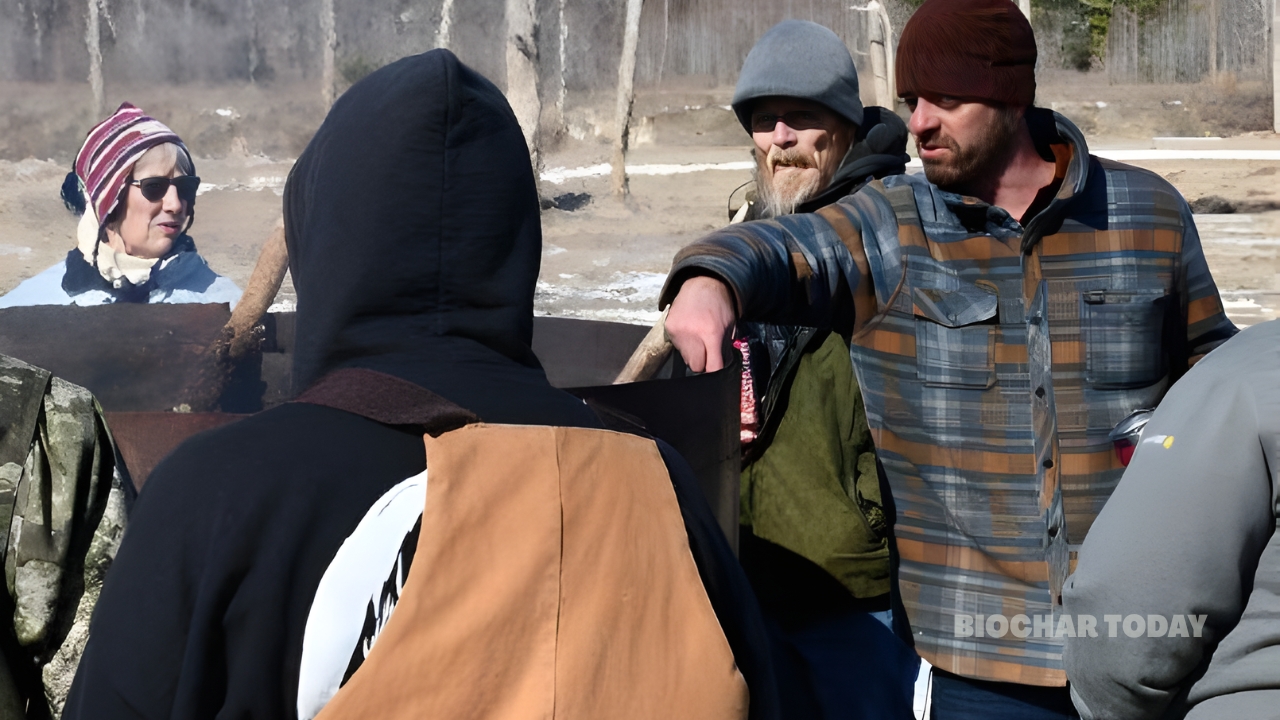
In the United States, a collaborative effort between the Appalachian Resource Conservation and Development Council (ARCD), the Nolichucky Outdoor Recreation Association, and Circleworks is repurposing storm debris to aid in disaster recovery. Following the extensive destruction caused by Hurricane Helene, these organizations held a technical workshop in Erwin, Tennessee, to demonstrate how wood waste can be converted into biocharBiochar is a carbon-rich material created from biomass decomposition in low-oxygen conditions. It has important applications in environmental remediation, soil improvement, agriculture, carbon sequestration, energy storage, and sustainable materials, promoting efficiency and reducing waste in various contexts while addressing climate change challenges. More. The initiative focuses on localized, low-barrier production methods to help farmers and landowners manage the vast quantities of downed timber while simultaneously addressing long-term land restoration needs in the affected region.
The primary challenge addressed by this partnership is the dual burden of catastrophic organic waste and severe soil degradation following record-level flooding. Hurricane Helene left the Nolichucky River area with heavy deposits of sandy and silty sediment, which lack the organic matter and structure necessary for productive agriculture. Furthermore, the sheer volume of fallen trees and woody debris poses a significant disposal problem; traditional burning or landfilling of this material would result in wasted resources and high carbon emissions. The region required a strategy that could manage this waste while actively repairing the biological and physical integrity of flood-damaged soils.
The solution implemented by ARCD and its partners involves the use of specialized kilns to process the woody debris through controlled pyrolysisPyrolysis is a thermochemical process that converts waste biomass into bio-char, bio-oil, and pyro-gas. It offers significant advantages in waste valorization, turning low-value materials into economically valuable resources. Its versatility allows for tailored products based on operational conditions, presenting itself as a cost-effective and efficient More. By heating the wood at high temperatures in a low-oxygen environment, the volatile compounds are removed, leaving behind a stable carbon structure. During the workshop, instructors demonstrated the “full cook” method, ensuring the material reaches a glowing state without open flames to produce high-quality biochar. This approach allows community members to utilize accessible technology to transform a liability—storm waste—into a soil amendmentA soil amendment is any material added to the soil to enhance its physical or chemical properties, improving its suitability for plant growth. Biochar is considered a soil amendment as it can improve soil structure, water retention, nutrient availability, and microbial activity. More that improves water retention and nutrient cycling in sandy, flood-affected areas.
The outcomes of this initiative include the direct conversion of storm-related waste into a value-added product for regional soil rehabilitation. Workshop participants, including farmers and conservationists, gained the technical skills to implement decentralized biochar production, reducing the community’s reliance on external waste management services. Beyond the immediate disposal of debris, the application of biochar to local fields is expected to enhance soil fertility and sequester carbon for decades. This model of resource sharing between Tennessee and North Carolina organizations establishes a scalable framework for using biochar as a standard tool in climate resilience and disaster recovery.




Leave a Reply