
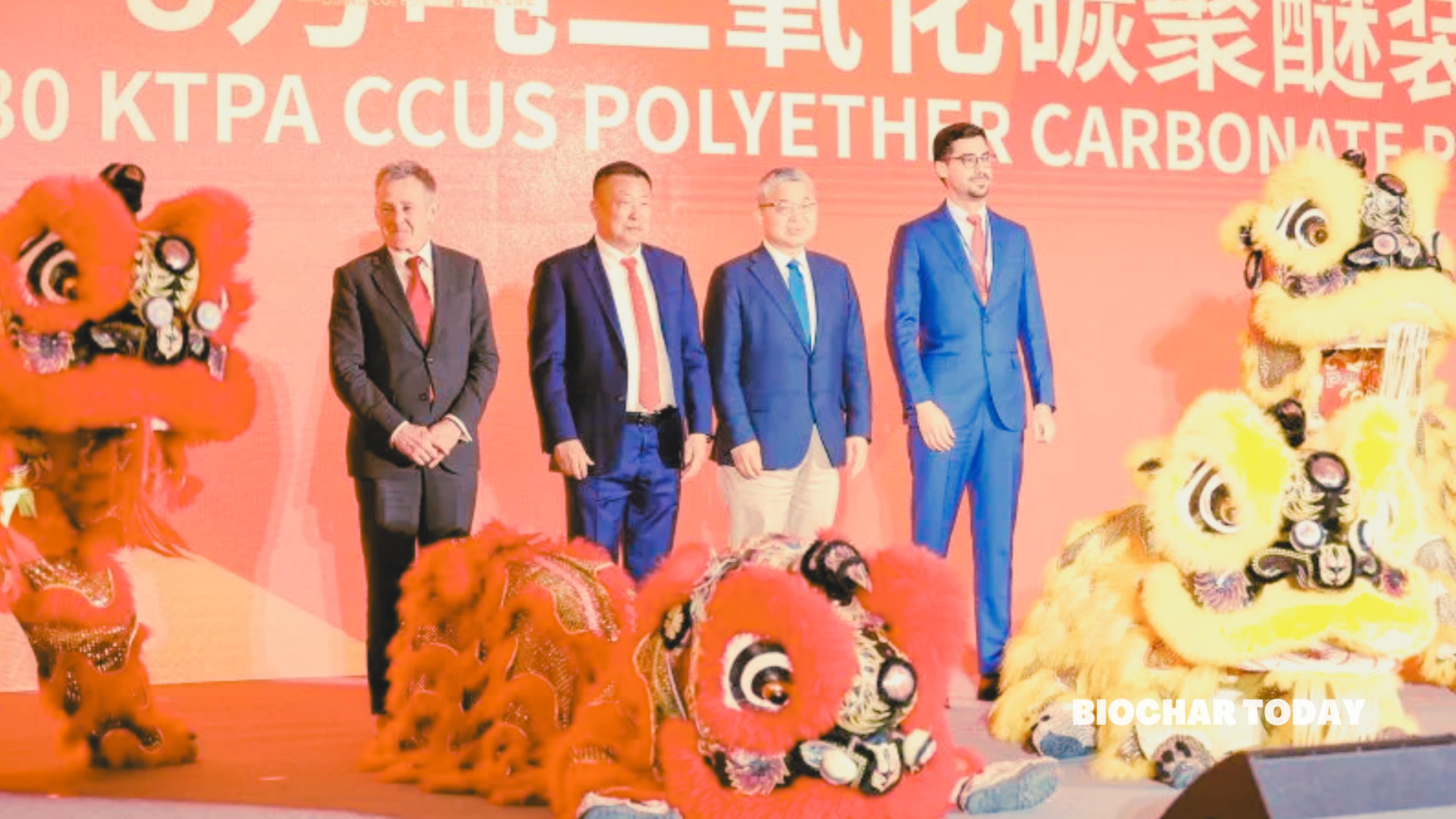
Altitude and Empacar S.A. have announced a significant commercial agreement for the delivery of over 305,000 tonnes of biochar-based carbon dioxide removal (CDR). This partnership, centered in Bolivia, represents a substantial expansion of the voluntary carbon market within South America. By utilizing industrial-scale pyrolysisPyrolysis is a thermochemical process that converts waste biomass into bio-char, bio-oil, and pyro-gas. It offers significant advantages in waste valorization, turning low-value materials into economically valuable resources. Its versatility allows for tailored products based on operational conditions, presenting itself as a cost-effective and efficient More technology, the project aims to convert agricultural residues into stable biocharBiochar is a carbon-rich material created from biomass decomposition in low-oxygen conditions. It has important applications in environmental remediation, soil improvement, agriculture, carbon sequestration, energy storage, and sustainable materials, promoting efficiency and reducing waste in various contexts while addressing climate change challenges. More, effectively sequestering atmospheric carbon for centuries while creating a tangible byproduct for local agricultural and industrial use.
A major challenge addressed by this initiative is the management of vast quantities of organic waste generated by Bolivia’s agricultural sector. Traditional disposal methods for these residues often involve open-field burning or natural decomposition, both of which release significant amounts of methane and carbon dioxide into the atmosphere. Furthermore, the lack of scalable, commercially viable carbon removal infrastructure in the region has historically limited the ability of local industries to participate in the global high-integrity carbon credit market.
The solution implemented by Altitude involves the deployment of advanced pyrolysis units designed to process Empacar’s biomassBiomass is a complex biological organic or non-organic solid product derived from living or recently living organism and available naturally. Various types of wastes such as animal manure, waste paper, sludge and many industrial wastes are also treated as biomass because like natural biomass these More streams. By heating this organic matter in an oxygen-limited environment, the process prevents combustion and instead reorganizes the carbon into a highly stable solid form. This biochar is then integrated into local supply chains, where it serves as a soil amendmentA soil amendment is any material added to the soil to enhance its physical or chemical properties, improving its suitability for plant growth. Biochar is considered a soil amendment as it can improve soil structure, water retention, nutrient availability, and microbial activity. More to improve moisture retention and nutrient cycling. This technical approach ensures that the carbon removed from the atmosphere is stored in a chemically inert state, fulfilling the rigorous permanence requirements of modern CDR standards.
The outcomes of this collaboration are multi-faceted, beginning with the projected removal of 305,000 tonnes of CO2 equivalent from the atmosphere. For Empacar S.A., the agreement provides a circular economy model that transforms waste liabilities into valuable carbon assets. For the broader biochar industry, this deal signals a shift toward larger, multi-year procurement contracts that provide the financial certainty required for capital-intensive infrastructure. The project also bolsters the local Bolivian economy by creating specialized green jobs and providing farmers with a tool to enhance soil productivity and climate resilience.



Leave a Reply