

Key Takeaways
- BiocharBiochar is a carbon-rich material created from biomass decomposition in low-oxygen conditions. It has important applications in environmental remediation, soil improvement, agriculture, carbon sequestration, energy storage, and sustainable materials, promoting efficiency and reducing waste in various contexts while addressing climate change challenges. More produced at lower temperatures becomes much better at carrying electricity as it ages in the environment.
- When biochar is made at very high temperatures, natural aging actually damages its structure and makes it less conductive.
- The way biochar handles electrons changes over time, affecting how well it can help clean up soil or help plants grow.
- Natural weathering, like freezing and thawing, adds new chemical groups to the surface of biochar that change its electrical properties.
- Understanding these long-term changes helps scientists predict how biochar will behave in nature years after it is first applied to the ground.
The research published in the journal Biochar by authors Mulin Cao, Hao Ren, Pengxiang Zhu, Wenmei Tao, Wei Du, Hao Li, Yandi Hu, Peng Zhang, and Bo Pan explores the complex evolution of pyrogenic carbon as it interacts with the environment over time. Biochar is frequently celebrated for its ability to stay in the soil for centuries, yet it is not a static material. As it undergoes aging through chemical interactions, temperature fluctuations, and natural weathering, its fundamental electrical properties shift. This study is significant because it highlights that the initial production temperature of the biochar determines whether these environmental changes will improve or degrade its ability to transfer and exchange electrons, a key factor in its ecological performance.
The central challenge addressed by this research is the unpredictability of biochar performance in long-term environmental applications. When biochar is added to soil, it is expected to facilitate chemical reactions that neutralize pollutants or assist microbes in nutrient cycling. However, most laboratory studies focus on fresh biochar, which does not account for the “weathering” that occurs over months or years. If the electrical conductivity or electron capacity of the material changes significantly after a year in the field, the intended benefits for soil remediation or carbon storage might be compromised or enhanced in ways that scientists cannot currently forecast without detailed aging data.
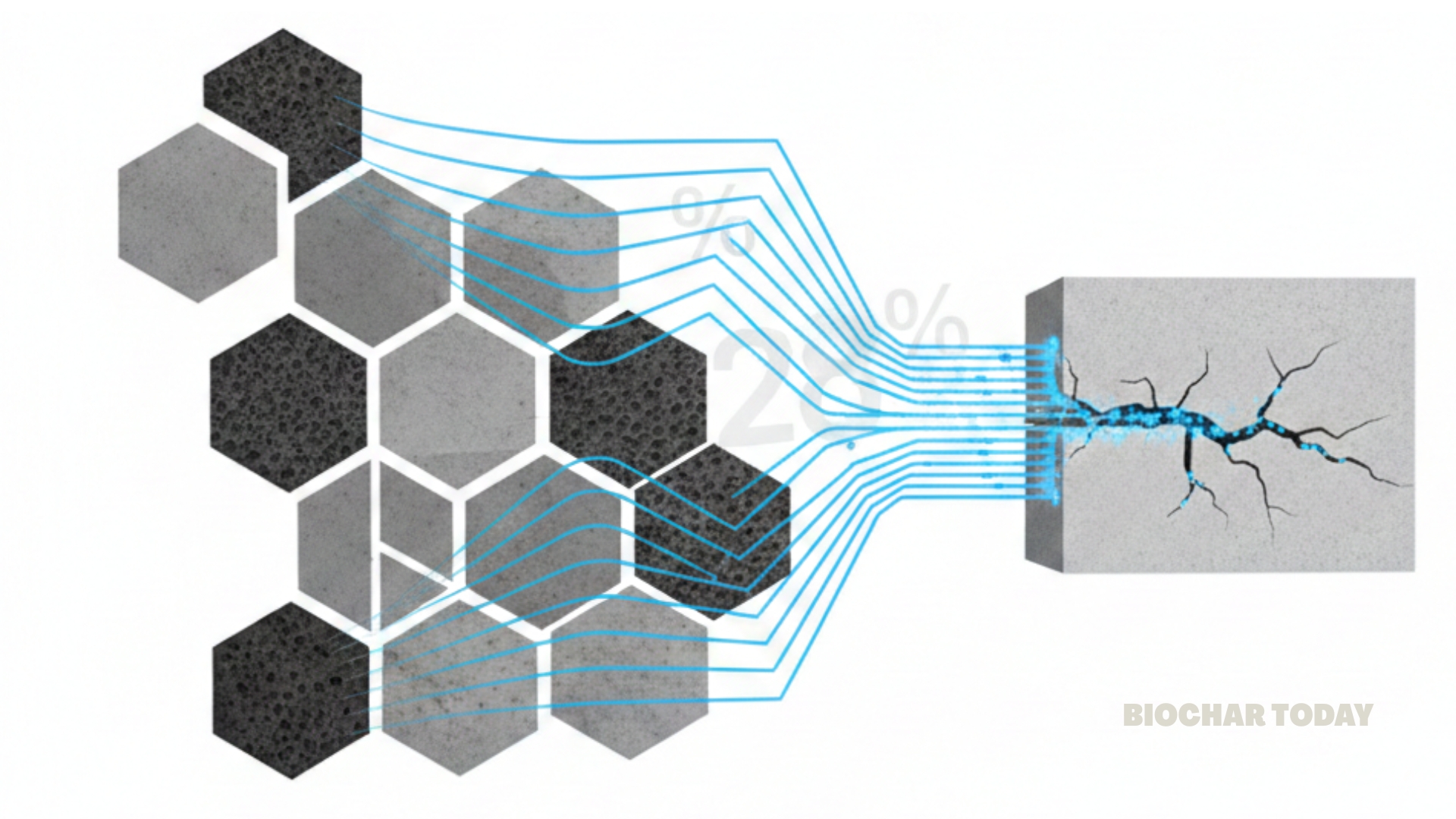
The findings reveal a striking divergence in how different types of biochar respond to aging. For biochar created at a relatively low temperature of 350 degrees Celsius, the aging process acts as a catalyst for improved electrical performance. These materials initially have a disorganized structure with low conductivity. As they age—whether through a year of natural exposure or simulated cycles of freezing and thawing—they develop a wealth of redox-active functional groups on their surfaces. These new chemical features bridge the gaps in the material’s structure, allowing electricity to flow much more easily. In some instances, the conductivity jumped by three orders of magnitude, transforming a resistive material into one that is highly active in electron transfer processes.
In contrast, biochar produced at a high temperature of 750 degrees Celsius experiences the opposite effect. High-temperature biochar starts with a very stable, highly conductive carbon framework similar to graphite. The study found that aging actually attacks this well-organized structure. Environmental exposure causes the breakdown of the polyaromatic carbon layers that make the material so conductive in its fresh state. Consequently, high-temperature biochar loses a significant portion of its ability to donate electrons to its surroundings. This suggests that while high-temperature biochar is often considered more stable, its specific “active” electrical properties may be more vulnerable to the wear and tear of natural environmental cycles than previously thought.
The results also clarify how the source material, or feedstockFeedstock refers to the raw organic material used to produce biochar. This can include a wide range of materials, such as wood chips, agricultural residues, and animal manure. More, influences these outcomes. While the temperature of the kiln is the dominant factor, the specific type of organic waste used to make the biochar provides the raw ingredients for the chemical groups that form during aging. The researchers observed that the capacity of the biochar to both give and take electrons generally decreased across the board as the material aged, but the increase in conductivity for low-temperature samples provided a trade-off. This suggests that for applications requiring long-term electrical activity, such as stimulating microbial growth in anaerobic digesters or contaminated soils, low-temperature biochar might actually become more effective as it settles into the environment.
This study provides a vital roadmap for the construction of more durable and effective carbon-negative solutions. It demonstrates that the “best” biochar for a project today might not be the best one five years from now. By choosing the right production temperature, land managers and environmental engineers can better align the initial properties of biochar with the natural aging processes it will encounter. This ensures that the material continues to serve its purpose in cleaning water, healthy soil, and stable carbon storage long after the initial application.
Source: Cao, M., Ren, H., Zhu, P., Tao, W., Du, W., Li, H., Hu, Y., Zhang, P., & Pan, B. (2026). PyrolysisPyrolysis is a thermochemical process that converts waste biomass into bio-char, bio-oil, and pyro-gas. It offers significant advantages in waste valorization, turning low-value materials into economically valuable resources. Its versatility allows for tailored products based on operational conditions, presenting itself as a cost-effective and efficient More temperature determines aging effects on the electron transfer and exchange properties of pyrogenic carbon. Biochar, 8(29).



Leave a Reply