
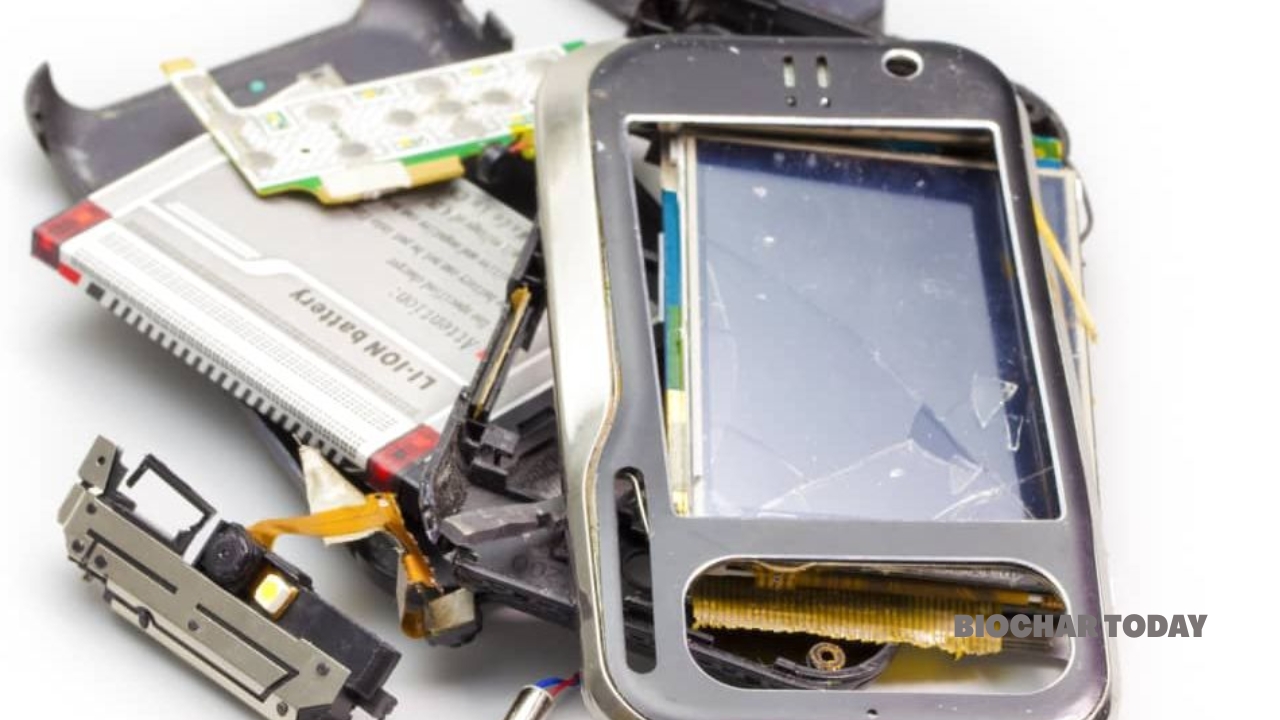
Researchers at Rice University in the United States have developed a method to integrate minerals recovered from discarded lithium-ion batteries with biochar to create high-efficiency supercapacitors. By employing a flash Joule heating technique, the team successfully reclaimed valuable metals—including cobalt, lithium, and manganese—from electronic waste and infused them into a biocharBiochar is a carbon-rich material created from biomass decomposition in low-oxygen conditions. It has important applications in environmental remediation, soil improvement, agriculture, carbon sequestration, energy storage, and sustainable materials, promoting efficiency and reducing waste in various contexts while addressing climate change challenges. More substrate. This process repurposes two distinct waste streams, transforming end-of-life telecommunications hardware and organic biomassBiomass is a complex biological organic or non-organic solid product derived from living or recently living organism and available naturally. Various types of wastes such as animal manure, waste paper, sludge and many industrial wastes are also treated as biomass because like natural biomass these More into functional components for the next generation of energy storage systems.
The primary challenge addressed by the Rice University team is the dual crisis of escalating electronic waste and the high environmental cost of mining virgin minerals for battery production. As the global demand for energy storage increases, the accumulation of discarded smartphones and laptops presents a significant disposal hazard, often leachingLeaching is the process where nutrients are dissolved and carried away from the soil by water. This can lead to nutrient depletion and environmental pollution. Biochar can help reduce leaching by improving nutrient retention in the soil. More toxic chemicals into the soil. Simultaneously, conventional supercapacitor production relies on expensive, energy-intensive materials. Finding a way to efficiently extract these minerals and stabilize them in a conductive medium has remained a persistent technical hurdle for the sustainable electronics industry.
The solution involves a localized, high-temperature thermal treatment that recovers minerals from battery anodes and cathodes while simultaneously preparing the biochar. The flash Joule heating method allows for the rapid recovery of up to 98 percent of the metals found in battery waste without the need for the harsh acids typically used in hydrometallurgical recycling. These recovered metal oxides are then embedded into the porous structure of biochar, which provides the high surface area necessary for electrochemical reactions. This hybrid material serves as a low-cost, high-performance electrode for supercapacitors, effectively bridging the gap between waste management and energy technology.
The outcomes of this research indicate that biochar-based supercapacitors can match or exceed the performance of traditional carbon-based storage devices. The resulting electrodes demonstrated high capacitance and stability over thousands of charge-discharge cycles. Furthermore, the process significantly reduces the carbon footprint associated with both battery disposal and electrode manufacturing. By demonstrating that biochar can act as a robust framework for recycled battery minerals, Rice University has provided a viable pathway for a circular economy in the energy sector, reducing reliance on raw mineral extraction.





Leave a Reply