
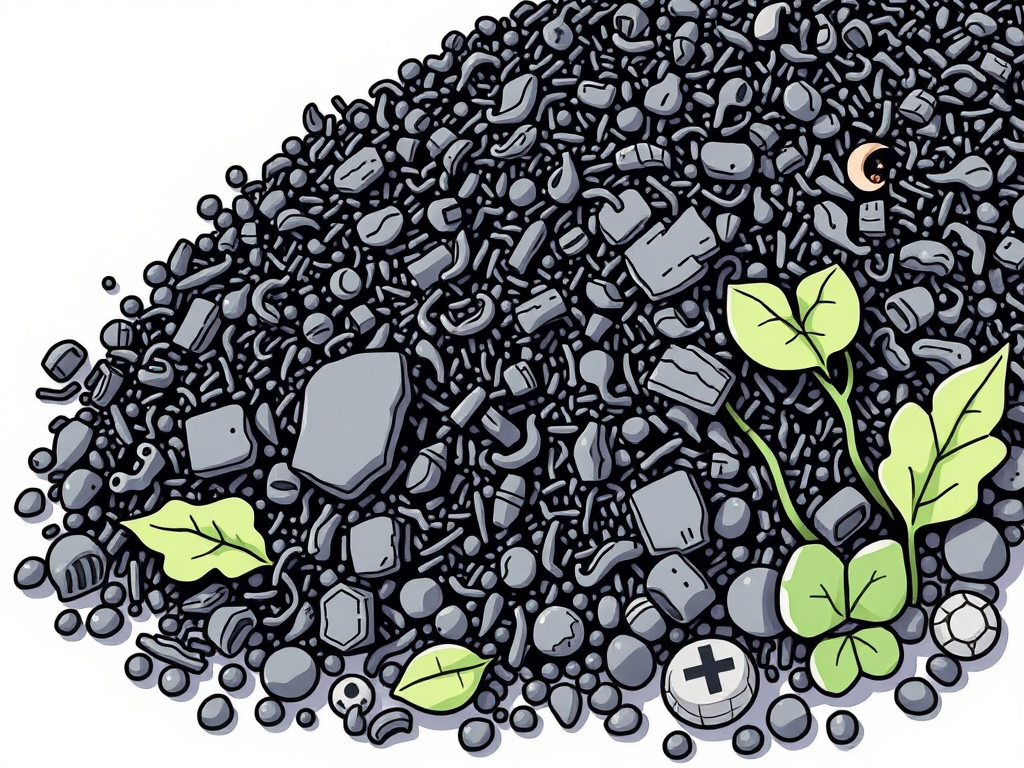
The global drive for low-carbon initiatives has amplified interest in anaerobic digestion (AD) for biogas production. However, challenges such as low methane yield, high carbon dioxide (CO2) concentration, and system acidification persist. BiocharBiochar is a carbon-rich material created from biomass decomposition in low-oxygen conditions. It has important applications in environmental remediation, soil improvement, agriculture, carbon sequestration, energy storage, and sustainable materials, promoting efficiency and reducing waste in various contexts while addressing climate change challenges. More, a carbon-rich material derived from biomassBiomass is a complex biological organic or non-organic solid product derived from living or recently living organism and available naturally. Various types of wastes such as animal manure, waste paper, sludge and many industrial wastes are also treated as biomass because like natural biomass these More pyrolysisPyrolysis is a thermochemical process that converts waste biomass into bio-char, bio-oil, and pyro-gas. It offers significant advantages in waste valorization, turning low-value materials into economically valuable resources. Its versatility allows for tailored products based on operational conditions, presenting itself as a cost-effective and efficient More, has emerged as a promising additive to enhance AD performance. A study by Najwa Alia A’adil Bohara, Zainura Zainon Noor, Kerry Neil McPhedran, Mohsen Asadi, and Rahman Zeynali, published in IOP Conference Series: Earth and Environmental Science, utilized a Life Cycle Assessment (LCA) approach to evaluate the environmental benefits of adding different types of biochar to anaerobic digestion for biogas enhancement. The research analyzed five distinct biochar types—activated carbon-based, microwave-based, forest residue, sludge-based, and wood-based—to determine which offers the greatest environmental advantages.
Biochar improves biomethane yield primarily by chemically stimulating methanogens, promoting microbial community growth, and acting as a buffer against inhibitors and acidification. It is also predicted to absorb CO2, NH3, and H2S. Previous studies have demonstrated significant increases in methane production with biochar addition: 8.6% to 17.8% in sludge AD , 46.9% in food waste AD , 32% to 36% in chicken manure AD , and 35% to 37% in algae AD. Biochar additives have also been shown to reduce CO2 emissions by 5.90% and H2S content by over 95% in cornstalk and chicken manure AD systems, respectively.
The study employed a cradle-to-gate LCA approach, with a functional unit of 1 m³ of biogas produced, focusing on five key environmental impact categories: freshwater eutrophication potential (FEP), terrestrial acidification potential (TAP), global warming potential (GWP), fossil fuel depletion potential, and human toxicity (non-cancer). The environmental impacts were simulated using Simapro 8.5 software.
The results indicate that activated carbon-based biochar is the most environmentally friendly option, demonstrating the lowest impacts in three of the five categories: global warming potential, acidification potential, and fossil fuel depletion. This superior performance is attributed to its lower energy consumption during pyrolysis and pre-processing, and reduced raw material requirements compared to other biochar types. Activated carbonActivated carbon is a form of carbon that has been processed to create a vast network of tiny pores, increasing its surface area significantly. This extensive surface area makes activated carbon exceptionally effective at trapping and holding impurities, like a molecular sponge. It is commonly More biochar also exhibits excellent pHpH is a measure of how acidic or alkaline a substance is. A pH of 7 is neutral, while lower pH values indicate acidity and higher values indicate alkalinity. Biochars are normally alkaline and can influence soil pH, often increasing it, which can be beneficial More buffering qualities, which help neutralize acidic substances and inhibit the release of acidifying chemicals like sulfur dioxide and nitrogen oxides, thereby lowering acidification potential.
In contrast, microwave-based biochar showed higher impacts on eutrophication and human toxicity (non-cancer), mainly due to phosphorus addition during its production. However, it had the lowest global warming potential among the five types, thanks to its lower energy consumption during production. Sludge-based biochar exhibited the lowest impacts on eutrophication and human toxicity (non-cancer), likely due to thorough treatment processes that remove harmful contaminants and the absence of additional chemical additives in its production. Forest residue biochar performed best in terms of eutrophication potential but had worse outcomes for fossil fuel depletion and global warming potential.
Overall, all five types of biochar were deemed beneficial for enhancing biogas production, showing moderate improvements in human toxicity and eutrophication potential. The study emphasizes the critical need to consider production stages (energy and chemicals) as main sources of environmental impacts and advocates for cleaner energy sources and further optimization of biochar production processes to enhance ecological sustainability.
Source: Bohara, N. A. A., Noor, Z. Z., McPhedran, K. N., Asadi, M., & Zeynali, R. (2025). Life Cycle Assessment of Difference Type of Biochar as Additives in Anaerobic Digestion for Enhancement of Biogas Production. IOP Conference Series: Earth and Environmental Science, 1505(1), 012001.


![Eucalyptus Wood Waste-Derived Biochar Achieves a Ninety-Eight Percent Removal Efficiency for Benzo[ghi]perylene in Vehicle-Wash Wastewater](https://biochartoday.com/wp-content/uploads/2026/10/SCIENCE-BLOGS-2026-2026-10-19T160523.703.jpg)

Leave a Reply